Welcome to ExtruderX Extrusion Machine Manufacturing Facility

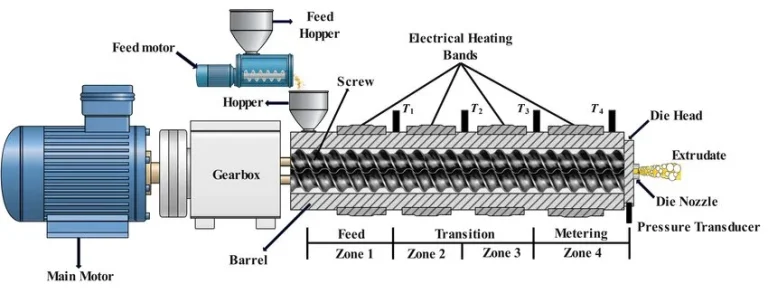
Construction and Working Principle of Twin Screw Extruders
For twin screw extruder distributors, mastering the working principle and construction of twin screw extruders enables them to accurately address the inquiries of downstream plastic processing plant customers and strengthen customer trust. For purchasing/technical personnel at plastic processing companies, it is a critical factor in assessing equipment compatibility and mitigating procurement risks. For startup traders, it is even a core basis for selecting reliable manufacturers and clarifying business directions, directly impacting collaboration decisions and profitability. This article will explain the working principle and construction of twin screw extruders in detail.
Comprehensive Analysis of the Structure and Key Components of Twin Screw Extruders
The structural stability of twin screw extruders directly determines processing efficiency and material molding quality, and their key components are collaboratively designed around the entire process of “material conveying – plasticization – mixing – extrusion”. The detailed analysis of the key components is presented below.
1.Drive System
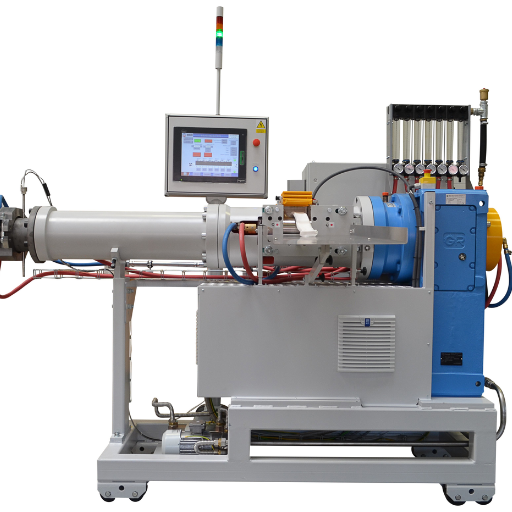
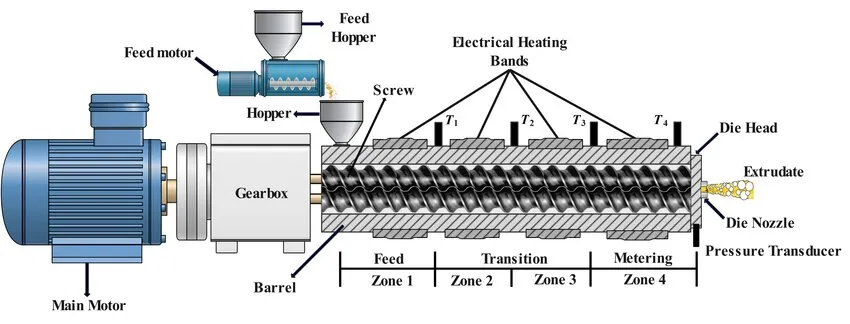
The drive system serves as the “power core” of the equipment, consisting of a motor, a reducer, and couplings. Motors provide the power source, with variable-frequency types being the common choice, allowing flexible speed adjustment based on processing requirements. The reducer converts the high speed of the motor into the low speed and high torque required by the screws, ensuring stable power output. Couplings connect the motor to the reducer and the reducer to the screws, reducing operational vibration, ensuring continuous power transmission, and preventing processing quality issues caused by power fluctuations.
2.Screw and Barrel Assembly
As the core processing components, screws and barrels directly determine the material plasticization effect. Screws typically feature a meshing design, divided into co-rotating and counter-rotating types. Parameters such as the pitch and groove depth of screw flights and grooves can be customized based on the characteristics of different materials (e.g., PVC, recycled materials). Barrels form a tight fit with screws and are equipped with segmented heating and cooling devices to precisely control temperatures during different processing stages (preheating, plasticization, homogenization). Both components are made of wear-resistant and corrosion-resistant materials to extend service life.
3.Feeding System
The feeding system undertakes the responsibility of “steady material feeding” and consists of a feeder and a hopper. Feeders adopt a quantitative design, allowing synchronous adjustment of feeding volume based on screw speed to ensure material supply matches the processing rhythm. Hoppers are used for material storage, and some are equipped with mixing devices to prevent material agglomeration and blockage, ensuring smooth feeding. Its stability directly affects the uniformity of extrusion output, serving as the foundation for consistent product quality.
4.Extrusion Molding System
This system is the final stage of material processing, including extrusion heads and dies. After plasticization and mixing, the molten material enters the die through the extrusion head. Dies are customized according to product specifications (e.g., pipes, sheets, films) to shape the material into the corresponding cross-sectional form. Extrusion heads are equipped with pressure detection devices to monitor extrusion pressure in real time, preventing product defects or equipment failures caused by abnormal pressure and ensuring stable molding results.
Step-by-Step Breakdown of the Working Principle of Twin Screw Extruders
The core working principle of twin screw extruders relies on the rotational motion of screws to achieve the continuous transformation of materials from solid state to molten state and finally to molded form. The entire process is interconnected, and the parameter control of each stage directly affects the final product quality. Clearly breaking down the working process helps the audience quickly understand the equipment’s operation logic and accurately determine whether the equipment is suitable for their own processing needs.
1.Material Conveying Stage
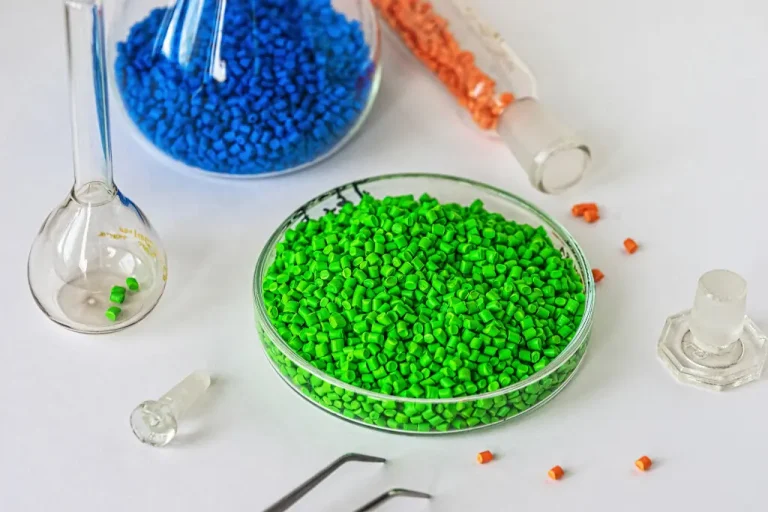
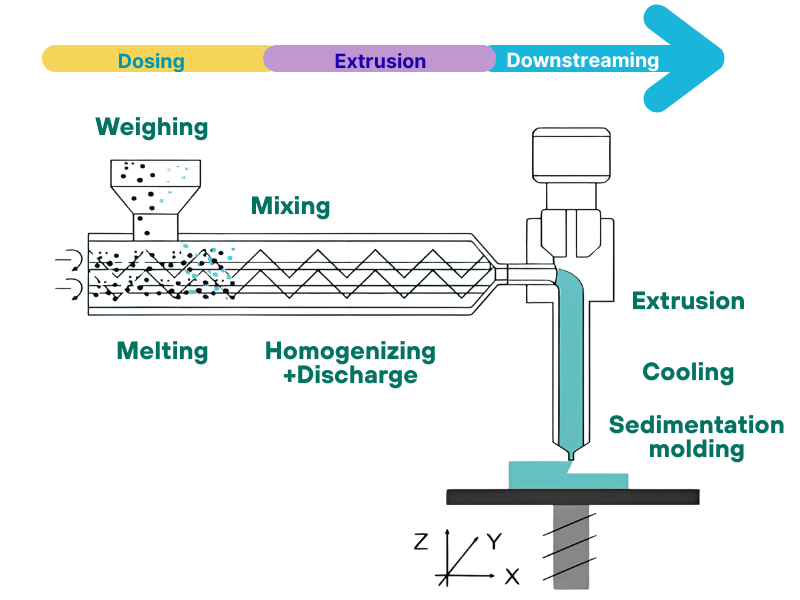
After the equipment starts, the feeding system feeds solid materials (granules, powders) into the gap between the barrel and screws at a steady speed. Driven by the drive system, the screws rotate, and through the pushing force of the screw flights, the materials are conveyed along the screw grooves toward the extrusion head. At the same time, the external heating device of the barrel preliminarily preheats the materials, and the screw extrusion also expels air from the materials to avoid bubble defects in subsequent processing.
2.Plasticization and Melting Stage
When the materials enter the middle section of the barrel, the temperature gradually increases through the barrel’s segmented heating and the frictional heat generated by screw shearing and extrusion, causing the solid materials to gradually soften and melt. Precise control of temperature and screw speed is required at this stage to ensure the materials are fully melted without degradation, laying the foundation for subsequent mixing and homogenization.
3.Mixing and Homogenization Stage
During the continuous conveying process by the screws, the molten materials achieve uniform mixing of their components through the stirring and shearing effects of the screw flights and the special structural design inside the barrel. For processing scenarios that require adding additives or fillers, this stage ensures the additives are fully dispersed, improving the stability of product performance.
4.Extrusion Molding Stage
Driven by the pushing force of the screws, the uniformly mixed molten materials enter the extrusion head and are formed into products with specific cross-sectional shapes through the die. Then, through subsequent processes such as cooling and pulling, the final product processing is completed. The pressure detection devices on the extrusion head provide real-time feedback of pressure data, allowing operators to timely adjust parameters and ensure a stable extrusion process.
Comparison: Advantages of Twin Screw Extruders Over Single Screw Extruders in Structure and Working Principle
From the perspectives of structural design and working principle, twin screw extruders hold significant advantages over single screw extruders, and these advantages directly determine their adaptability and processing efficiency in complex processing scenarios.
1.Material Conveying and Plasticization Efficiency
Single screw extruders rely on friction between materials, screws, and barrels to convey materials, which often leads to issues like unstable feeding and inadequate plasticization. Twin screw extruders use the meshing and pushing action of two screws, enabling higher and more stable material conveying efficiency. Moreover, the synergistic effect of screw shearing and barrel heating greatly enhances plasticization efficiency, making them suitable for large-scale, high-demand processing scenarios.
2.Mixing Uniformity
Single screw extruders have weak mixing capabilities and struggle to meet the uniform mixing requirements of multi-component materials. Twin screw extruders, through the coordination of their screw flight design and rotational direction, generate strong stirring and shearing effects. This allows for full mixing of materials with additives and fillers, improving the uniformity of product components and adapting to complex processing needs such as modified plastics.
3.Adaptable Material Range
Single screw extruders have strict requirements for material properties and are difficult to adapt to materials with high viscosity and poor fluidity (e.g., recycled materials, PVC). Twin screw extruders, through customized screw parameters and barrel temperature control, can accommodate various material types, including high-viscosity materials, heat-sensitive materials, and recycled materials, offering a wider range of applicable scenarios.
4.Operational Stability
Due to unstable material conveying, single screw extruders tend to experience fluctuations in extrusion output and uneven product quality. Twin screw extruders, with their optimized structural design and drive system, ensure smoother operation, stable extrusion output, and minimal fluctuations in product quality—effectively reducing the scrap rate during production.
Applications of Twin Screw Extruders
1.PVC Pipe and Fitting Processing Field
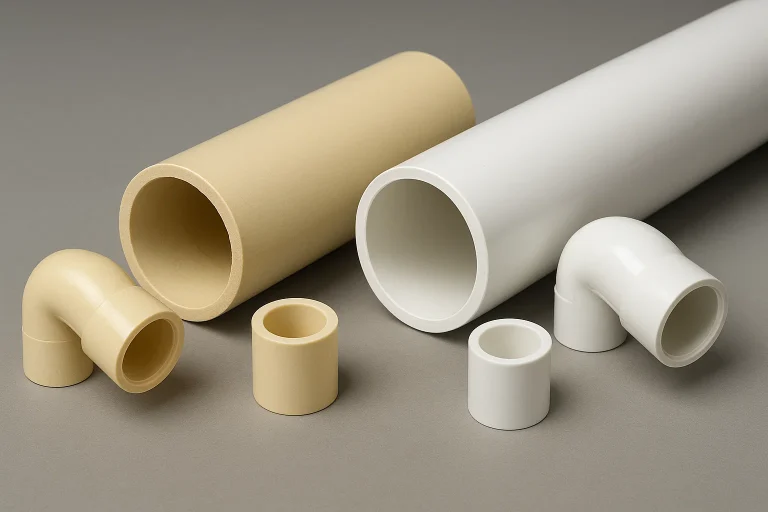
Relying on its precise segmented temperature control structure and working principle of sufficient plasticization, twin screw extruders can prevent PVC materials from degrading during processing, ensuring the strength, sealing performance, and dimensional accuracy of pipes and fittings. Widely used in scenarios such as building water supply and drainage pipes and municipal engineering pipes, they are suitable for large-scale standardized production and serve as core equipment for PVC pipe processing.
2.Plastic Film Production Field
With its stable material conveying structure and working characteristic of uniform mixing, twin screw extruders can ensure uniform melting of film raw materials and stable extrusion output, thereby guaranteeing consistent thickness, high transparency, and excellent mechanical properties of finished films. Suitable for processing various film products such as packaging films, agricultural films, and industrial protective films.
3.Recycled Plastic Reutilization Field
By virtue of its high-shear screw structure and adaptable working principle, twin screw extruders can effectively process recycled plastics with high impurity content and large viscosity fluctuations (e.g., waste plastic bottles, recycled plastic film materials), achieving sufficient plasticization of materials and impurity separation. This supports resource recycling and meets the needs of environmentally friendly plastic processing enterprises.
4.Modified Plastic Processing Field
Utilizing the strong stirring and shearing effects generated by the meshing of twin screws, twin screw extruders can achieve uniform mixing of plastics with fillers and additives (e.g., reinforcing agents, flame retardants), improving the mechanical properties, heat resistance, flame retardancy, and other performance of plastic products. Widely used in high-end processing scenarios such as modified plastics for automotive parts and modified plastics for electronic and electrical enclosures.
5.Rubber and Elastomer Processing Field
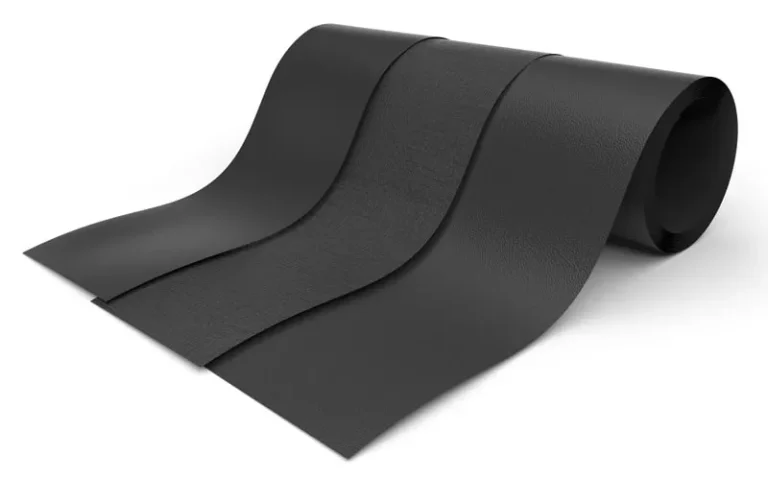
With its stable drive system and customizable screw parameters, twin screw extruders can adapt to the processing needs of materials such as rubber and thermoplastic elastomers, achieving sufficient plasticization, mixing, and molding of materials. Suitable for the production of products such as sealing strips, rubber hoses, and elastomer accessories.