Welcome to ExtruderX Extrusion Machine Manufacturing Facility

What Is a Single Screw Extruder: Key Application Fields
In industrial production procurement lists, single screw extruders often occupy a critical position, as their selection and application matching directly impact production efficiency and cost control. However, in reality, many companies lack sufficient understanding of single screw extruders, falling into the procurement pitfall of “application mismatch.” According to industry statistics, such mistakes average more than 25% cost inefficiency. Additionally, the technical challenge of disconnect between application requirements and equipment parameters often hinders procurement decisions and impacts production timelines. Today, we will provide a comprehensive analysis of single screw extruders from multiple dimensions – definition, applications, structure, and principles – to help you avoid procurement traps and ensure equipment truly matches production needs.
What is a Single Screw Extruder?
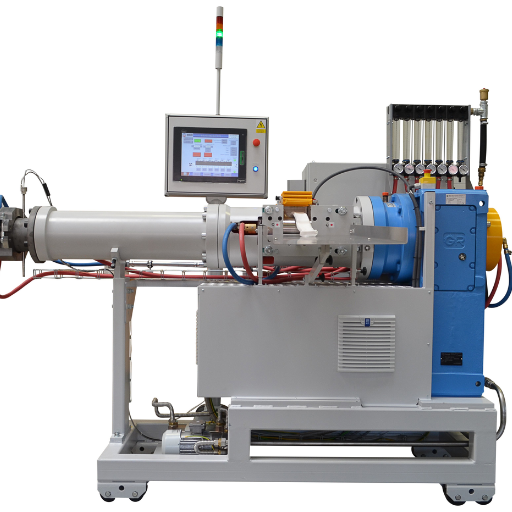
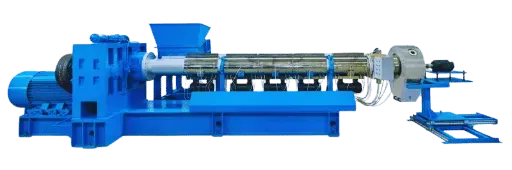
A single screw extruder is a specialized machine that utilizes the rotational motion of a single helical screw to continuously transport, compress, melt, and plastify solid materials (such as plastics and rubber), then extrudes them through a die to form products with specific cross-sectional shapes. It serves as the fundamental core equipment in industries like rubber and plastic processing, building materials production, and packaging manufacturing.
The machine’s design is characterized by its relatively simple structure, ease of operation, and cost-effectiveness, making it particularly suitable for small-to-medium scale production and processing single-material applications.
At its core, the single screw extruder performs an integrated process combining “material plastification + continuous forming.” Its performance primarily depends on the matching of key components including the screw structure, barrel design, and drive system, as well as its adaptability to different material properties.
Whether used for primary raw material pelletizing or precision product forming, a single screw extruder must be precisely matched to the application scenario through parameter adjustment to achieve optimal efficiency.
Applications of Single Screw Extruders
With its flexible adaptability, the single screw extruder has penetrated multiple industrial sectors. Significant differences exist in equipment parameter requirements across various application scenarios, and accurately grasping the characteristics of each application field is key to avoiding procurement pitfalls. Specific applications are as follows:
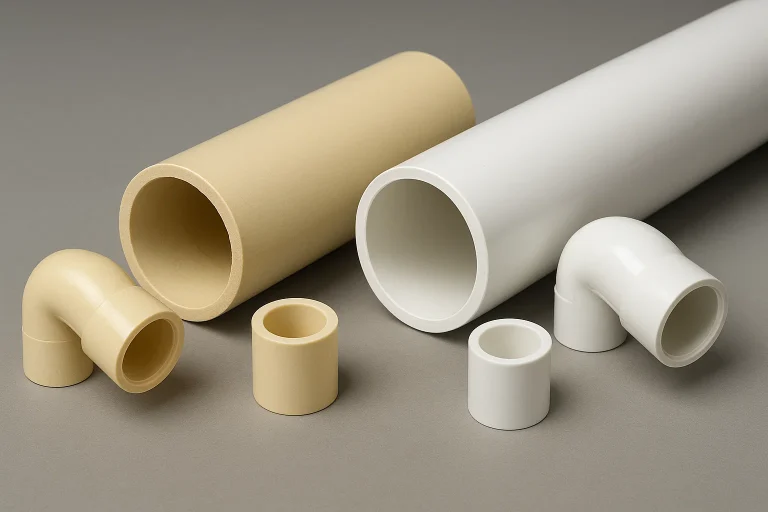
- Plastic Processing Industry: As a “workhorse” in this industry, it boasts diverse application scenarios. In pipe extrusion, it can process water supply pipes, drainage pipes, gas pipes, and other products made from materials such as PVC, PE, and PP. Screw speed and barrel temperature need to be adjusted according to pipe diameter and pressure class. In profile extrusion, it is used for producing door and window profiles, decorative moldings, etc., which demand high precision of the die head and uniform plasticization of materials. In film extrusion, it can manufacture blown film and cast film, requiring strict control of extrusion speed and temperature stability to ensure uniform film thickness. Additionally, it is widely applied in specialized scenarios such as plastic pelletizing (converting waste plastic or new materials into pellets) and cable coating (applying plastic insulation layers to cable cores).
- Rubber Industry: Primarily used for the preforming and extrusion molding of rubber products, such as tire treads, hoses, and sealing strips. Unlike plastic processing, rubber processing requires focusing on controlling the crosslinking reaction of materials, and the equipment must have more precise temperature regulation capabilities to ensure the physical properties of rubber products.
- Food and Pharmaceutical Industries: Single screw extruders that meet hygienic standards can be put into use. In food processing, they are used for the molding of puffed cereal products and pet food; in pharmaceutical excipient processing, they are applied for the molding of sustained-release tablet carriers. Such equipment must adopt hygienic designs such as stainless steel bodies and food-grade grease to avoid material contamination.
- Other Industries: In the building materials industry, it can be used for the extrusion production of plastic flooring, wall panels, etc.; in the packaging industry, it can manufacture packaging films, heat shrinkable films, and other products. The demand differences across various fields directly determine the direction of equipment selection.
Main Components of Single Screw Extruders
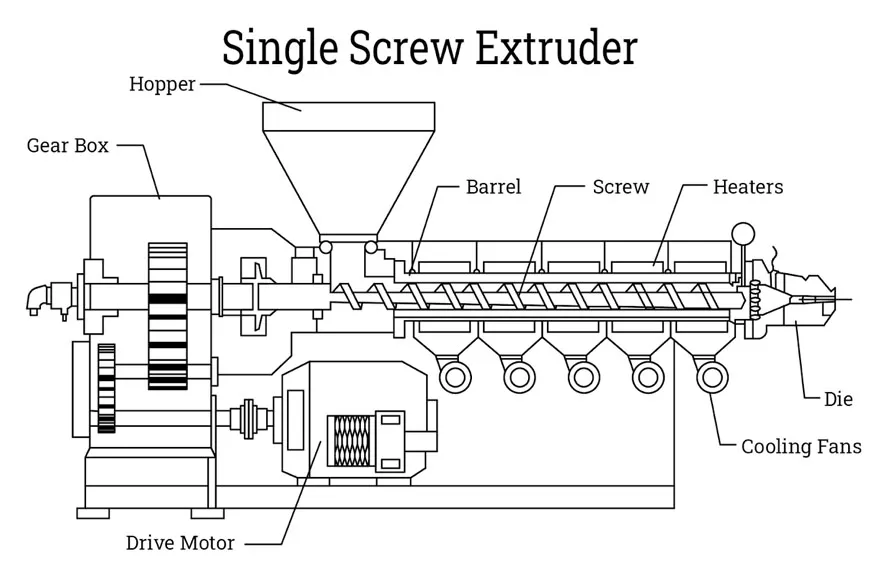
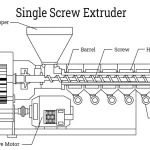
The performance core of a single screw extruder stems from the coordinated operation of its components. Understanding the functions and roles of key parts serves as the technical foundation for accurately matching application requirements. Its core components mainly include the following:
1.Feeding System: Composed primarily of a hopper and feed throat, it is responsible for uniformly and stably delivering solid materials into the barrel. Hoppers are usually equipped with level sensors to monitor material volume, preventing material shortage or overflow. For special applications, forced feeding devices may be adopted to accommodate materials prone to moisture absorption or poor fluidity.
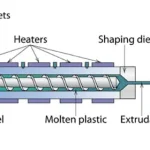
2.Barrel and Screw: These are the “heart” components of a single screw extruder. As the chamber for containing and heating materials, the barrel is typically fitted with heating coils and a cooling system, enabling zoned temperature control to meet the thermal requirements for material melting and plastification. The screw, through rotation, realizes material conveying, compaction, mixing, and plastification. Its structure (such as pitch, flight depth, and compression ratio) must be customized based on material properties (e.g., melting temperature, viscosity) and application scenarios. For instance, screws with high compression ratios are required when processing high-viscosity materials.
3.Die Head and Die: The die head acts as a transitional component connecting the barrel and die, guiding the molten and plastified material to the die. The die directly determines the cross-sectional shape of the final product—for example, annular dies for pipes and profiled dies for sections. Its precision directly affects product dimensional tolerance, making it a critical component for molding.
4.Drive System: Consisting of a motor, reducer, and coupling, it provides power for screw rotation. Extrusion speed can be precisely controlled by adjusting the motor speed, which in turn influences product output and quality. Drive systems with different power ratings are compatible with extruders of varying specifications, and selection should be based on production capacity requirements.
5.Control System: Centered on a PLC (Programmable Logic Controller) with a touchscreen interface, it regulates parameters such as barrel zone temperatures, screw speed, and feeding rate to achieve automated production. High-end equipment may also feature data collection and traceability functions, facilitating production process management and control.
Working Principle of Single Screw Extruders
The working process of a single screw extruder is essentially a continuous “material state transformation + forced conveying and molding” process. It can be divided into four core stages: feeding, plastification, extrusion, and shaping. Each stage is interconnected, collectively determining production efficiency and product quality.
First Stage: Feeding and Conveying
After solid materials enter the barrel from the hopper, they move toward the die head along the screw grooves under the thrust of the screw’s rotation. In this stage, the temperature in the front section of the barrel is relatively low, and the materials remain in a solid state. The main function of the screw is to achieve stable material conveying and prevent bridging (material caking and clogging at the bottom of the hopper).
Second Stage: Plastification and Melting
As materials move toward the die head, the barrel temperature gradually increases. Under the combined action of external heating from the heating coils and shear friction heat generated between the screw and the barrel inner wall, the materials gradually soften and melt, forming uniform molten materials. Meanwhile, the compression section of the screw compacts the materials to expel air, ensuring plastification quality. This stage is critical to product performance—excessively high or low temperatures will lead to poor plastification.
Third Stage: Extrusion Molding
Driven by the continuous thrust of the screw, the molten materials pass through the die head and enter the die. Constrained by the die, they form continuous billets with specific cross-sectional shapes. In this stage, it is necessary to control the stability of extrusion pressure and speed to avoid uneven cross-sectional dimensions caused by pressure fluctuations.
Fourth Stage: Shaping and Cooling
The billets extruded from the die have a high temperature and must immediately enter a shaping device (such as a vacuum sizing sleeve for pipes or a shaping die for profiles) for cooling and shaping. This process allows the products to maintain their predetermined shape and solidify. Finally, the finished products that meet the requirements are obtained after being pulled by the traction device and cut by the cutting device.
Market Size of Single Screw Extruders
The global single screw extruder market has maintained steady growth amid the upgrading of downstream manufacturing industries. According to the report “Single Screw Extruder Market – Growth, Trends, and Forecast (2024 – 2030)” released by Credence Research, the global total extruder market size reached approximately 14.2 billion USD in 2024. Single screw models, leveraging their simple structure and wide adaptability, accounted for 60%-65% of the market share, corresponding to a size of 8.52-9.23 billion USD. The market is projected to achieve a CAGR (Compound Annual Growth Rate) of 4.8%-5.3% from 2024 to 2029, with the market size expected to exceed 11 billion USD by 2029. Growth drivers include infrastructure development in emerging markets and equipment upgrades for eco-friendly material processing.
Regional markets exhibit differentiated characteristics:
- Asia-Pacific serves as the core market, holding a 57% share in 2024, driven primarily by the capacity expansion of plastic pipes and profiles in China and India.
- The North American market reached 1.28 billion USD (with a growth rate of 4.2%), focusing on demands for medical packaging and automotive lightweighting.
- The European market stood at 1.55 billion USD (with a growth rate of 3.9%), where stringent environmental regulations are fueling the growth of processing equipment for biodegradable plastics.
In terms of product structure:
- Mid-to-low-end models (unit price < 80,000 USD) account for 72%, serving small and medium-sized enterprises engaged in pipe and profile production.
- High-end models featuring intelligent temperature control and energy-saving capabilities hold a 28% share, targeting engineering plastics and medical-grade material applications.
Notably, specialized models for biodegradable plastics have emerged as a highlight in the niche segment, with a growth rate of 8.5% in 2024, driven by global plastic ban policies. Click on the report title to access detailed data.
Differences Between Single Screw Extruders and Twin Screw Extruders
| Comparison Dimension | Single Screw Extruder | Twin Screw Extruder |
|---|---|---|
| Structural Features | Single screw, simple structure, few components | Two parallel or intermeshing screws, complex structure, high requirements for the transmission system |
| Plastification Efficiency | Relies on shear friction heat; plastification speed is slow, and uniformity is average | Intermeshing screws generate strong shearing and mixing; high plastification efficiency and good uniformity |
| Suitable Materials | Single materials, low-viscosity materials (e.g., PE, PP, PVC), easy-to-process materials | Mixed materials, high-viscosity materials, filled modified materials (e.g., glass fiber-reinforced plastics), difficult-to-process materials |
| Production Efficiency | Small-to-medium production capacity, suitable for batch production, limited output adjustment range | Large production capacity, suitable for large-scale continuous production, flexible output adjustment |
| Cost & Maintenance | Low manufacturing cost, simple structure for easy maintenance, low maintenance cost | High manufacturing cost, many components, high maintenance difficulty, high maintenance cost |
| Application Scenarios | Molding of single products (e.g., pipes, profiles, films), small-to-medium scale production | Material modification, compounding, filling, large-scale product production |
Simply put, if a company focuses on small-to-medium scale molding production of single materials, a single screw extruder is the cost-effective choice. If the application involves material mixing, modification, or large-scale production, a twin screw extruder is better suited—but it requires bearing higher costs and maintenance burdens.
Advantages and Disadvantages of Single Screw Extruders
A comprehensive understanding of the advantages and disadvantages of single screw extruders is crucial for “maximizing strengths and mitigating weaknesses” in procurement decisions. By weighing the pros and cons against your specific application scenarios, you can achieve the highest equipment value.
Advantages of Single Screw Extruders
- Simple structure with controllable costs: Single screw extruders have far fewer components than twin screw models, resulting in lower manufacturing costs and a lower procurement threshold. Their simple structure also reduces the difficulty of installation, commissioning, and long-term maintenance, making them easily affordable for small and medium-sized production enterprises.
- Easy operation and quick mastery: The control system is streamlined, with intuitive parameter adjustments. Operators can start working after simple training, reducing labor training costs.
- Strong adaptability and flexible scenarios: For single-material molding applications (e.g., production of standard pipes and profiles), single screw extruders can produce different products by changing the die and adjusting parameters, ensuring high equipment utilization.
- Lower energy consumption: Compared to twin screw extruders, single screw models require lower power for their drive systems. In small-to-medium capacity scenarios, they offer superior energy efficiency per unit of output.
Disadvantages of Single Screw Extruders
- Limited plastification efficiency and uniformity: Single screws rely primarily on shear friction for heat generation and plastification. For high-viscosity, heat-sensitive, or multi-component mixed materials, plastification uniformity is insufficient, which may lead to product quality defects.
- Capacity constraints: The conveying and plastification efficiency of single screws limits large-scale capacity expansion, making them unable to meet the high-capacity demands of large enterprises.
- Narrow material adaptability: For difficult-to-process materials such as high-fill modified materials and fiber-reinforced materials, single screws struggle to achieve adequate mixing and dispersion. They are not suitable for complex scenarios like material modification.
- Limited room for improving product precision: Due to constraints in plastification uniformity and extrusion stability, single screw extruders perform less effectively than twin screw or other high-precision equipment in the production of precision products.