Welcome to ExtruderX Extrusion Machine Manufacturing Facility

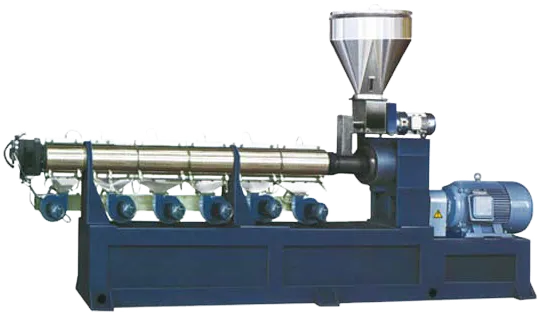
Intro to Process & Advantages of Single Screw Extruder
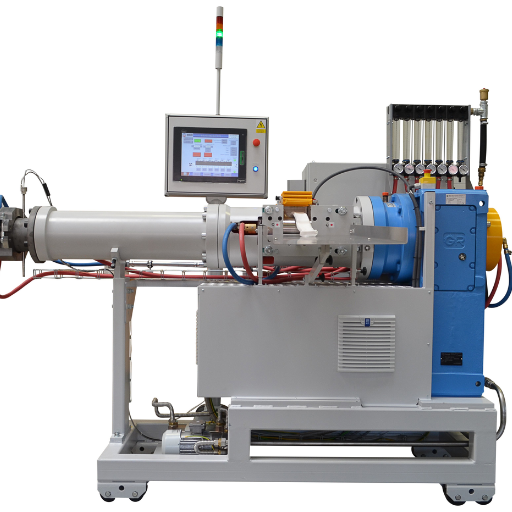
The plastic processing industry often faces challenges such as unstable production, high costs, and difficulties in material compatibility. The single screw extruder process is precisely designed to address these pain points. With its streamlined workflow of “feeding – plasticizing – extruding – shaping”, it enables efficient material processing. Additionally, it boasts advantages including a simple structure, low cost, and wide material compatibility, providing crucial support for enterprises to achieve stable production and cost control. This article will elaborate on the process flow and advantages of single screw extruders in detail.
Detailed Explanation of the Single Screw Extruder Process
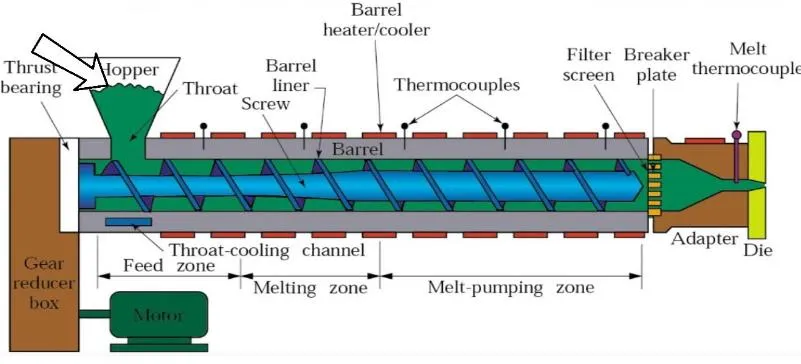
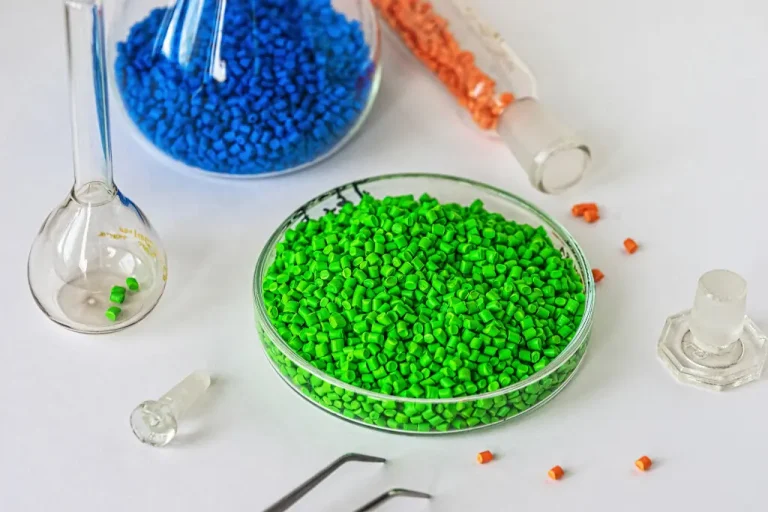
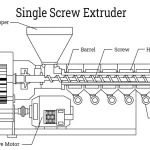
1.Feeding Stage: Through a quantitative feeding system, granular, powdered, or flaky thermoplastic raw materials (such as PE and PP) are evenly fed into the extruder barrel. This ensures stable raw material supply and prevents uneven plasticization in subsequent stages.
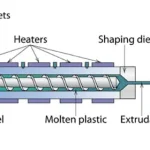
2.Plasticization Stage: As the screw rotates, it drives the material to move forward along the inner wall of the barrel. Combined with the segmented heating of the barrel (temperature gradient control for the feeding section, compression section, and metering section) and mechanical shear force, the solid raw materials gradually melt and mix to form a uniform melt.
3.Extrusion Stage: Driven by the thrust of the screw, the molten material passes through a custom-shaped die (such as a pipe die or sheet die) under stable pressure, forming a continuous parison consistent with the shape of the die cavity.
4.Sizing Stage: The parison is rapidly solidified through a cooling system (water cooling, air cooling, or vacuum sizing), then pulled at a set speed by a pulling device. Finally, it is cut into specified lengths or wound up by cutting equipment, resulting in the final product.
Core Advantages of Single Screw Extruders
- Simple Structure with Easy Operation and Maintenance
The core components only include a single screw and barrel, with no complex meshing structure. Operators can master the setting of parameters such as temperature and rotation speed after just 1-2 days of training. Fault diagnosis is intuitive (e.g., material blockage and abnormal temperature are easy to locate), and the replacement of wear parts (such as screws and barrel liners) takes only 1-2 hours, reducing labor costs.
- Outstanding Cost Advantage and High Cost-Effectiveness
The procurement cost is only 50%-70% of that of twin-screw extruders with the same capacity, making it suitable for enterprises engaged in small-to-medium batch production. During operation, its energy consumption is 15%-20% lower than that of twin-screw extruders. Additionally, the wear parts have strong universality and low unit prices (e.g., the unit price of a standard screw is approximately RMB 2,000-5,000), ensuring controllable long-term operating costs.
- Wide Material Compatibility
It can process general-purpose plastics such as PE (polyethylene), PP (polypropylene), PVC (polyvinyl chloride), and PS (polystyrene). It is also compatible with modified plastics (e.g., glass fiber-reinforced PP), filled plastics (e.g., calcium carbonate-filled PE), and recycled plastics (recycled PET and PP). By adjusting the screw compression ratio (e.g., 1:3 to 1:5) or screw groove depth, it can meet the processing needs of materials with different viscosities.
- Flexible Production Capacity for Multiple Scenarios
The production capacity of a single machine can be flexibly adjusted from 50kg/h to 500kg/h. It can not only meet the “small-batch, multi-category” production needs of small enterprises (e.g., customized pipes) but also adapt to the large-scale production of medium-sized enterprises (e.g., standard packaging films), eliminating the need for frequent equipment replacement.
Single Screw Extruders VS Other Extrusion Equipment
| Comparison Dimension | Single Screw Extruders | Twin Screw Extruders | Triple Screw Extruders |
|---|---|---|---|
| Structural Complexity | Low (only a single screw + barrel, no complex meshing structure) | Medium-High (precision meshing of twin screws, requiring a supporting synchronous transmission system) | High (synergistic transmission of three screws, with extremely high precision requirements for structural design) |
| Procurement Cost (Same Capacity) | 100,000 – 500,000 RMB (low initial investment threshold, suitable for small and medium-sized customers) | 300,000 – 1,500,000 RMB (higher cost than single screw extruders, ideal for medium-to-large-scale production needs) | 400,000 – 2,000,000 RMB (high-end models, highest cost, targeting special process requirements) |
| Plasticizing Efficiency | Medium (relies on screw shearing + barrel heating, suitable for low-viscosity materials, stable plasticizing speed) | High (strong shearing + forced conveying of twin screws, good plasticizing uniformity, 30%-50% more efficient than single screw extruders) | Extremely High (multi-dimensional shearing and mixing of three screws, 20%-30% more efficient than twin screw extruders, with more sufficient material melting) |
| Material Adaptability Range | Wide (general plastics such as PE/PP/PVC, recycled plastics, some low-filler modified materials) | Relatively Wide (high-viscosity materials, color masterbatches, high-filler modified materials, glass fiber-reinforced materials and other complex formula materials) | Narrow (mainly suitable for high-end special engineering plastics such as PEEK, LCP, precision composite materials, and high-purity medical-grade materials) |
| Maintenance Difficulty | Low (vulnerable parts are only screws/barrels, replacement cycle is 1-3 months, maintenance takes 1-2 hours) | Medium-High (twin screws require alignment of meshing gaps, vulnerable parts include screws/barrels/seals, maintenance cycle is 3-6 months, taking 4-8 hours) | High (three screws require precise calibration of their positions, vulnerable part replacement is difficult, maintenance cycle is 6-12 months, taking 12-24 hours) |
| Energy Consumption (Per Unit Capacity) | Low (approximately 5-8 kW·h/ton, controllable operating costs) | Medium (approximately 8-12 kW·h/ton, requiring higher power input due to strong shearing) | High (approximately 12-18 kW·h/ton, highest energy consumption due to multi-screw transmission + strong mixing) |
| Applicable Scenarios | Production of conventional products (pipes, sheets, cable coating, ordinary films; suitable for “small-batch, multi-variety” production) | Production of modified plastics/functional masterbatches (e.g., color masterbatches, filled modified materials; suitable for “medium-to-large-scale standardized” production) | Production of high-end precision products (special pipes, medical precision components, composite materials for aerospace; suitable for “small-batch, high-precision” high-end needs) |
Application Fields of Single Screw Extruders
Construction Materials Industry
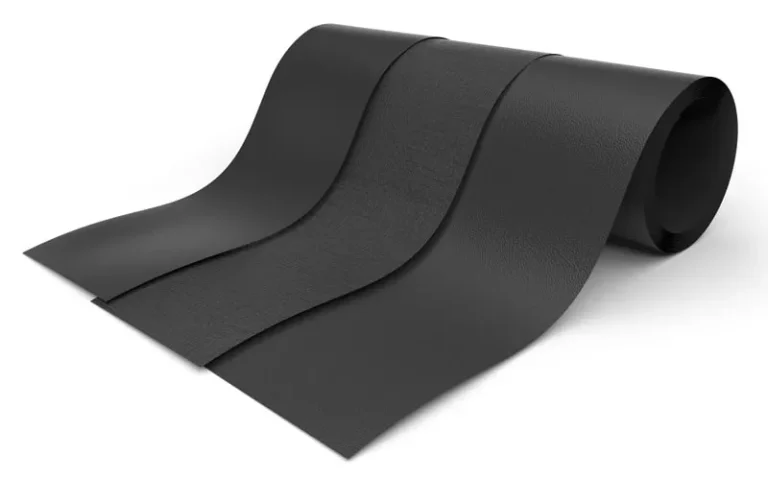
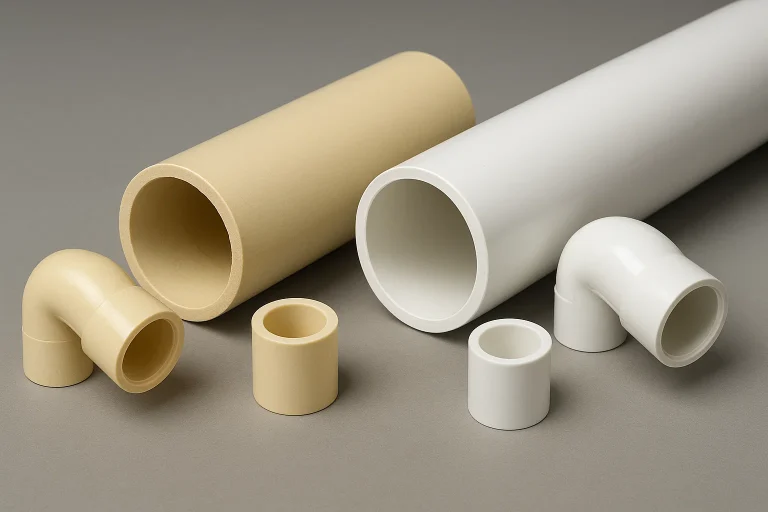
It is mainly used to produce PVC drainage pipes, PPR water supply pipes, plastic profiles (e.g., door and window frames), and plastic sheets (e.g., decorative panels). With its stable process, it ensures uniform wall thickness and high dimensional accuracy of products, meeting the requirements for durability and standardization in the construction materials industry.
Packaging Industry
It can process PE heat-shrinkable films, PP packing straps, and plastic preforms (which are then blow-molded in subsequent processes). It can adjust the thickness and transparency of products according to packaging needs, making it suitable for packaging scenarios in the food, daily necessities, and other fields.
Electronics and Automotive Industries
In the electronics industry, it is used to produce cable sheaths (e.g., PVC cable insulation layers) to ensure the insulation performance of cables. In the automotive industry, it can manufacture small structural parts such as automotive weatherstrips and plastic buckles, meeting the requirements for temperature resistance and aging resistance of automotive components.