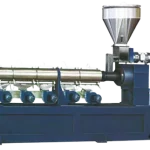
Welcome to ExtruderX Extrusion Machine Manufacturing Facility

Single Screw & Twin Screw Extruder Difference
In the plastic processing industry, choosing the wrong type of extruder can potentially trigger a chain of adverse consequences: production efficiency drops by 30% directly, raw material waste rate surges by 15%, and the equipment investment payback period may even be extended by a full year. Without a clear understanding of the core differences between Twin Screw Extruder and Single Screw Extruder, we will be unable to determine which model is more efficient and cost-effective when selecting extruders for ourselves or our clients.
As professionals with 10 years of experience in the extruder industry, we have witnessed Southeast Asian pipe distributors double their regional sales volume through a product portfolio centered on Single Screw Extruder supplemented by Twin Screw Extruder; we have also seen European modified plastic manufacturers experience a drop in product qualification rate from 95% to 70% due to the incorrect selection of Single Screw Extruder. These cases confirm a fact: the depth of understanding of model differences directly determines business competitiveness.
This article will systematically analyze the differences between Single Screw Extruder and Twin Screw Extruder from multiple dimensions, including equipment definition, structural principles, and application scenarios, providing professional references for your cooperation and model selection.
What is a Single Screw Extruder
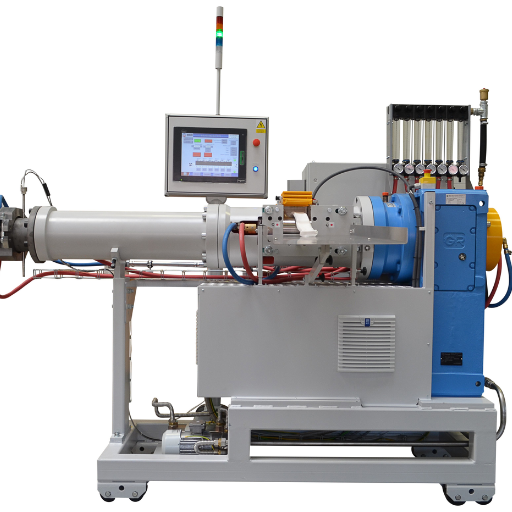
A Single Screw Extruder is a basic model in the field of plastic extrusion molding. It has become a standard equipment configuration for plastic processing enterprises worldwide due to its advantages of simple structure, stable operation, and easy maintenance. Its core feature is completing the entire process of material conveying, melting, plasticizing, and extrusion through the rotational movement of a single screw inside the barrel, which is widely suitable for low-to-medium complexity plastic processing needs.
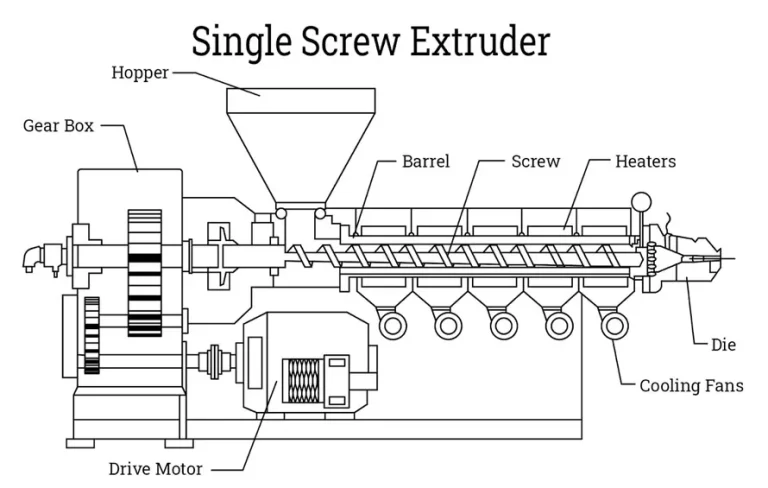
Key Components of Single Screw Extruders
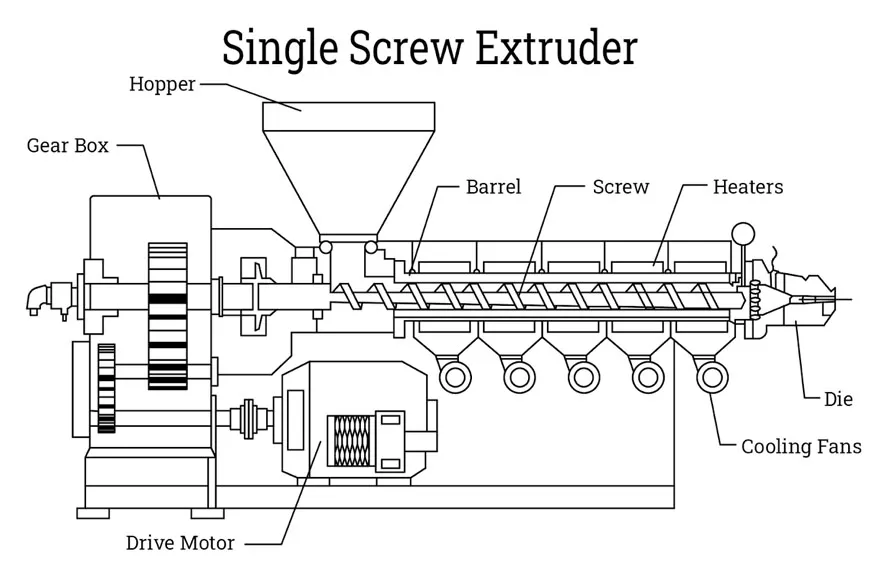
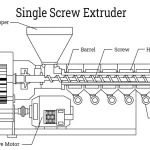
The core components of a Single Screw Extruder are designed around “efficient plasticization” and “stable conveying”, mainly including the following key parts:
- Hopper : As the material supply unit, it adopts a bridge-proof design to ensure uniform feeding of granular or powdered materials. Some models are equipped with heating or drying functions to adapt to moisture-absorbing materials;
- Screw : The core working component, available in different compression ratio designs such as gradual change and sudden change according to material characteristics. The common length-to-diameter ratio (L/D) ranges from 20:1 to 30:1, which directly affects plasticization efficiency;
- Barrel : Cooperates with the screw to realize material plasticization. It adopts a segmented heating (usually 3-5 segments) and cooling control system with a temperature control precision of up to ±1℃ to ensure uniform melting of materials;
- Drive System : Composed of a motor and a reducer, it provides stable torque output. Most small and medium-sized models adopt variable frequency speed regulation to achieve precise capacity adjustment;
- Head and Die : Customized according to product types, such as pipe dies, sheet dies, and film dies, to ensure the molding precision of extruded materials.
Working Principle of Single Screw Extruders
A Single Screw Extruder follows a “three-stage” working process, realizing material processing through the synergy of the screw and barrel:
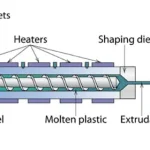
- Feeding and Conveying Stage: After materials enter the barrel from the hopper, the spiral groove of the screw conveys the materials forward, and the outer wall of the barrel heats up to preheat the materials initially;
- Melting and Plasticizing Stage: As the materials move towards the head, the compression ratio of the screw gradually increases. Combined with the heating of the barrel and the shear heat generated by the screw rotation, the materials gradually melt from a solid state into a uniform melt, while discharging internal air and volatile substances;
- Measuring and Extrusion Stage: The molten melt is pushed into the head by the screw, formed into products with specific cross-sections through the die, and finally pulled and cut by the traction device to complete processing.
The entire process relies on the synergy of the mechanical conveying force of the screw and heat transfer. It has a simple structure and stable operation, making it easy to realize continuous production.
Applications of Single Screw Extruders
With the core advantages of “high cost-effectiveness” and “easy operation”, Single Screw Extruders are widely used in conventional plastic processing scenarios, especially suitable for standardized and large-scale production needs. The main application areas include:
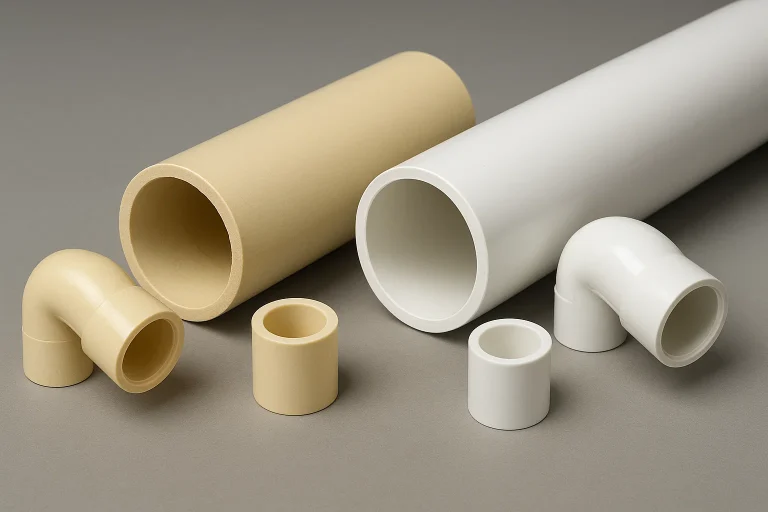
- General Plastic Product Production: Such as PE/PP pipes, PVC drainage pipes, HDPE water supply pipes, etc. It is suitable for pipe diameters ranging from φ20 to φ630mm, with a capacity of 50-500kg/h;
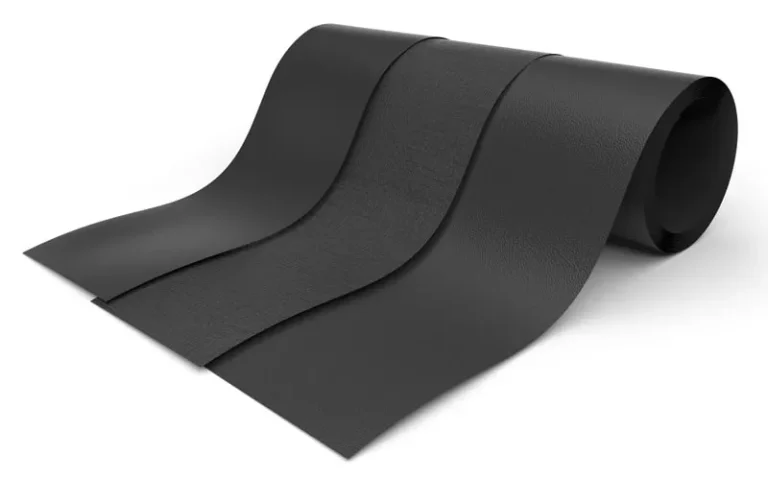
- Film and Sheet Processing: Used for the production of LDPE agricultural films, PP strapping tapes, PVC sheets, etc. Multi-specification switching can be achieved by replacing the die;
- Profile and Shaped Profile Extrusion: Such as PVC door and window profiles, aluminum-plastic composite profiles, etc. The sizing device can ensure product dimensional accuracy;
- Simple Modification and Pelletizing: Suitable for low-fill (≤20%) masterbatch pelletizing, ordinary plastic recycling pelletizing and other scenarios, with significant cost advantages.
What is a Twin Screw Extruder
A Twin Screw Extruder is an upgraded model developed for complex material processing and high-efficiency production needs. Through the coordinated work of two intermeshing or non-intermeshing screws, it significantly improves material mixing, shearing, and plasticizing capabilities. Its core advantages lie in its adaptability to high-viscosity, high-fill, and heat-sensitive materials, as well as its production characteristics of “low energy consumption and high output”, making it a core equipment in the mid-to-high-end plastic processing field.
Key Components of Twin Screw Extruders
The structural design of a Twin Screw Extruder focuses on “enhanced mixing” and “precision control”. Its core components are upgraded and optimized based on those of Single Screw Extruders, mainly including:
- Twin Screw Assembly: The core working unit, divided into two types: co-rotating and counter-rotating. The screws adopt a modular design (such as conveying section, mixing section, shearing section), which can be combined and matched according to material requirements. The length-to-diameter ratio ranges from 28:1 to 48:1;
- Barrel: Adopts a modular segmented structure, with each segment equipped with an independent heating and cooling system. The temperature control precision reaches ±0.5℃, and some models adopt wear-resistant coatings to extend service life;
- Feeding System: Equipped with a dual feeding port or a loss-in-weight feeder, which can realize precise proportioning and mixing of multiple materials with a feeding precision of up to ±0.2%, adapting to multi-component material processing;
- Transmission System: Adopts a high-precision gearbox to ensure the synchronous operation of the two screws. The transmitted torque is 30%-50% higher than that of Single Screw Extruders, adapting to high-load operation;
- Ventilation System: Equipped with 1-3 vacuum vents to efficiently discharge moisture, volatile substances, and low-molecular impurities in materials, improving melt purity.
Working Principle of Twin Screw Extruders
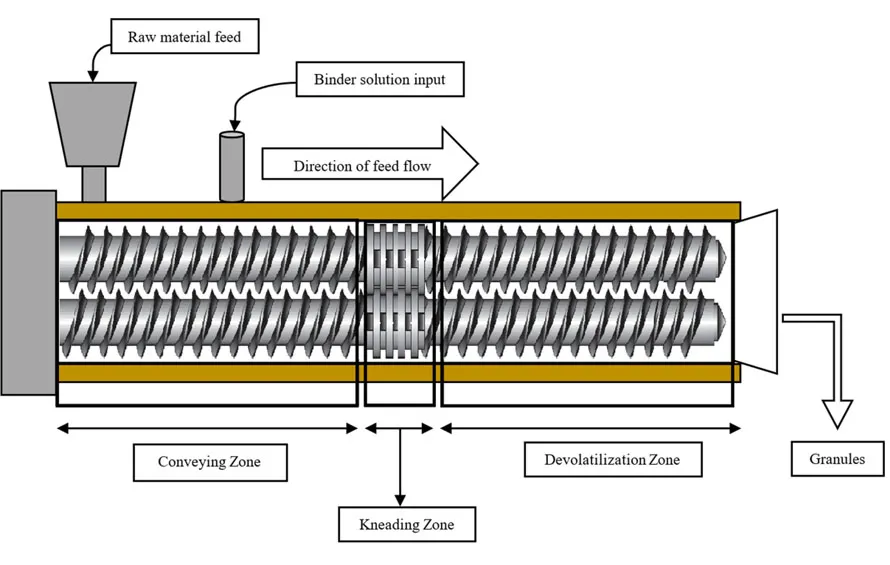
The working process of a Twin Screw Extruder is based on a “synergistic meshing” mechanism, realizing efficient material processing through the interaction of two screws. The core process includes:
- Precision Feeding: The main material and additives enter the barrel through different feeding ports respectively, and the meshing structure of the screws realizes preliminary mixing and conveying;
- High-Shear Plasticization: The mixing section and shearing section of the modular screw generate strong mechanical shear force. Combined with barrel heating, the materials are quickly melted and uniformly mixed, especially suitable for hard-to-plasticize materials;
- Ventilation and Metering: After the molten melt passes through the vacuum vent to discharge impurities, it enters the metering section and is accurately conveyed to the head for molding through the die. The entire process has a short material residence time (only 1/3-1/2 of that of Single Screw Extruders), reducing the risk of degradation of heat-sensitive materials;
- Continuous Discharging: The synergistic pushing of the two screws makes the melt pressure more stable, and the discharging uniformity is 20%-30% higher than that of Single Screw Extruders.
Applications of Twin Screw Extruders
With the advantages of “strong adaptability” and “high added value”, Twin Screw Extruders are mainly used in mid-to-high-end plastic processing scenarios, especially suitable for complex formula and special material processing. The core applications include:
- Modified Plastic Production: Such as glass fiber reinforced PA, flame-retardant PP, toughened PC, etc. It can realize high filling (≤60%) and multi-component mixing with uniform and stable modification effects;
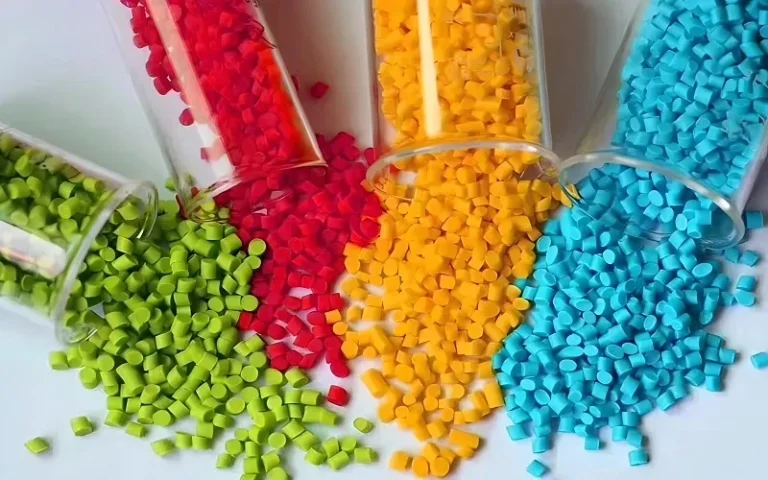
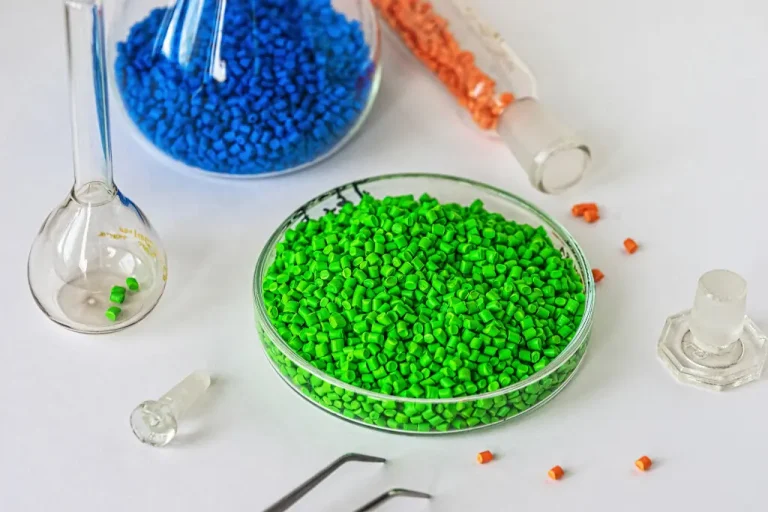
- Functional Masterbatch Pelletizing: Color masterbatches, filling masterbatches, degradable masterbatches, etc. Precise feeding and enhanced mixing ensure masterbatch dispersibility, and the coloring power of color masterbatches is 15%-20% higher than that produced by Single Screw Extruders;
- Special Material Processing: PVC, heat-sensitive ABS, biodegradable plastics, etc. The short residence time and precise temperature control can effectively avoid material degradation or discoloration;
- Composite Pipe and Profile Processing: Such as aluminum-plastic composite pipes, glass fiber reinforced profiles, etc. It can realize co-extrusion of multiple materials and improve the mechanical properties of products;
- High-Value Utilization of Recycled Materials: For heavily polluted or mixed material recycling, the high-shear and ventilation systems can remove impurities and improve the quality of recycled materials.
Comparison Between Single Screw Extruders and Twin Screw Extruders
Single Screw Extruders and Twin Screw Extruders are not about “superiority or inferiority” but “adaptability differences”. For different production needs, material characteristics, and market positioning, the two have different focuses in terms of technical parameters and application scenarios. The following is a comparative analysis from five core dimensions:
| Technical Specifications | Single Screw Extruder | Twin Screw Extruder |
|---|---|---|
| Screw Quantity & Rotation Direction | A single screw, unidirectional rotation | Two screws, co-rotating/counter-rotating |
| Length-to-Diameter Ratio (L/D) | 20:1—30:1, conventional fixed design | 28:1—48:1, modular and adjustable |
| Capacity Range | 50—500kg/h, mainly small to medium-sized | 100—2000kg/h, mainly medium to large-sized |
| Temperature Control Precision | ±1°C, sectioned heating | ±0.5°C, modular precise temperature control |
| Material Residence Time | 30—60s, relatively long | 10—30s, relatively short |
| Vacuum Vent Port | 1 optional port, moderate efficiency | 1—3 ports, high-efficiency venting |
Comparison of Application Scenario Adaptability
The difference in application scenarios between the two mainly stems from the differentiation of “processing complexity” and “capacity requirements”. The specific applicable scenarios are as follows:
- Single Screw Extruder Applicable Scenarios: Small and medium-sized standardized production, single material processing, conventional plastic products (such as ordinary pipes, films), cost-sensitive projects, initial configuration for start-ups or small processing plants;
- Twin Screw Extruder Applicable Scenarios: Large-scale continuous production, complex formula processing (such as high-fill modification, multi-component mixing), special material (heat-sensitive, high-viscosity) processing, high-value-added product (functional masterbatch, composite profile) production, mid-to-large processing enterprises or high-end market layout.
example, for the production of ordinary PVC drainage pipes with high demand in Southeast Asia, Single Screw Extruders have become the mainstream choice due to their high cost-effectiveness; while the demand for glass fiber reinforced automotive modified plastics in the European market is more suitable for the efficient processing capacity of Twin Screw Extruders.
Comparison of Cost and Benefit
The balance between cost and benefit is a core consideration for enterprise selection. The two have significant differences in the whole-life cycle cost:
- Initial Investment Cost: Single Screw Extruders have lower costs, 30%-50% lower than Twin Screw Extruders with the same capacity. For example, a Single Screw Extruder with a capacity of 500kg/h costs about 150,000-250,000 RMB, while a Twin Screw Extruder costs 300,000-500,000 RMB;
- Operating Cost: Single Screw Extruders have lower energy consumption (10%-20% lower than Twin Screw Extruders with the same capacity), but low efficiency when producing high-value-added products; although Twin Screw Extruders have slightly higher energy consumption, their capacity is significantly improved, and the energy consumption per unit product is reduced by 15%-25% instead;
- Benefit Return: Single Screw Extruders have a short investment payback period (about 6-12 months), suitable for conventional products with small profits but quick turnover; Twin Screw Extruders have a longer investment payback period (about 12-24 months), but the gross profit margin can be increased by 20%-40% when producing high-value-added products, with more significant long-term benefits.
Comparison of Operation and Maintenance Difficulty and Service Life
Operation and maintenance costs and equipment service life directly affect enterprise operation efficiency. The difference between the two is mainly reflected in structural complexity:
- Operation and Maintenance Difficulty: Single Screw Extruders have a simple structure, easy to disassemble and clean. Daily maintenance only requires regular inspection of screw wear and lubrication, which can be operated by ordinary technicians; Twin Screw Extruders have a more complex modular structure, requiring professionally trained personnel for disassembly and assembly. The maintenance cycle is shorter (once every 3-6 months), and the maintenance cost is 20%-30% higher than that of Single Screw Extruders;
- Service Life: Under conventional working conditions, both Single Screw and Twin Screw Extruders have a main engine service life of 10-15 years; however, for high-wear materials (such as glass fiber filling), the wear-resistant coating design of Twin Screw Extruders makes their screw service life 50%-80% longer than that of Single Screw Extruders, reducing equipment replacement costs.
Comparison of Material Adaptability
Material adaptability is the core difference between the two, which directly determines the application boundary of the equipment. The specific applicable materials are as follows:
| Material Type | Single Screw Extruder Compatibility | Single Screw Notes | Twin Screw Extruder Compatibility | Twin Screw Notes |
|---|---|---|---|---|
| Commodity Thermoplastics (PE/PP/PS) | Excellent | Ideal for stable, high-volume production | Excellent | High efficiency with variable feed rates |
| Heat-Sensitive Plastics (PVC/ABS/PC) | Limited | Prone to degradation; needs precise 温控 | Excellent | Short residence time minimizes degradation |
| High-Filled Materials (Glass Fiber/Carbon Black Filled) | Poor | Uneven mixing; rapid screw/barrel wear | Excellent | Intensive shear mixing; wear-resistant design |
| Multi-Component Blends (Functional Masterbatches) | Fair | Average dispersibility of additives | Excellent | Precise proportioning; uniform component dispersion |
| Recycled Plastics (Contaminated/Impure Feedstock) | Poor | Hard to remove impurities; uneven plasticization | Good | Venting & shearing improve material purity |
Development Trends of Single Screw and Twin Screw Extruders
With the global plastic industry transforming towards “high efficiency, energy saving, environmental protection, and intelligence”, Single Screw and Twin Screw Extruders show differentiated upgrading trends, both pointing to the two core goals of “quality and efficiency improvement” and “environmental compliance”:
- Single Screw Extruders: Upgrade towards Precision and Energy Saving : Aiming at small and medium-sized production needs, the plasticization efficiency is improved by optimizing the screw structure (such as barrier screws), and IE4 high-efficiency motors are matched to reduce energy consumption; at the same time, intelligent temperature control systems and online monitoring modules are integrated to realize production process visualization, adapting to small-batch and multi-variety production needs.
- Twin Screw Extruders: Deepening Modularization and Intelligence: Adopt more flexible modular screw design to support quick component replacement to adapt to different materials; integrate Industry 4.0 technology to realize automatic adjustment and remote monitoring of parameters such as feeding, temperature control, and ventilation; develop low-energy-consumption gearboxes and new wear-resistant coatings to further reduce operation and maintenance costs and extend equipment service life.
- Common Trend: Environmental Protection and Customization: Both strengthen the processing adaptability to environmentally friendly materials such as biodegradable plastics and recycled plastics; provide customized machine design and parameter optimization services for the differentiated needs of different regional markets (such as high-end modified materials in Europe and conventional pipe materials in Southeast Asia) to improve market adaptability.
Collaborate to Explore the Most Suitable Model for Your Needs
As a Chinese manufacturer deeply engaged in the extruder field, we understand the needs of overseas distributors for “highly adaptable products” and “localized support”, as well as the attention of purchasing and technical personnel to “precise selection” and “service guarantee”. Based on this, we provide exclusive support plans for partners with different needs:
- For Overseas Distributors: We will provide detailed product manuals (including technical parameters and installation guides) and target regional market analysis reports (such as Southeast Asian PVC pipe market demand data and European modified plastic market trends), and offer highly competitive agency policies, including exclusive regional agency rights, marketing material support, and after-sales technical training. We sincerely invite you to become our global partner to jointly explore the overseas market.
- For Purchasing/Technical Personnel: Our senior technical team will provide free one-on-one selection plan consultation, customize the optimal machine configuration according to your material characteristics, capacity needs, and product specifications; at the same time, we provide free sample testing services to verify equipment performance through actual processing, ensuring that the machine is fully suitable for your production needs.
- Cooperation Email: [email protected]