Welcome to ExtruderX Extrusion Machine Manufacturing Facility


Learn About Co-Rotating and Counter-Rotating Twin Screw Extruders
Understanding co-rotating and counter-rotating twin-screw extruders is key to accurate equipment selection and improved production efficiency in the plastic, rubber, and other processing industries. This article will provide a detailed overview of their definitions, working principles, core differences, advantages, disadvantages, and applicable scenarios to help you address challenges in equipment selection and application.
What Are Co-Rotating and Counter-Rotating Twin-Screw Extruders?
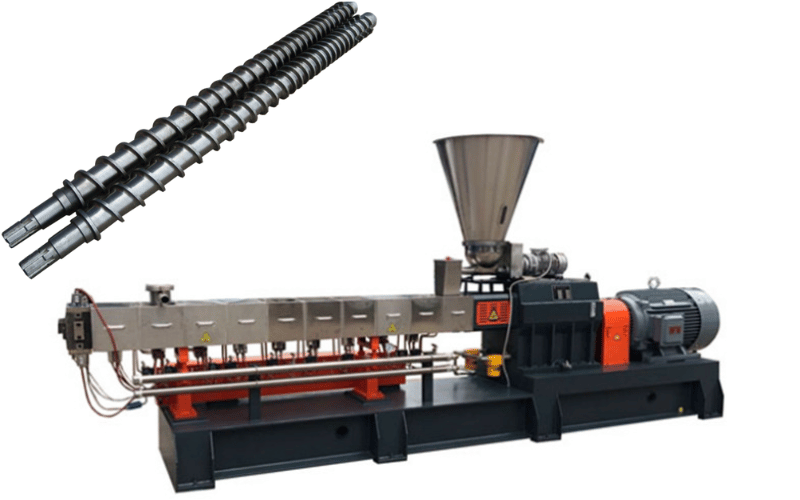
Twin-screw extruders are core equipment in polymer processing, primarily classified by the rotation direction of their two screws. Both co-rotating and counter-rotating twin-screw extruders consist of screws, barrels, drive systems, and feeding systems; their key difference lies in the relative rotation direction of the screws.
Co-Rotating Twin-Screw Extruders
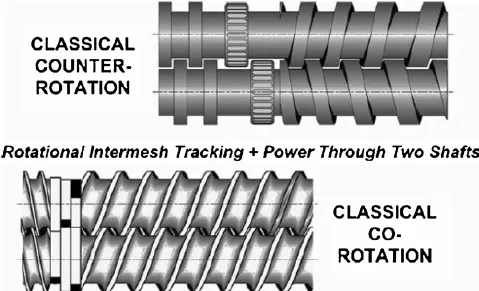
A co-rotating twin-screw extruder refers to one where the two screws rotate in the same direction (e.g., both clockwise or both counterclockwise), and most feature an intermeshing design. During operation, the two screws work together to move materials forward while completing material conveying, mixing, and melting.
Counter-Rotating Twin-Screw Extruders
A counter-rotating twin-screw extruder refers to one where the two screws rotate in opposite directions (one clockwise, the other counterclockwise), available in both intermeshing and non-intermeshing designs. Materials are moved forward by the thrust of the screws’ reverse rotation, resulting in a smoother and more stable conveying process.
Working Principles of Co-Rotating and Counter-Rotating Twin-Screw Extruders
Working Principle of Co-Rotating Twin-Screw Extruders
After materials enter the barrel through the feed inlet, they are captured by the screw flights and pushed forward as the two intermeshing screws rotate in the same direction. During conveyance, the intermeshing screws generate strong shearing and kneading effects, enabling rapid and thorough mixing and melting of solid materials. Finally, the molten materials are extruded and shaped through the die, making it suitable for applications requiring high mixing uniformity.
Working Principle of Counter-Rotating Twin-Screw Extruders
After materials enter the barrel, they are moved forward by the thrust of the two counter-rotating screws. Unlike co-rotating models, counter-rotating screws exert weaker shearing force on materials; material conveyance is primarily based on “positive displacement,” offering greater stability. Material mixing mainly relies on the design of the screw flights and the material’s own flow, resulting in a relatively gentle melting rate—ideal for processing shear-sensitive materials.
Differences Between Co-Rotating and Counter-Rotating Twin-Screw Extruders
1.Rotation and Intermeshing Characteristics
Co-rotating models: The two screws rotate in the same direction, mainly featuring an intermeshing design with screw flights that closely interlock.
Counter-rotating models: The screws rotate in opposite directions, available in both intermeshing and non-intermeshing designs; intermeshing counter-rotating models have smaller screw clearance, offering superior conveying stability.
2.Shearing and Mixing Capabilities
Co-rotating models: The intermeshing process generates strong shear and high kneading forces, enabling rapid material melting and high mixing uniformity.
Counter-rotating models: They exert gentle shear force and have weaker mixing intensity, prioritizing stable material conveyance over high-intensity mixing.
3.Conveying Stability
Co-rotating models: Conveying efficiency is easily affected by material viscosity—conveying resistance for high-viscosity materials increases significantly.
Counter-rotating models: They possess distinct positive displacement conveying characteristics, ensuring stable conveying volume with minimal impact from fluctuations in material properties.
Advantages and Disadvantages of Co-Rotating and Counter-RotatingTwin-Screw Extruders

Co-Rotating Twin-Screw Extruders
Advantages
1.High Mixing Uniformity: The intermeshing co-rotating design delivers strong shearing and kneading effects, enabling precise mixing of multi-component materials with over 50% high-filler loading. It prevents agglomeration, making it suitable for high-end modified plastic processing.
2.Excellent Melting Efficiency and Capacity: Melting speed is 30% higher than that of counter-rotating models. With the same screw diameter, its capacity is 20%-50% greater, effectively reducing unit production costs.
3.Wide Application Range: It can process general-purpose plastics and engineering plastics, and is suitable for producing color masterbatches, biodegradable plastics, etc., meeting the needs of automotive, home appliance, and other industries.
Disadvantages
1.Limited Processing of Heat-Sensitive Materials: Strong shearing easily causes thermal degradation of materials like PVC and POM. Additional precision temperature control systems are required, increasing equipment investment and operational complexity.
2.High Energy Consumption and Maintenance Costs: It requires high motor power, and high shearing accelerates the wear of screws and barrels. Especially when processing glass fiber-filled materials, parts need frequent replacement, leading to high long-term costs.
3.Conveying Stability Highly Affected by Materials: Fluctuations in material viscosity easily cause instability in feeding and extrusion volume. Frequent adjustments to process parameters are needed, requiring high skills from operators.
Applications of Co-Rotating and Counter-Rotating Twin-Screw Extruders
Application Scenarios of Co-Rotating Twin-Screw Extruders
- Plastic Modification: Covers PP/PE calcium carbonate-filled modification, talc-filled modification, and glass fiber-reinforced modification. It is used to produce modified materials dedicated to automotive bumpers and reinforced materials for home appliance structural parts.
- Plastic Blending: Includes PC/ABS alloy blending, PP/EPDM elastomer blending, and PA/PP compatible blending. It is adapted for raw material processing of high-end electronic enclosures, automotive interior parts, and other products.
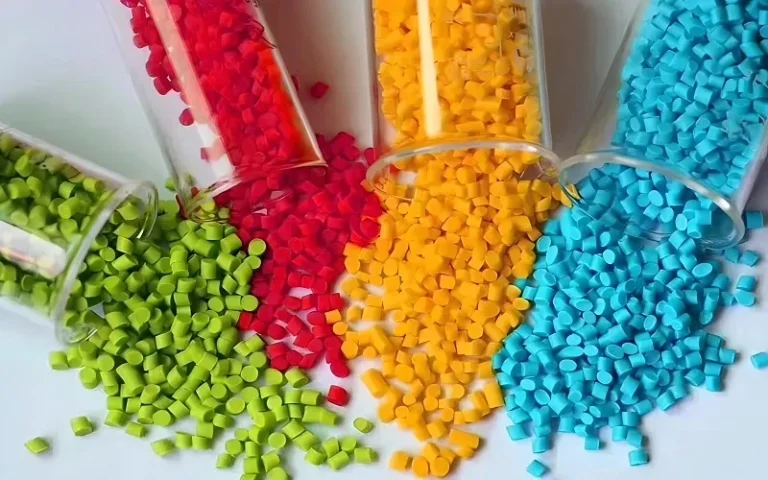
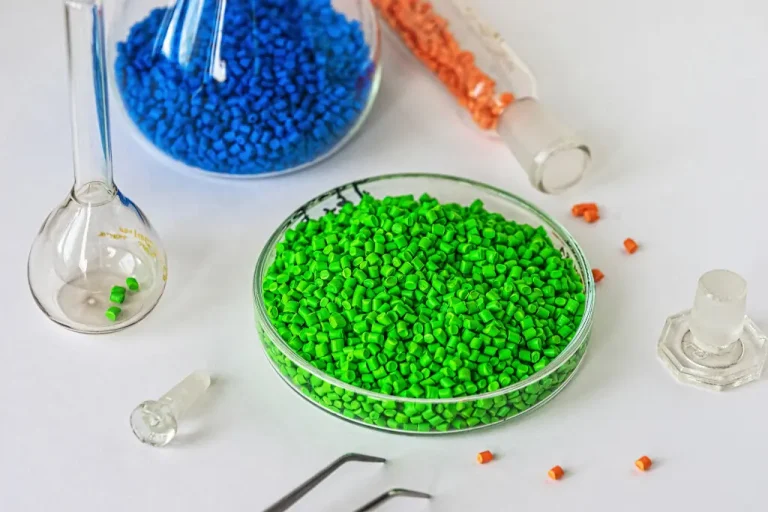
- Functional Masterbatch Production: Can process color masterbatches, flame-retardant masterbatches, antioxidant masterbatches, and antibacterial masterbatches, meeting the functional needs of plastic coloring, flame retardancy, and long-term stability.
- Special Plastic Processing: Suitable for extrusion granulation of biodegradable plastics such as PLA and PBAT, complying with production requirements for environmentally friendly packaging materials.
- High-Filler Composite Materials: Capable of processing PE pipe materials with calcium carbonate filling content over 50% and talc-filled PP sheet raw materials.
- End-Use Application Areas: Widely serves manufacturing industries such as automotive parts, home appliance enclosures, high-end packaging materials, and electronic/electrical accessories.
Application Scenarios of Counter-Rotating Twin-Screw Extruders
- PVC Product Production: Can process PVC drain pipes, PVC-U door and window profiles, PVC decorative sheets, and PVC foam boards, suitable for building water supply and drainage, interior decoration, and other fields.
- Elastomer and Rubber Processing: Can produce TPR/TPU elastic granules, rubber additive granulation, and EVA hot-melt adhesive granules, used in daily necessities seals, shoe materials, packaging hot-melt adhesives, and other products.
- Heat-Sensitive Material Processing: Adapted for processing heat-sensitive engineering plastics such as low-temperature melting processing of PA66 and modified processing of POM, avoiding material degradation that affects product performance.
- Special-Field Packaging: Can process food-contact grade PP packaging film raw materials and high-transparency PVC granules for pharmaceutical packaging, complying with hygiene standards in the food and pharmaceutical industries.
- End-Use Application Areas: Mainly serves manufacturing industries such as construction materials, medical consumables, daily necessities, and power cable sheaths.