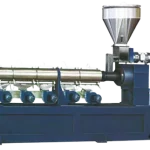
Welcome to ExtruderX Extrusion Machine Manufacturing Facility


Principles & Applications of Co-Rotating Twin Screw Extruder
In industrial sectors such as rubber and plastic processing and new material preparation, the co-rotating twin-screw extruder has become a core piece of equipment due to its advantages in high-efficiency mixing and stable processing. Understanding its principles, components, and applications helps enterprises achieve accurate equipment selection and improve production efficiency, while also providing technical support for distributors to address end-user needs. This article will systematically break down its core principles, key components, application scenarios, and other key aspects.
Core Principle of the Co-Rotating Twin-Screw Extruder

The core principle of the co-rotating twin-screw extruder is to complete a series of processes—including material conveying, mixing, plasticization, devolatilization, and extrusion—within a closed barrel via two parallel screws rotating in the same direction. Unlike single-screw extruders, which rely on friction between materials and the barrel for conveying, co-rotating twin-screw extruders primarily use positive thrust generated by the intermeshing of the two screws to propel materials forward. The shearing and mixing space formed in the intermeshing area enables more uniform dispersion and plasticization of materials. The specific process is divided into the following four stages:
1.Feeding Stage: Materials enter the screw flights from the hopper and are forcibly conveyed forward as the screws rotate;
2.Compression & Plasticization Stage: As the screw flight depth gradually decreases, materials are subjected to extrusion, shearing, and heating, gradually becoming melted and plasticized;
3.Mixing & Homogenization Stage: Molten materials undergo uniform mixing of components and temperature homogenization under the shearing and stirring action of the intermeshing screws, while volatiles such as moisture and gas in the materials are discharged;
4.Metering & Extrusion Stage: Homogenized materials are pushed by the screws and extruded into shape through the die head, resulting in the desired product form.
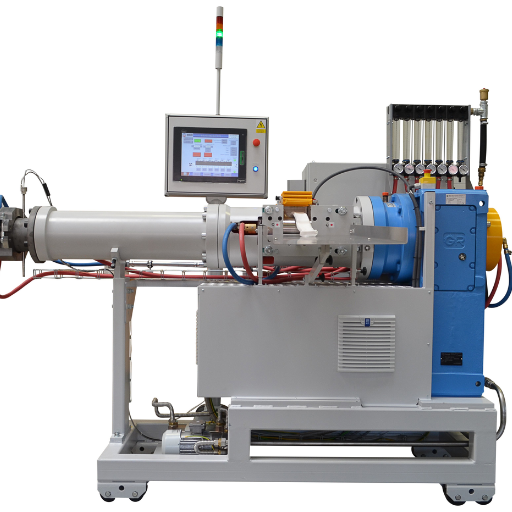
Introduction to Key Components and Their Functions of the Co-Rotating Twin-Screw Extruder

1.Screw: Core Working Component
The screw is the core component determining the extruder’s processing performance. It adopts a modular design, composed of functional modules such as feeding section screw blocks, compression section screw blocks, mixing section screw blocks, and metering section screw blocks. These modules differ in pitch, flight width, and flight depth, and can be flexibly combined according to material properties and processing requirements. Its main functions are to convey materials, generate shear force to realize material plasticization and mixing, and simultaneously press and push materials to the extruder head.
2.Barrel: Closed Space for Material Processing
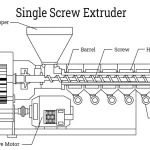
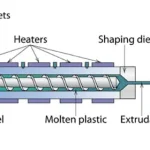
The barrel cooperates with the screw to form a closed processing chamber. Its inner wall is usually equipped with wear-resistant liners to withstand high temperatures, high pressures, and material wear. The outer part of the barrel is wrapped with heating devices (e.g., electric heating coils) and cooling devices (e.g., cooling water pipes), which are used to precisely control the processing temperature and ensure materials complete plasticization and mixing within an appropriate temperature range. In addition, the barrel is also equipped with devolatilization ports to discharge volatiles generated during material plasticization, thereby improving product quality.
3.Transmission System: Core of Power Output
The transmission system mainly consists of a motor, reducer, and coupling. Its core function is to provide stable power and appropriate rotational speed for screw rotation. The high-speed rotational power output by the motor is reduced by the reducer, then transmitted to the two screws through the coupling, ensuring the two screws rotate synchronously in the same direction. A high-quality transmission system can maintain stable screw speed and avoid affecting material processing quality due to speed fluctuations.
4.Feeding System: Guarantee for Stable Material Supply
The feeding system includes a hopper, feeder, and feed inlet, and is responsible for stably and uniformly conveying materials into the screw flights. The feeder usually adopts frequency conversion control, and the feeding speed can be adjusted according to processing requirements to ensure the feeding volume matches the screw’s processing capacity—this prevents barrel blockage caused by excessive feeding or reduced production efficiency due to insufficient feeding. For moisture-absorbing materials, some feeding systems are also equipped with drying devices to prevent moisture absorption from affecting processing quality.
5.Head and Die: Key Components for Shaping
The head is a transition component connecting the barrel and the die. Its internal flow channel design ensures materials are evenly distributed into the die. The die is designed with different cavity structures according to product requirements; materials are extruded and shaped through the die cavity to obtain products of different forms such as pipes, profiles, sheets, and granules. The precision of the head and die directly determines the dimensional accuracy and surface quality of the final product.
Applications of the Co-Rotating Twin-Screw Extruder
1.Rubber and Plastic Processing Industry
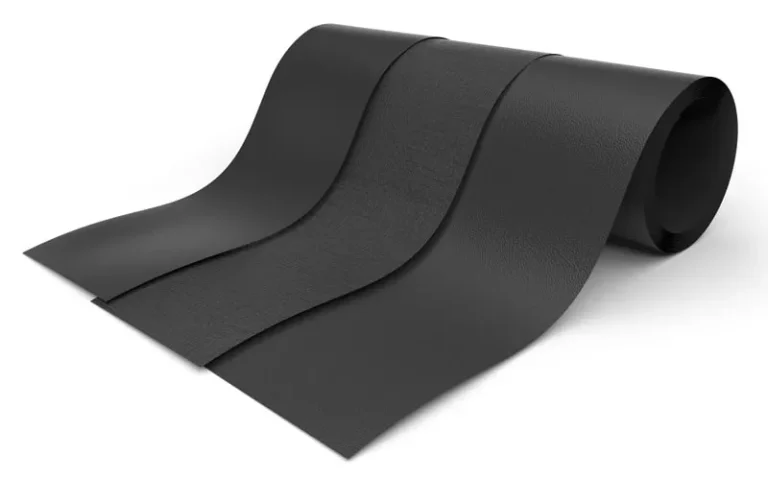
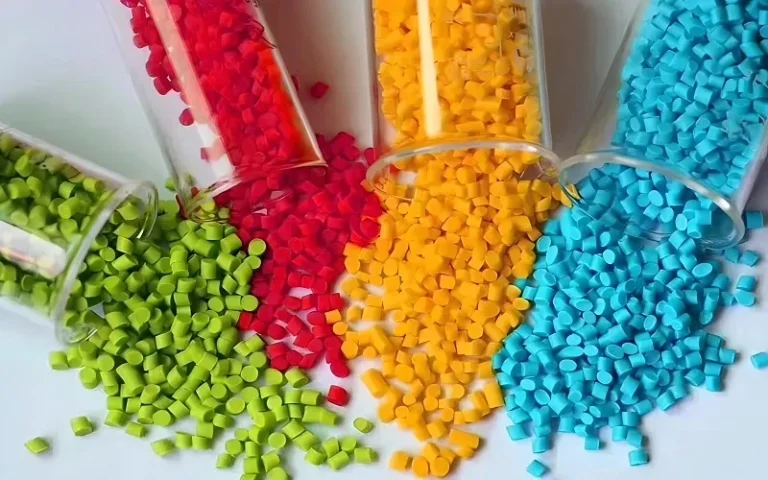
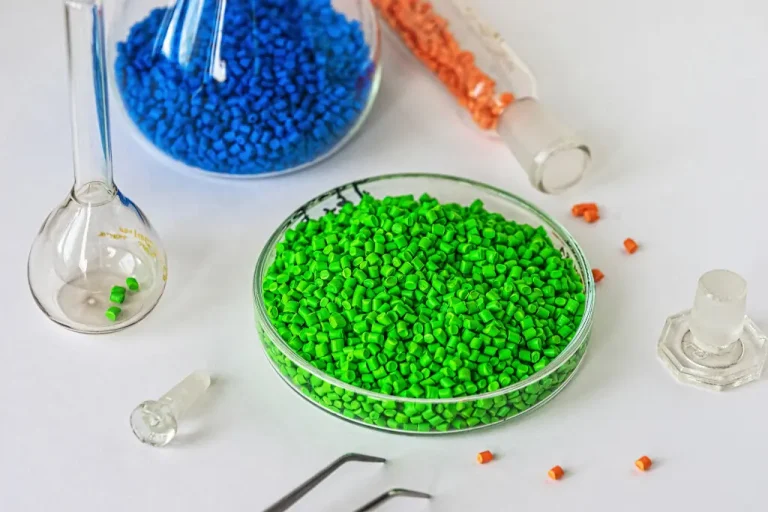
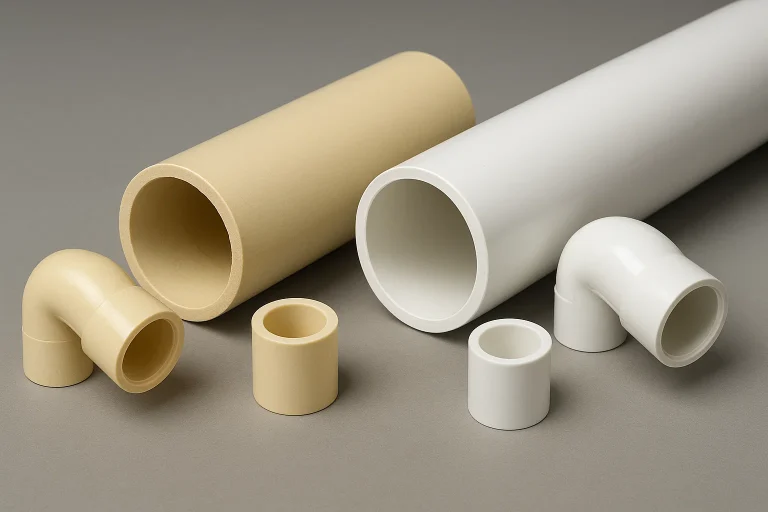
In the rubber and plastic processing field, the co-rotating twin-screw extruder is mainly used in processes such as plastic modification and rubber blending. For example, in plastic modification, it can mix base plastics such as polypropylene (PP) and polyethylene (PE) with modifiers like glass fiber, calcium carbonate, and flame retardants to produce modified plastics with special properties (e.g., high strength, high toughness, and flame retardancy). In rubber processing, it enables the blending of rubber and plastic to improve the wear resistance, aging resistance, and other properties of rubber products. Additionally, it can be used for the extrusion molding of rubber and plastic products, such as the production of plastic pipes, profiles, and sealing strips.
2.New Material Preparation Field
With the development of the new material industry, the co-rotating twin-screw extruder has been widely used in the preparation of biodegradable materials, composite materials, and functional polymer materials. In the field of biodegradable materials, it can blend biodegradable resins (e.g., polylactic acid (PLA) and polybutylene succinate (PBS)) with natural materials like starch and cellulose to produce fully biodegradable plastics. In the composite material field, it enables the preparation of fiber-reinforced composites and nanocomposites, enhancing the mechanical properties and functional characteristics of materials. In the functional polymer material field, it can produce materials with special functions, such as conductive plastics, thermally conductive plastics, and antibacterial plastics.
3.Food and Pharmaceutical Packaging Industry
In the food and pharmaceutical packaging industry, the co-rotating twin-screw extruder is mainly used for the production of food packaging films and pharmaceutical packaging materials. Due to its uniform material mixing and excellent plasticization effect during processing, it ensures the purity and stable performance of packaging materials, meeting the hygiene standards of the food and pharmaceutical industries. For instance, when producing high-barrier food packaging films, multi-layer co-extrusion technology can be used to mix and extrude plastic materials with different properties, enabling the packaging film to block oxygen, moisture, and other substances.
4.Feed and Building Materials Industries
In the feed industry, the co-rotating twin-screw extruder can be used for the extrusion puffing of feed. Through the action of high temperature and high pressure, feed raw materials are puffed to improve the palatability and digestibility of feed. In the building materials industry, it can be used for the production of thermal insulation materials and waterproof materials. For example, when producing extruded polystyrene (XPS) board insulation materials, the extruder mixes and extrudes polystyrene resin with a foaming agent to produce XPS board products with excellent thermal insulation performance.