Welcome to ExtruderX Extrusion Machine Manufacturing Facility

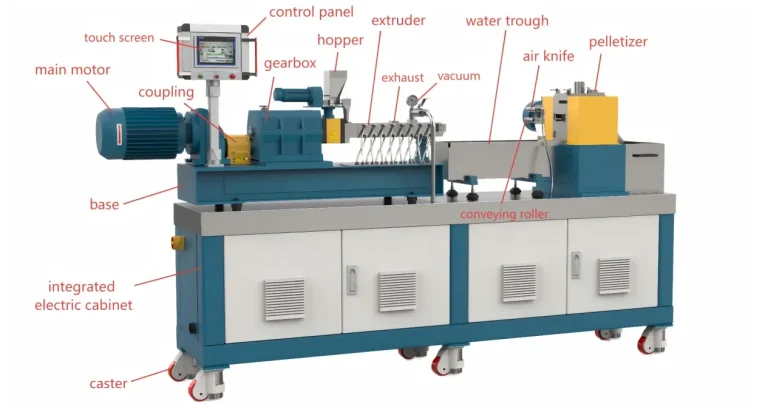
Laboratory Twin Screw Extruder: Complete Guide
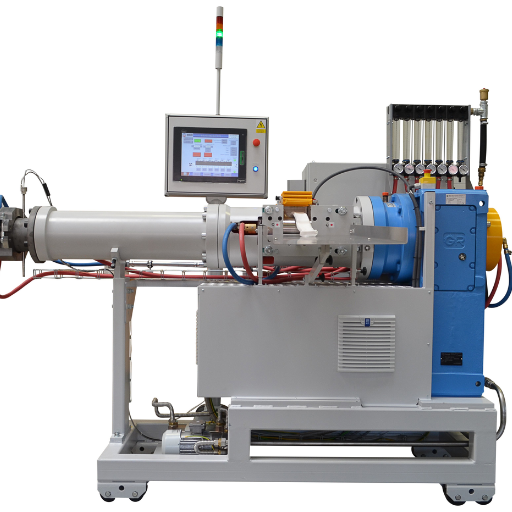
The lab twin screw extruder is a compact high precision material processing equipment specifically designed for research and development scenarios. Its core applications include small batch material modification formula testing process validation and new material research. Understanding its principles components selection criteria and standards can help researchers optimize experimental procedures and enable distributors to accurately meet end user demands. This article will cover aspects including equipment fundamentals technical key points and selection methods and provide comprehensive references for practitioners by incorporating practical problem solutions.
Introduction to Lab Twin Screw Extruder
The lab twin screw extruder features compact size and high precision as its core attributes. It is significantly smaller than industrial grade equipment making it ideal for the limited space available in laboratories. It is designed for small batch material processing ranging from gram scale to kilogram scale. Its core applications include formula development process parameter optimization and material compatibility testing in fields such as polymer materials biomaterials and modified plastics. It can accurately simulate the processing procedures of industrial extruders providing reliable data support for large scale production. It serves as an indispensable core piece of equipment for research institutions and corporate R&D centers.
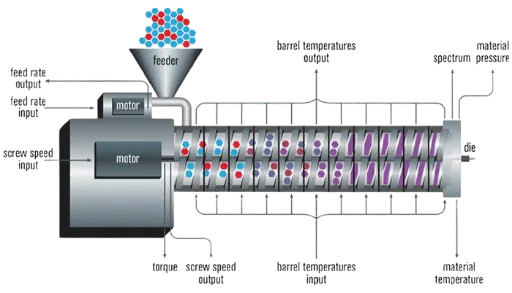
The lab twin screw extruder relies on the coordinated operation of intermeshing twin screws and a precision temperature control system. It is a core piece of equipment for achieving efficient plasticization and uniform mixing of small batch materials. It can accurately simulate industrial processes and provide repeatable experimental data support for research and development. The detailed working principle is as follows:
1.Feeding and Conveying: Materials enter the barrel through the micro feed hopper. The helical grooves of the two intermeshing screws run synchronously to push the materials forward steadily ensuring uniform and stable feeding without fluctuations.
2.Melting and Plasticization: The zoned temperature control system of the barrel controls temperature precisely. Combined with the shearing and compressing actions of the screws the solid materials are gradually melted to form a uniformly plasticized melt.
3.Dispersion and Mixing: The intermeshing structure of the twin screws generates strong shearing force which breaks up material agglomerates and fully integrates multiple components to achieve efficient dispersion and mixing.
4.Extrusion Molding: The plasticized melt is extruded and shaped through the small die head and mold. Parameters such as rotation speed temperature and pressure can be precisely adjusted throughout the process to ensure the repeatability of experimental data.
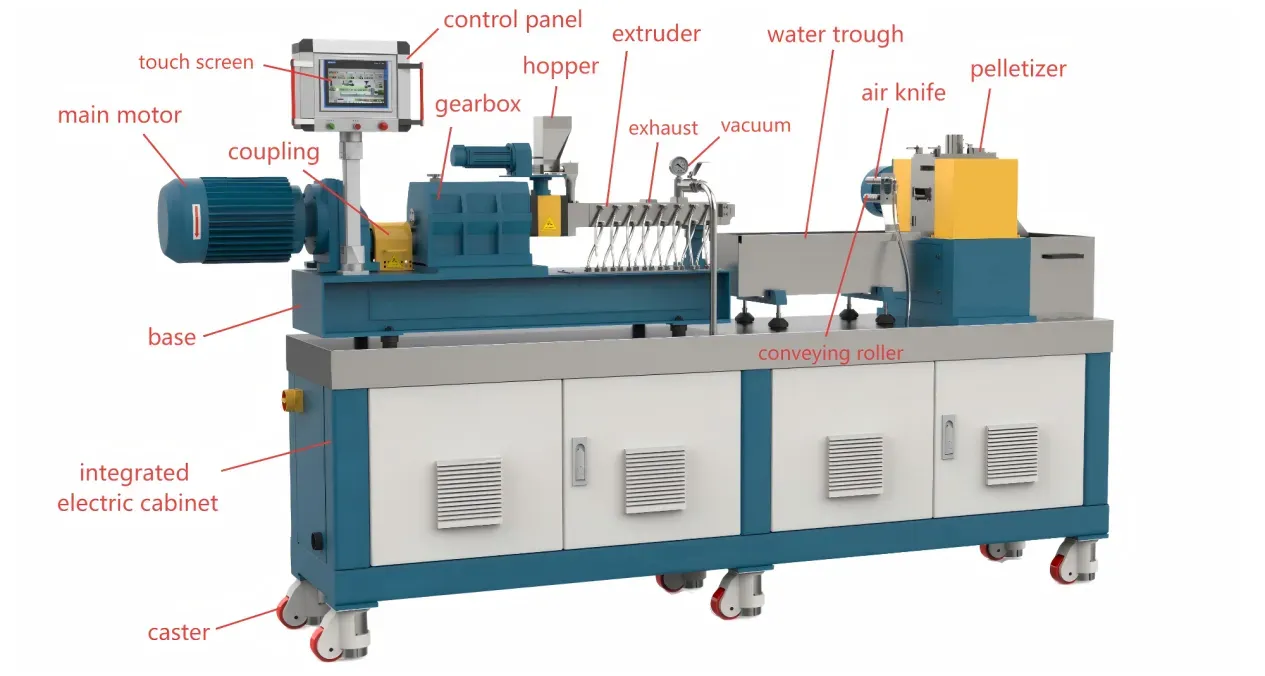
1.Screw: As the core mixing component, it is mostly made of wear resistant alloy. Its length to diameter ratio is tailored to meet the small batch processing needs of laboratories. The screw pitch and flight can be customized, and some models support quick disassembly and cleaning, facilitating experiments with different materials.
2.Barrel: Adopting a compact zoned design, it is equipped with a high precision temperature control module. The inner wall is coated with a wear resistant layer to ensure temperature uniformity and equipment durability, making it suitable for experimental scenarios with frequent start stop cycles.
3.Micro Feeding System: Designed as a volumetric screw type, it can precisely control the feeding speed of micro scale materials, preventing feeding fluctuations from affecting the accuracy of experimental data.
4.High Precision Temperature Control System: It includes electric heating and cooling units with a temperature control accuracy of up to ±0.5℃. It monitors and adjusts the temperature of the barrel, screw and die head in real time, making it suitable for processing temperature sensitive materials.
5.Transmission System: Equipped with a compact motor and a precision gearbox, it ensures synchronous and stable screw rotation speed. It has a wide speed adjustment range to meet the shearing requirements of different materials.
6.Data Acquisition Module: Available on some high end models, it can record parameters such as temperature, pressure and rotation speed in real time, facilitating the traceability and analysis of experimental data.
Material Compatibility and Processing Scope of Lab Twin Screw Extruder
Material Compatibility
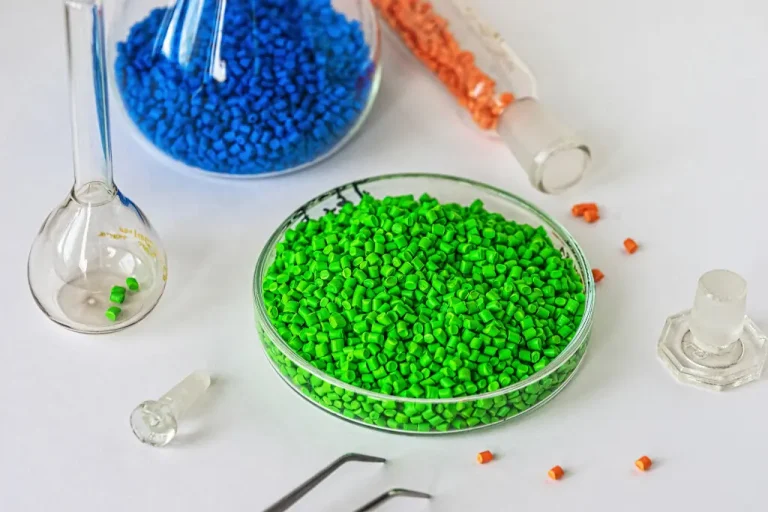
It is compatible with most polymer and modified materials including commodity plastics such as polyethylene polypropylene and polyvinyl chloride engineering plastics such as nylon and polycarbonate as well as special materials such as biodegradable materials composite materials nano fillers and color masterbatches. It can process powder granular and fibrous materials. By adjusting process parameters it can adapt to the processing of materials with different viscosity and hardness addressing issues such as material agglomeration and uneven plasticization during experiments.
Processing Scope
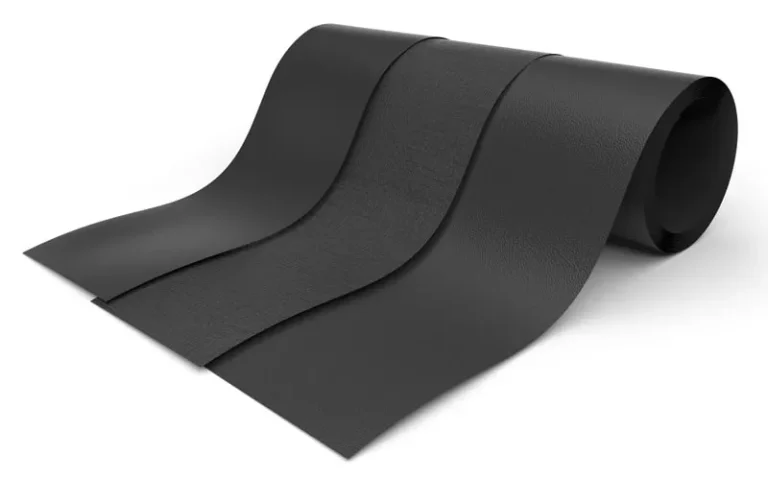
It is mainly used in small batch R&D scenarios covering formulation optimization such as filler ratio adjustment and additive incorporation testing process validation simulating industrial production parameters new material performance evaluation and material mixing effect testing. The processing output is usually 1 to 50 kilograms per hour. The extrusion specifications can be adjusted according to experimental needs to meet various molding requirements such as pellets films and strands. It is widely used in fields such as materials science polymer chemical engineering and biomedicine.
How to Select the Right Lab Twin Screw Extruder for R&D Needs
1.Clarify Experimental Requirements: Select the model based on material type viscosity and hardness output range and molding method. For example wear resistant screws are required for processing high hardness materials and compact models are preferred for micro scale experiments.
2.Focus on Core Parameters: Prioritize the screw length to diameter ratio ranging from 16:1 to 40:1 where a higher ratio delivers better mixing performance temperature control accuracy and speed adjustment range to ensure the accuracy of experimental data is met.
3.Emphasize Operational Flexibility: Choose models that are easy to disassemble and clean with intuitive parameter adjustment. These models are suitable for scenarios where materials are frequently changed and multiple groups of experiments are conducted alternately improving experimental efficiency.
4.Evaluate Data Acquisition Function: For scientific research scenarios it is recommended to select models with parameter recording and data export functions to facilitate experimental review and result transformation.
5.Match After sales Service and Customization: Prioritize manufacturers that can provide screw customization parts replacement and technical support to meet special experimental needs and reduce operation and maintenance costs.
Core Differences Between Lab Twin Screw Extruder and Industrial Grade Twin Screw Extruder
1.Capacity and Volume: Lab models offer a capacity of 1 to 50 kilograms per hour. They are compact and suitable for limited laboratory space. Industrial grade models have a capacity of over 50 kilograms per hour. They are large in size and designed for large scale production.
2.Precision and Control: Lab models focus on precise parameter control and data acquisition, featuring higher temperature and speed control accuracy and supporting fine tuning of multiple sets of parameters. Industrial grade models prioritize stable mass production, with control settings optimized for efficient manufacturing processes.
3.Functionality and Design: Lab models are detachable for easy cleaning and flexible customization, making them suitable for multi scenario experiments. Industrial grade models have a fixed structure, designed around continuous production, with an emphasis on durability and capacity optimization.
4.Application and Scenario: Lab models are used for research and development, testing and formula validation. Industrial grade models are applied in large batch production and directly integrated into production lines.
5.Cost and Maintenance: Lab models have a moderate unit price, with maintenance focusing on parts replacement and precision calibration. Industrial grade models come with a high unit price, and their maintenance prioritizes overall operational stability and efficient overhaul.
Frequently Asked Questions
Q: Is the lab twin screw extruder suitable for microscale experiments?
A: Yes it is. Mainstream models support microscale output below 1 kilogram per hour. Equipped with a precision feeding system, they can meet the requirements of gram scale experiments. Some models allow customization of smaller specification screws.
Q: How to prevent material residue from affecting subsequent experiments?
A: Choose models with detachable screws and barrels. After experiments, use cleaning materials for high temperature cleaning or disassemble components for manual cleaning to avoid cross contamination between different materials.
Q: Does temperature control accuracy have a significant impact on experimental results?
A: Yes it does. Temperature deviations can lead to uneven material plasticization and performance fluctuations. It is recommended to select models with a temperature control accuracy within ±0.5℃ to ensure the repeatability of experimental data.
Q: Can the equipment be adapted for processing biodegradable materials?
A: Yes it can. It needs to be equipped with special wear resistant screws and a precision temperature control system. Adjust the rotation speed and temperature to prevent material degradation. Some manufacturers can provide customized solutions.
Q: What is the typical service life of the screw?
A: Under normal operating conditions, the service life is 1 to 2 years, depending on material hardness. Processing materials with high filler loading and high hardness will accelerate screw wear. Regular calibration and replacement are recommended.
Q: Can it simulate the process parameters of industrial grade extruders?
A: Yes it can. By adjusting the screw rotation speed, length to diameter ratio and temperature control curve, it can accurately simulate industrial production processes and provide data support for large scale production.
Q: Does equipment operation require professional training?
A: Basic training is required. Operators only need to be familiar with parameter adjustment, cleaning procedures and safety specifications. Manufacturers usually provide operation manuals and technical guidance.
Q: What certifications are required for market access in North America?
A: Core certifications include UL electrical safety certification and CE certification. Meanwhile, the equipment must comply with local noise and environmental protection standards to ensure compliant use in laboratories.
Q: Which model is suitable for small batch color masterbatch research and development?
A: Choose models with a length to diameter ratio of 25:1 to 30:1 that support quick cleaning. Equipped with a high precision feeding system, they facilitate the adjustment of color ratios and prevent color cross contamination.
Q: How to handle sudden pressure spikes during equipment operation?
A: Immediately reduce the rotation speed and adjust the temperature. Troubleshoot issues such as mold blockage or excessive feeding speed. Restart the equipment only after clearing the fault to avoid component damage.