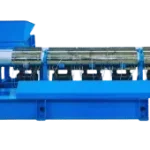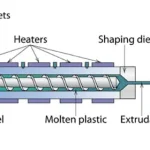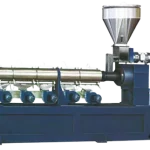
Welcome to ExtruderX Extrusion Machine Manufacturing Facility

Complete Guide to Filler Masterbatch Twin Screw Extruder
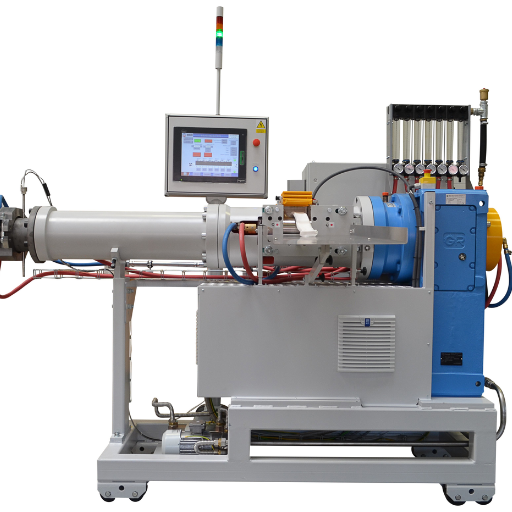
A core piece of equipment in the plastic processing industry, the twin-screw extruder for filler masterbatch is specifically designed for the mixing, plasticizing, and extrusion molding of filler masterbatch. It enables efficient dispersion and uniform compounding of materials, and is widely used in production scenarios such as modified plastics and packaging materials. Understanding the principles, functions, and selection methods of such equipment can help enterprises optimize production processes, improve product quality, and reduce operational costs. This article will expand on aspects including equipment fundamentals, working mechanisms, core components, and selection skills, and provide comprehensive references for practitioners by combining practical problem-solving.
Introduction to Twin Screw Extruder for Filler Masterbatch: Definition and Core Functions
The twin screw extruder for filler masterbatch is a specialized plastic processing equipment designed for filler masterbatch production. Its core function is to perform efficient mixing plasticizing shearing and extrusion molding of fillers and carrier resins providing uniform and stable blanks or pellets for subsequent filler masterbatch processing. With precise material control and robust mixing capability it has become an indispensable piece of equipment in high specification filler masterbatch production. Its core functions cover four key stages: material conveying melting and plasticizing dispersion and mixing and extrusion molding. It can adapt to production requirements of different filling ratios and material types balancing production efficiency and product stability.
Working Principle of Twin Screw Extruder for Filler Masterbatch: In-depth Analysis
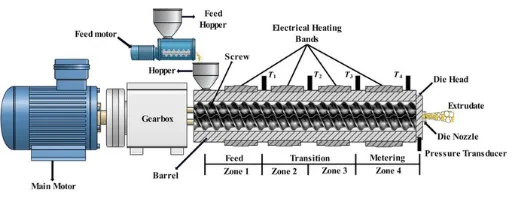
The twin screw extruder for filler masterbatch completes the entire process of material conveying mixing plasticizing and extrusion inside the barrel via two intermeshing or counter rotating screws. After materials enter the barrel through the feed hopper the helical grooves of the screws push them forward. Meanwhile with the heating of the barrel and the shearing and compressing action of the screws the solid materials are gradually melted and plasticized. The coordinated operation of the twin screws generates a powerful dispersive mixing effect ensuring that fillers such as calcium carbonate and talc powder are fully integrated with the carrier resin. Finally the mixture is extruded and shaped through the die head forming uniform filler masterbatch pellets or blanks. The entire process achieves continuous and highly efficient operation.
Core Components of Twin Screw Extruder for Filler Masterbatch
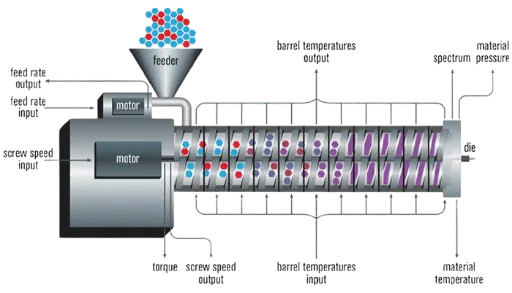
1.Screw: It is the core power transmission and mixing component. Functionally divided into conveying section, compression section and plasticizing section, it is mostly made of wear resistant alloy. The screw pitch and flight width can be customized according to material properties, which directly affects the mixing effect and extrusion efficiency.
2.Barrel: Working with the screw to realize material plasticization, it adopts a sectional heating and cooling design to ensure uniform and stable temperature inside the barrel. Its inner wall is coated with a wear resistant layer to extend service life.
3.Feeding System: Mostly a volumetric screw feeder, it can precisely control the material feeding speed to ensure uniform feeding, preventing product quality issues caused by feeding fluctuations.
4.Temperature Control System: It includes heating devices (either electric heating or oil heating) and cooling systems. It monitors and adjusts the temperature of the barrel, screw and die head in real time to meet the plasticization requirements of different materials.
5.Die Head and Mold: Designed according to product specifications, it is used to shape the plasticized material into specific forms. Die precision directly determines the dimensions and appearance of the final product.
6.Transmission System: It provides power for screw rotation, ensures synchronous rotation speed and stable torque of the two screws, and guarantees smooth operation of the equipment.
Twin Screw Extruder vs Single Screw Extruder for Filler Masterbatch
The core differences between the two lie in mixing performance, production efficiency and application scenarios, with detailed comparisons as follows:
1.Mixing Capability: With the intermeshing action of two screws, the twin screw extruder delivers stronger dispersion and shearing effects, enabling more uniform integration of fillers and resins. It is especially suitable for materials with high filler loading and poor mixability. The single screw extruder relies on material self friction for conveying, resulting in weaker mixing effects, and is only applicable for processing materials with low filler loading or simple formulations.
2.Production Efficiency: The twin screw extruder features stable feeding and fast plasticizing speed, yielding higher output per unit time, and it can handle materials with high viscosity. The single screw extruder has lower conveying efficiency and narrower adaptability to material viscosity.
3.Energy Consumption and Operation: The twin screw extruder has a complex structure with slightly higher initial investment and energy consumption, but it boasts a high level of automation, keeping later stage operation and maintenance costs controllable. The single screw extruder has a simple structure and low cost, making it suitable for small scale enterprises or simple production needs.
4.Application Scenarios: The twin screw extruder is the preferred choice for high end products such as filler masterbatch and modified plastics. The single screw extruder is mostly used in the production of basic products such as ordinary plastic pipes and films.
How to Select the Right Twin Screw Extruder for Filler Masterbatch for Your Business
1.Clarify Production Requirements: Select the equipment based on the filler loading, output volume and material properties of your target products such as filler type and resin viscosity. Intermeshing twin screws are required for materials with high filler loading, while large size barrel and screw are suitable for high output demands.
2.Focus on Core Parameters: Screw length to diameter ratio, speed range and temperature control accuracy are key indicators. A larger length to diameter ratio delivers better mixing performance, and a wider adjustable speed range allows adaptation to more types of materials. Temperature control accuracy should be kept within ±1℃ to ensure stable plasticization.
3.Evaluate Equipment Quality: Prioritize equipment with barrels and screws made of wear resistant materials. Check the stability of the transmission system to avoid malfunctions during long term operation. Meanwhile, pay attention to the equipment’s sealing performance to prevent material leakage.
4.Match Automation Level: According to the needs of your production process, choose equipment equipped with automatic feeding automatic temperature control and online detection functions to improve production efficiency and reduce manual intervention.
5.Value After sales Service and Compatibility: Select manufacturers that can provide customized services such as screw structure customization and timely after sales maintenance. At the same time, confirm that the equipment is compatible with your existing production lines to lower retrofitting costs.
Frequently Asked Questions
Q:What types of fillers are suitable for processing with the twin screw extruder for filler masterbatch?
A:It is suitable for most inorganic and organic fillers including calcium carbonate talc mica powder glass fiber and carbon black. It can break filler agglomeration through screw shearing action to achieve uniform dispersion. It is necessary to adjust screw speed and barrel temperature according to filler hardness. For fillers with high hardness it is recommended to use wear resistant screws.
Q:What should I do if material plasticization is uneven during equipment operation?
A:First check if the temperature control system is functioning properly and adjust the temperature of each barrel section to ensure the melting temperature meets the standard. Second optimize the feeding speed to avoid insufficient plasticization caused by excessive feeding speed. Finally check the screw wear condition. Severe wear will reduce the mixing effect and the screw needs to be replaced in a timely manner.
Q:How much higher is the energy consumption of twin screw extruders compared to single screw extruders?
A:Under the same output volume the energy consumption of twin screw extruders is 10% to 15% higher than that of single screw extruders. However when considering mixing effect and production efficiency the energy consumption per unit product is actually lower. Energy consumption can be further reduced by optimizing rotation speed and temperature control parameters. Usually the comprehensive energy consumption advantage of twin screw extruders is more obvious in high filler masterbatch production.
Q:What is the general service life of screws?
A:Under normal operating conditions the service life of screws is 1 to 3 years depending on material properties and operating specifications. High hardness fillers will accelerate screw wear. It is recommended to regularly check the surface wear of screws and avoid mixing metal impurities into materials to extend the service life.
Q:How to solve pressure fluctuations during extrusion?
A:Pressure fluctuations are mostly caused by uneven feeding mold blockage or unstable screw speed. First check the feeding system to ensure uniform feeding. Then clean the residual materials in the mold to avoid blockage. Finally calibrate the screw speed to ensure stable operation of the transmission system. If necessary check whether the pressure sensor is accurate.
Q:What site conditions are required for equipment installation?
A:Sufficient operating space needs to be reserved with at least 0.8 meters of clearance around the equipment for easy maintenance. The site should be flat and the floor load bearing capacity should meet the equipment weight requirements. At the same time a stable power supply and water supply system should be equipped with the power supply voltage fluctuation controlled within ±5% to meet the temperature control and transmission needs.
Q:What factors affect the output of the twin screw extruder for filler masterbatch?
A:The output is mainly affected by screw speed barrel temperature feeding volume material properties and mold specifications. Higher rotation speed and larger feeding volume will result in higher output but the corresponding plasticization temperature must be matched. Larger mold aperture will lead to higher output but excessively large aperture may affect product density so it is necessary to balance output and quality.
Q:What are the key points of daily equipment maintenance?
A:Check the operating status of the temperature control system and transmission system daily and clean the residual materials in the barrel and mold. Lubricate the transmission components weekly and check if the seals are leaking. Calibrate the temperature control accuracy and pressure sensor monthly and check the wear condition of the screw and barrel. Replace hydraulic oil and lubricating oil regularly to ensure stable operation of the equipment.
Q:What safety precautions should new operators pay attention to?
A:Familiarize yourself with the equipment operation manual before operation and wear protective equipment such as high temperature resistant gloves and safety goggles. Do not touch high temperature components such as screws and die heads while the equipment is running and do not open the barrel sealing cover. After shutdown wait for the barrel temperature to drop to room temperature before cleaning materials to avoid scalding.
Q:What causes abnormal noise in the equipment?
A:Common causes include friction between the screw and barrel loose parts in the transmission system and metal impurities mixed into the materials. Stop the equipment immediately for inspection check if the screw is deformed and if the screws of transmission components are loose. If there are metal impurities clean them thoroughly. Restart the equipment only after confirming there are no faults to avoid expanding the failure.