Welcome to ExtruderX Extrusion Machine Manufacturing Facility

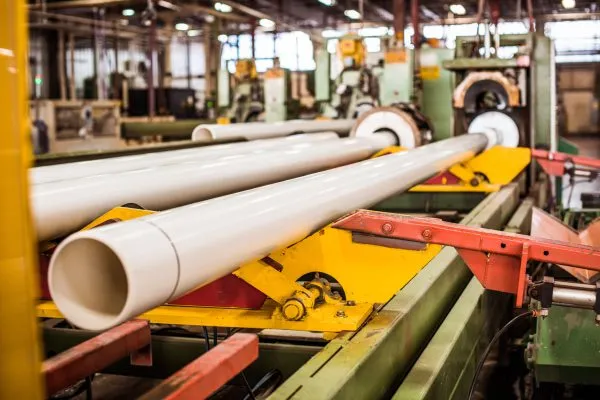
PVC Twin Screw Extruders : Complete Guide
PVC Twin-Screw Extruders are the core equipment in PVC product processing, achieving raw material plasticization and molding through the synergistic effect of the twin screws. This article will provide a detailed explanation of their definition, working principle, key applications, as well as advantages and disadvantages, helping users gain a comprehensive understanding of PVC Twin-Screw Extruders.
What Is a PVC Twin-Screw Extruder?
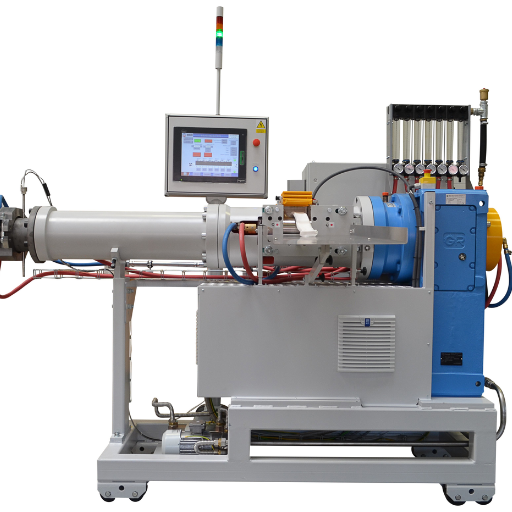
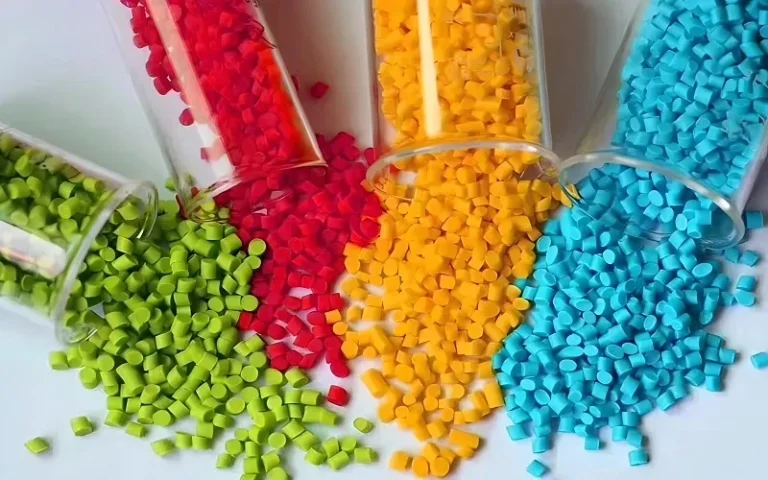
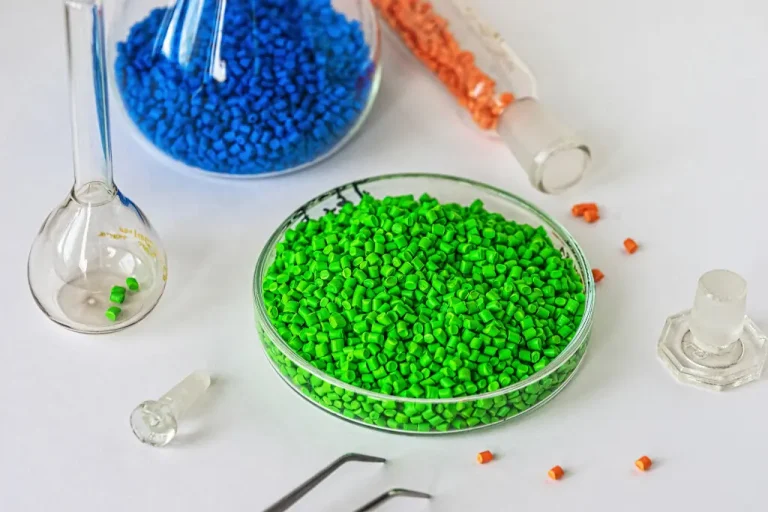
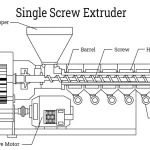
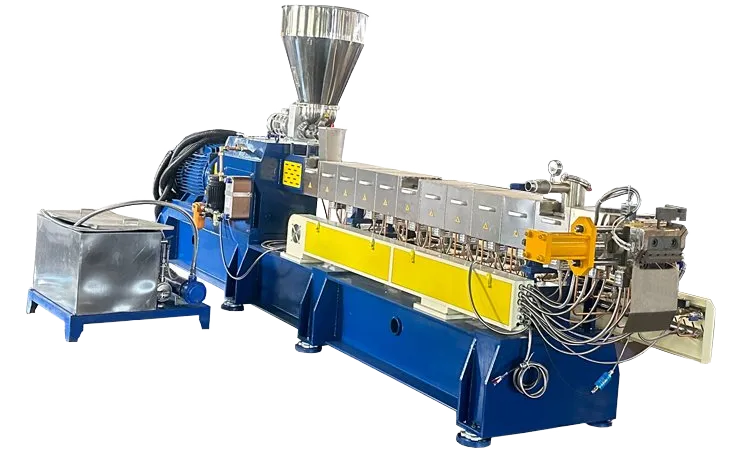
A PVC Twin-Screw Extruder is a plastic molding equipment specifically designed for processing polyvinyl chloride (PVC) raw materials. It is primarily composed of two intermeshing or counter-rotating screws, a barrel, and auxiliary systems such as drive and temperature control. Its core function is to process solid PVC raw materials (in powder or granular form) through extrusion, shearing, and plasticization, then continuously extrude them into PVC product blanks with specific cross-sectional shapes. It serves as a critical processing link connecting PVC raw materials to end products. Compared with single-screw extruders, it is more tailored for PVC processing, as it can adapt to the characteristics of PVC raw materials such as heat sensitivity and difficulty in plasticization, and is widely used in the large-scale production of various PVC products.
Core Working Principle of PVC Twin-Screw Extruders
1.Raw Material Conveying Stage
After PVC raw materials enter the barrel through the feed hopper, the two screws rotate synchronously driven by the drive system. Utilizing the friction between the screw flights and the inner wall of the barrel, as well as the volume change of the screw grooves, the raw materials are stably pushed from the feed end to the extrusion end. During this stage, the raw materials are initially compacted, and part of the air in the raw materials is discharged, preparing for subsequent plasticization.
2.Plasticization and Melting Stage
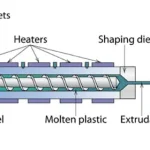
During the conveying process, the raw materials are subjected to conductive heat from the heating device outside the barrel, as well as shear friction heat between the screw and the barrel, and between the two screws. Under the action of dual heat sources, the solid PVC raw materials gradually soften and melt, forming a uniform molten material. The intermeshing structure of the twin screws generates stronger shearing force, ensuring uniform plasticization of PVC raw materials and effectively avoiding product defects caused by insufficient plasticization.
3.Extrusion Molding Stage
The uniformly plasticized molten PVC material is pushed to the end of the screws, and extruded and molded through the die cavity inside the machine head, forming continuous blanks (e.g., pipes, profiles) with the same cross-sectional shape as the die. In this stage, the pressure stability of the screws directly affects the dimensional accuracy of the products, and the temperature control system of the equipment must accurately control the material temperature to prevent the decomposition of PVC materials.
4.Cooling and Shaping Stage
The high-temperature blanks extruded from the die must immediately enter the cooling and shaping device (e.g., cooling water tank, vacuum shaping sleeve). Through cold water cooling or vacuum adsorption, the blanks are quickly solidified and shaped, eventually forming PVC finished products with stable dimensions and regular shapes, completing the entire extrusion processing process.
Key Applications of PVC Twin-Screw Extruders
1.PVC Pipe Production
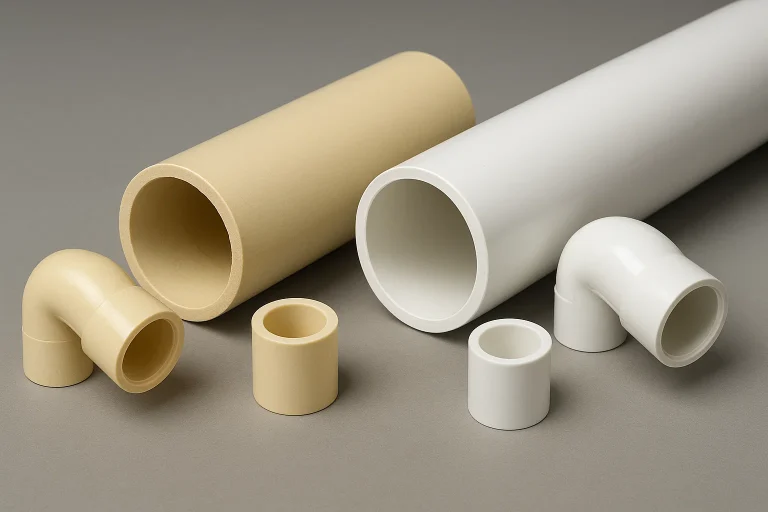
This is one of the core application areas for PVC twin-screw extruders, capable of manufacturing various PVC pipes such as water supply pipes, drainage pipes, conduit pipes, and gas pipes. The equipment can precisely control the wall thickness uniformity and outer diameter dimensions of the pipes, adapting to the production requirements of pipes with different pressure ratings and calibers. The products are widely used in municipal engineering, building water supply and drainage, power communication, and other industries.
2.PVC Profile and Special-Shaped Profile Production
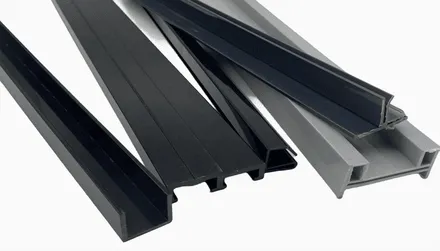
It is suitable for manufacturing PVC door and window profiles, decorative profiles, industrial special-shaped profiles, etc. By replacing different dies, profiles with complex cross-sectional shapes can be processed. The equipment’s high plasticization quality ensures that the profiles have a smooth surface and stable mechanical properties, meeting the application requirements of building decoration, industrial supporting, and other scenarios.
3.PVC Sheet and Film Production
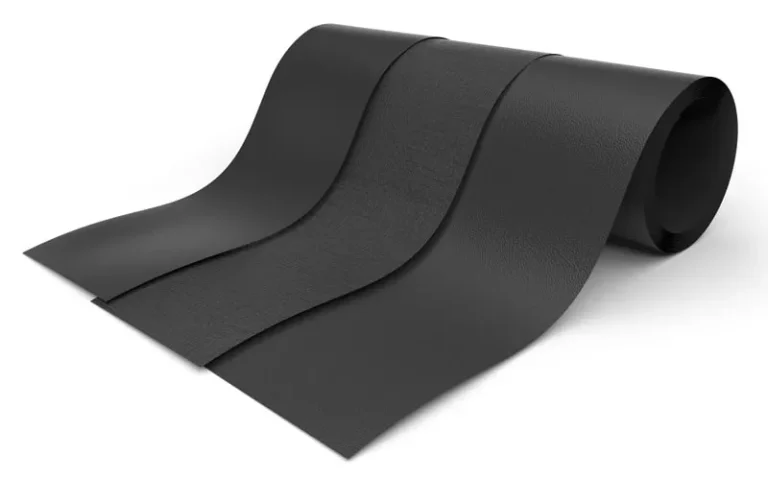
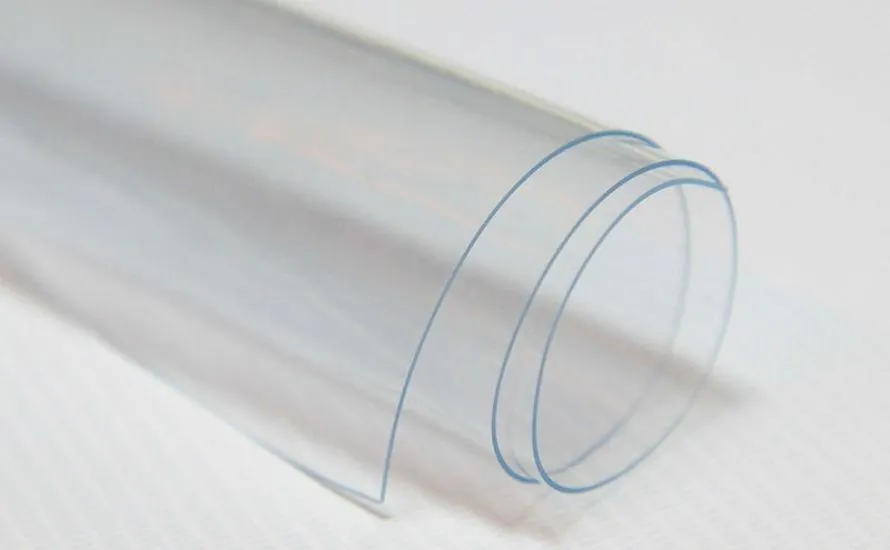
It can produce products such as PVC foam sheets, solid sheets, and decorative films. The stable extrusion performance of the twin-screw extruder ensures uniform thickness of the sheets and fine, uniform cells in foam products. These products are widely used in advertising production, building decoration, packaging, and other industries.
4.Production of Other PVC Products
It can also be used to produce PVC cable compounds, hoses, sealing strips, and other products. By adjusting formulas and dies, it can adapt to the processing of PVC products with different performance requirements, featuring strong application flexibility.
Advantages and Disadvantages of PVC Twin-Screw Extruders
Advantages
1.Excellent Plasticization Quality: The strong shearing effect of twin screws ensures more uniform plasticization of PVC raw materials, which effectively improves the mechanical properties and surface quality of products while reducing defects such as air bubbles and delamination.
2.High Production Efficiency: Compared with single-screw extruders, twin-screw extruders have stronger conveying capacity and faster extrusion speed, making them suitable for large-scale, high-volume production.
3.Wide Adaptability: It can adapt to PVC raw materials with different formulations (e.g., rigid PVC, flexible PVC, foamed PVC) and process various types of PVC products, covering rich application scenarios.
4.Precise Temperature Control: The equipment is equipped with a comprehensive temperature control system, which can accurately control the material temperature at each stage. This adapts to the processing needs of heat-sensitive PVC raw materials and reduces material decomposition.
Disadvantages
1.High Equipment Cost: Twin-screw extruders have a more complex structure and higher manufacturing process requirements, so their initial purchase cost is higher than that of single-screw extruders.
2.Difficult Maintenance: The disassembly and maintenance processes for core components (such as twin screws and barrels) are more cumbersome, requiring higher professional skills from maintenance personnel.
3.Relatively High Energy Consumption: Due to the complex transmission structure of twin screws and the need to generate stronger shearing force, the energy consumption of the equipment during operation is higher than that of single-screw extruders.
4.Large Floor Space: The overall volume of the equipment is relatively large, requiring more space in the production workshop.
Why Choose ExtruderX’s PVC Twin-Screw Extruders
- Leading Core Technology
Backed by years of extruder R&D experience, we have designed customized screw structures tailored to the processing characteristics of PVC—such as heat sensitivity and difficulty in plasticization—greatly improving the plasticization uniformity of raw materials. Equipped with a high-precision intelligent temperature control system, the temperature control error is limited to within ±1℃, ensuring production stability throughout the process. Compared with conventional equipment, the plasticization efficiency is increased by more than 20%, effectively reducing the product defect rate.
- Reliable and Durable Quality
Core components like screws and barrels are made of high-strength wear-resistant alloy materials, strengthened through professional nitriding treatment—their hardness and wear resistance far exceed industry standards. Before leaving the factory, each piece of equipment undergoes multiple rigorous tests, including a 72-hour no-load test run and load performance test. This ensures long-term stable operation after delivery, with a service life extended by more than 30% compared to the industry average.
- Customized Solutions + Full-Cycle Distributor Empowerment
Based on the specific needs of overseas distributors and end customers, we can customize a complete set of solutions—covering screw specifications, production capacity configuration, and mold structure—to adapt to PVC product production scenarios in different regions. Meanwhile, we provide full-cycle empowerment support for overseas distributors, including professional product training, on-site technical guidance, fast after-sales maintenance, and customized marketing materials. Combined with highly competitive pricing and rebate policies, this helps distributors easily expand the local market.
- Contact Us Now to Start a Win-Win Cooperation
If you want to learn more about product details, customized solutions, or distributor cooperation policies, please feel free to contact us through the following methods: send an email to [email protected] or fill out the form. Our professional team will connect with you within 12 hours to provide exclusive consulting services.