Welcome to ExtruderX Extrusion Machine Manufacturing Facility

What is a conical twin screw extruder?
In the plastics, rubber, and other processing industries, the conical twin screw extruder is a core equipment for ensuring efficient production. Its characteristics of high-efficiency plasticization and wide adaptability make it indispensable. This article will provide a comprehensive analysis of it from aspects such as definition, functions, key components, and working principles, and provide a detailed explanation of how to select a conical twin screw extruder that meets the requirements.
What Is a Conical Twin Screw Extruder? Basic Definition and Core Functions
What is a conical twin screw extruder?
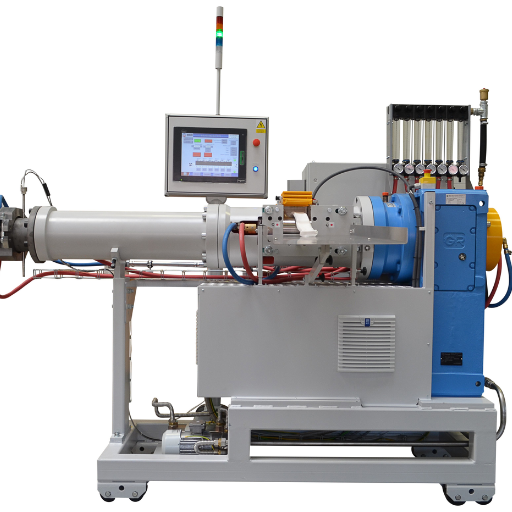
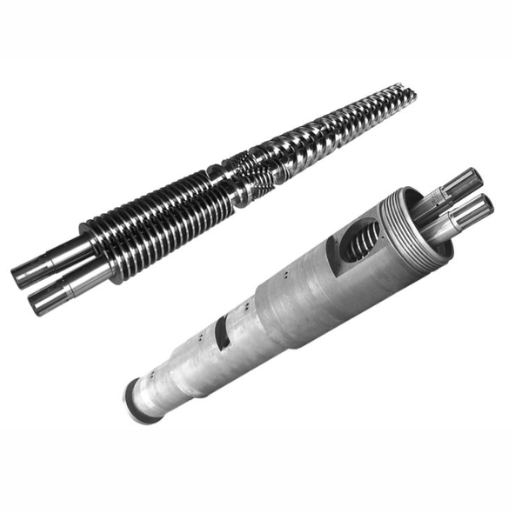
A conical twin screw extruder is a molding and processing equipment centered on intermeshing conical twin screws. It is mainly used to heat, melt, mix, and plasticize materials such as plastics, rubber, and food, then extrude and shape them through a mold. Its core functions include: first, stable material conveying, which relies on the screw’s spiral structure to ensure continuous feeding; second, uniform plasticization and mixing, which realizes material melting and component homogenization through the screw’s shearing action and heating system; third, precise extrusion molding, which pushes the plasticized material to the mold with stable pressure to produce products of various specifications.
Key Components of a Conical Twin Screw Extruder
- Conical twin screws: The core component. The two screws are conical and intermeshing with opposite spiral directions. They can accurately engage and push materials, directly affecting plasticization and extrusion efficiency.
- Barrel: Closely fits the conical screws, with special grooves on the inner wall to assist material plasticization. It also serves as a sealed cavity for material processing to ensure stable pressure.Feeding device: Responsible for stably conveying raw materials (such as blocks and granules) into the barrel. The feed inlet is designed to match the large end of the conical screws, reducing the risk of blockage.
- Heating and cooling system: Includes segmented heating devices and cooling pipelines. It can precisely control the processing temperature to prevent material degradation due to overheating or insufficient plasticization.
- Transmission system: Provides stable power for screw rotation, ensures uniform screw speed, and serves as the power support for the equipment’s continuous operation.
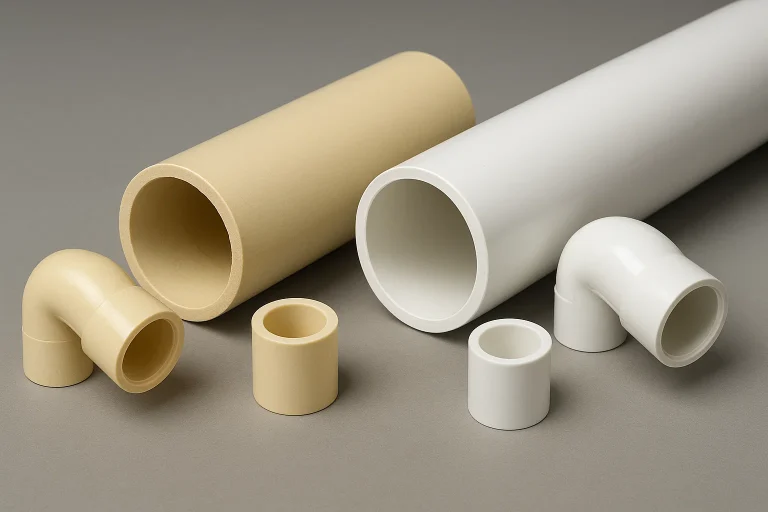
- Molding mold: Customized according to product requirements, it determines the shape and specification of the final product, such as pipe molds and profile molds.
Working Principle of a Conical Twin Screw Extruder
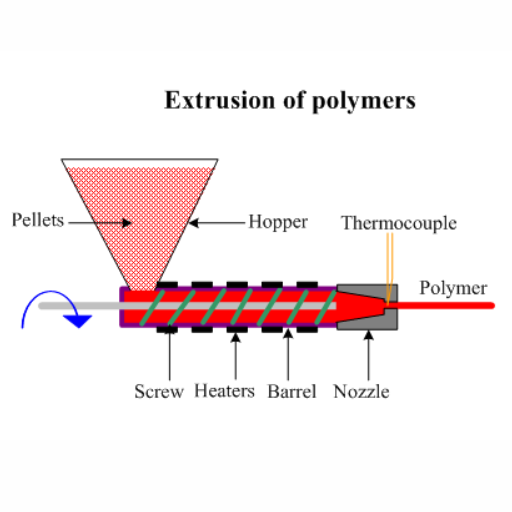
- Feeding Stage: Raw materials enter the barrel through the feeding device. The feed inlet at the large end of the conical screws can accommodate more materials. With the conveying force of the feeding device, smooth feeding is achieved, avoiding raw material accumulation and blockage.
Compression and Plasticization Stagethe feeding device, smooth feeding is achieved, avoiding raw material accumulation and blockage.
- Compression and Plasticization Stage: As the screw diameter gradually decreases, the space for materials in the barrel is continuously compressed. At the same time, under the temperature effect of the heating system and the shearing and kneading action of the screws, the raw materials gradually change from a solid state to a molten state.
- Mixing and Homogenization Stage:The intermeshing twin screws interact to fully shear and stir the molten material, ensuring uniform mixing of different components in the material, eliminating issues such as uneven composition and agglomeration, and improving material performance.
- Extrusion Molding Stage: The homogenized molten material is squeezed into the molding mold under the continuous pushing pressure of the screws. After shaping and cooling by the mold, the final product that meets the specifications is produced.
Core Advantages of Tapered Twin Screw Extruders
With its unique structural design, the tapered twin screw extruder has significant advantages in industrial production and has become the preferred equipment for many enterprises. The specific advantages are as follows:
- High plasticization efficiency: The intermeshing screws have strong shearing and mixing capabilities, enabling them to process high-viscosity and difficult-to-plasticize materials. Moreover, their plasticization uniformity is superior to that of single screw extruders.
- Stable operation and low energy consumption: The intermeshing transmission of the twin screws reduces energy loss. Compared with similar equipment, its energy consumption is 15%-25% lower. At the same time, it has low vibration and a low failure rate, ensuring continuous production.
- Wide adaptability range: It is compatible with a variety of materials such as plastics, rubber, food, and feed. It can also handle special raw materials such as filled and modified materials, meeting the needs of multiple industries.
- Easy operation and maintenance: The modular component design facilitates disassembly and maintenance, and the automatic parameter adjustment system reduces the difficulty of manual operation.
Core Advantages of Conical Twin Screw Extruders
With its unique structural design, the conical twin screw extruder has significant advantages in industrial production and has become the preferred equipment for many enterprises. The specific advantages are as follows:
- High plasticization efficiency: The intermeshing screws have strong shearing and mixing capabilities, enabling them to process high-viscosity and difficult-to-plasticize materials. Moreover, their plasticization uniformity is superior to that of single screw extruders.
- Stable operation and low energy consumption: The intermeshing transmission of the twin screws reduces energy loss. Compared with similar equipment, its energy consumption is 15%-25% lower. At the same time, it has low vibration and a low failure rate, ensuring continuous production.
- Wide adaptability range: It is compatible with a variety of materials such as plastics, rubber, food, and feed. It can also handle special raw materials such as filled and modified materials, meeting the needs of multiple industries.
- Easy operation and maintenance: The modular component design facilitates disassembly and maintenance, and the automatic parameter adjustment system reduces the difficulty of manual operation.
How to Choose a High-Quality Conical Twin Screw Extruder?
To select a high-quality conical twin screw extruder, you need to make a comprehensive judgment based on production needs to avoid selection errors that affect production efficiency. The specific selection key points are as follows:
- Clarify core parameters: Based on the type of processed materials (e.g., plastic viscosity, rubber hardness) and product specifications (e.g., pipe diameter, profile size), determine key parameters such as screw diameter, length-to-diameter ratio, and extrusion capacity to ensure the equipment matches production requirements.
- Inspect the quality of core components: Prioritize equipment where the screws and barrel are made of wear-resistant and corrosion-resistant alloy steel (e.g., 38CrMoAlA). This type of material ensures the equipment’s service life and processing accuracy.
- Evaluate the manufacturer’s strength: Choose manufacturers with independent R&D and production capabilities and a sound quality inspection system. At the same time, pay attention to whether they provide customized services to meet special production needs.
- Attach importance to after-sales service: High-quality manufacturers should provide end-to-end services such as installation and commissioning, operation training, and spare parts supply.
Additionally, you can verify the actual performance of the equipment through industry cases and customer reviews.