Welcome to ExtruderX Extrusion Machine Manufacturing Facility

Learn About Twin Screw Compounding Extruders
In the field of polymer processing and modified material production, twin screw compounding extruders are core equipment for enhancing material performance and ensuring production efficiency—their importance is self-evident. Gaining an in-depth understanding of them provides crucial support for enterprises in equipment selection and production capacity optimization. This article will systematically explain core content such as their definition and working principles, addressing industry professionals’ vague understanding and equipment selection confusion regarding this equipment with precision.
What is a twin screw compounding extruder?
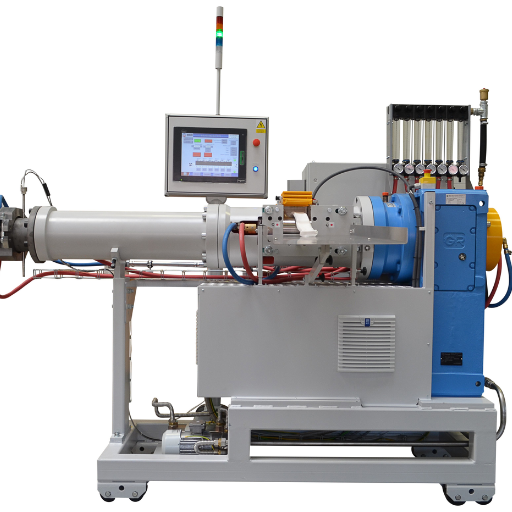
A twin screw compounding extruder is a high-efficiency polymer processing equipment that integrates material mixing, conveying, plasticizing, extrusion, and modification. Its core feature is two intermeshing or non-intermeshing screws; through the rotational movement of the screws and the cooperation of the barrel, it achieves uniform mixing and in-depth modification of multi-component materials, and finally extrudes and shapes them into materials or product blanks of specific forms. Compared with traditional single-screw equipment, it focuses more on the core demand of “compounding and modification” and is widely used in industrial scenarios that require improving material performance and optimizing component ratios. It is one of the key pieces of equipment in the modern polymer material processing field.
Core Working Principle of Twin Screw Compounding Extruders
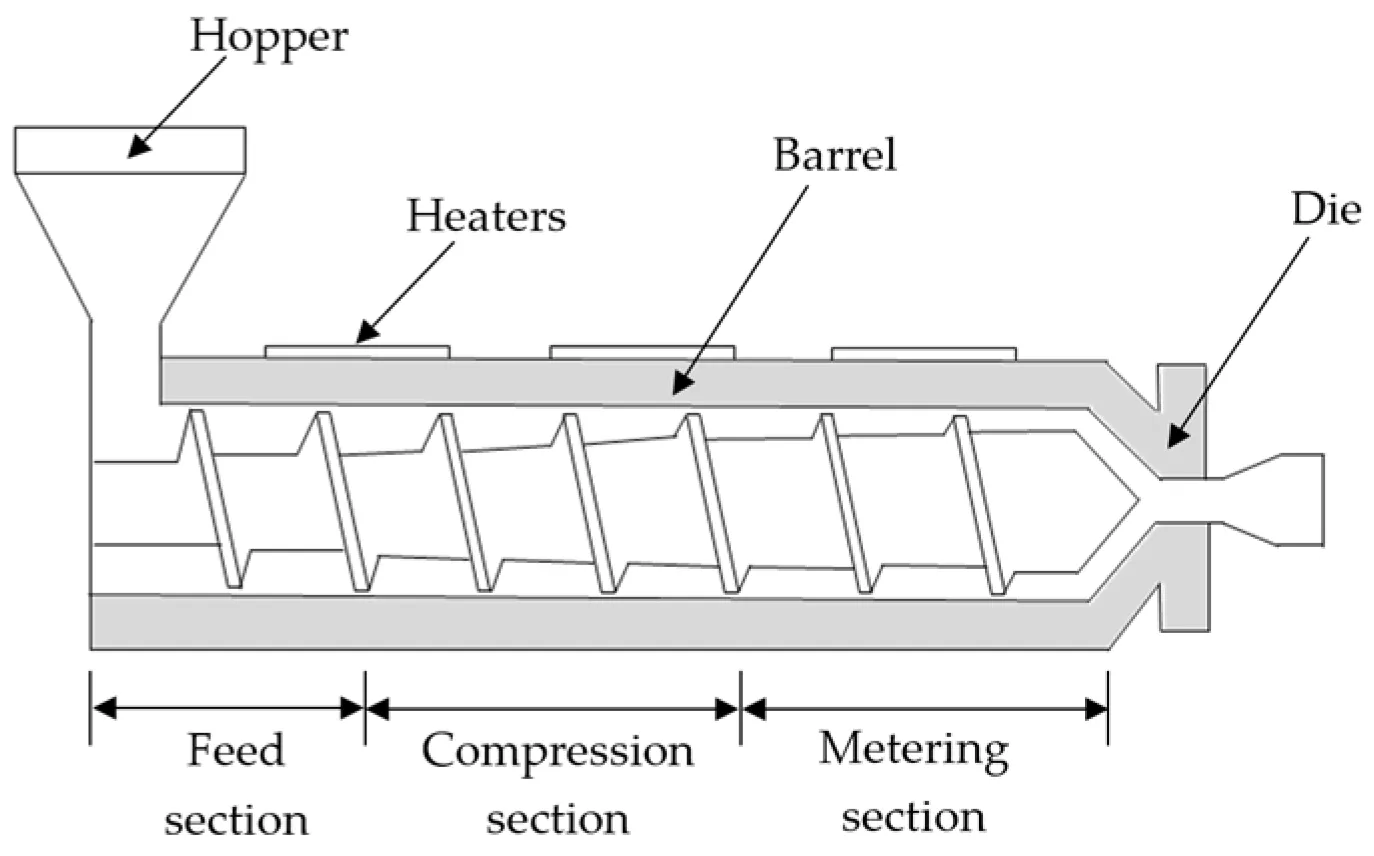
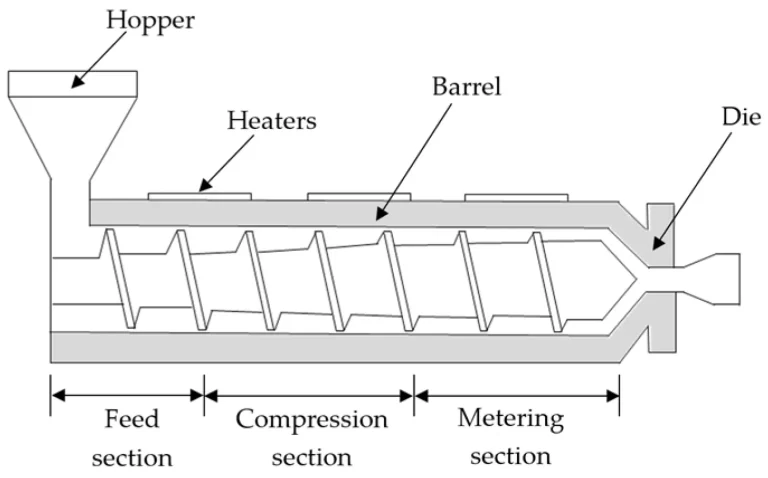
The core working principle of a twin screw compounding extruder lies in “intermeshing screw transmission + integrated multi-process collaborative operation”. Relying on the precise coordination of the two screws and the temperature control adjustment of the barrel, it achieves efficient full-process processing from raw material input to 成型 discharge. The detailed working principle and process are as follows:
- Feeding Stage: A quantitative feeding device (such as a loss-in-weight feeder) is used to accurately and stably convey multi-component raw materials—including resin, fillers, antioxidants, and color masterbatches—to the initial intermeshing area of the two screws according to the preset ratio. The key of this stage is “quantitative precision”, which prevents raw material ratio deviations from affecting the final product performance while ensuring feeding continuity to lay the foundation for subsequent processing.
- Conveying and Pre-compaction Stage: Driven by a motor, the screws rotate at high speed, and the loose raw materials fed in are conveyed forward along the barrel axis through the pushing force of the screw grooves. During this process, the raw materials are gradually pre-compacted under the extrusion of the screw threads, expelling the air between the raw material particles to reduce defects such as bubbles in the subsequent plasticization process. At the same time, the raw materials fully contact the inner wall of the barrel to prepare for heating and plasticization.
- Mixing and Shearing Stage: When the raw materials enter the intermeshing section of the screws, the core mixing process starts. The two intermeshing screws generate strong shearing force and stirring force; combined with special elements on the screws (such as kneading blocks and staggered threads), they break up agglomerated raw material particles, enabling uniform mixing of raw materials of different components at the micro level. For high-filler and high-viscosity raw materials, this stage can also break the entanglement between raw material molecules through shearing action, improving mixing uniformity and raw material dispersibility.
- Plasticization Stage: The plasticization process relies on a dual heating mode of “external heating + internal shear heat generation”. Heating devices (such as electric heating coils) are installed in different sections outside the barrel to precisely control the temperature of each section. At the same time, the raw materials generate internal frictional heat under the shearing and extrusion of the screws. The combined action of the two types of heat gradually melts the solid raw materials into a uniform and continuous melt. Strict temperature control is required at this stage to prevent raw material degradation due to overheating or incomplete plasticization due to insufficient temperature.
- Degassing and Extrusion Molding Stage: Some models are equipped with a degassing port in the middle section of the barrel. During the screw pushing process, residual air, low-molecular volatiles, etc., inside the molten melt are discharged through the degassing port to further improve melt purity. Finally, the fully mixed and plasticized melt is pushed to the die head under the continuous thrust of the screws, and extruded into shape through the specific cavity of the die. Eventually, product forms that meet requirements—such as granules, sheet blanks, and pipe blanks—are obtained, completing the entire processing process.
Throughout the working process, parameters such as screw speed, temperature of each barrel section, and feeding speed can be precisely adjusted to adapt to different raw material characteristics and product requirements. Its core advantage lies in the integrated operation mode of “conveying, mixing, and plasticizing simultaneously”, which significantly improves processing efficiency and product quality stability.
Core Components and Functions of Twin Screw Compounding Extruders
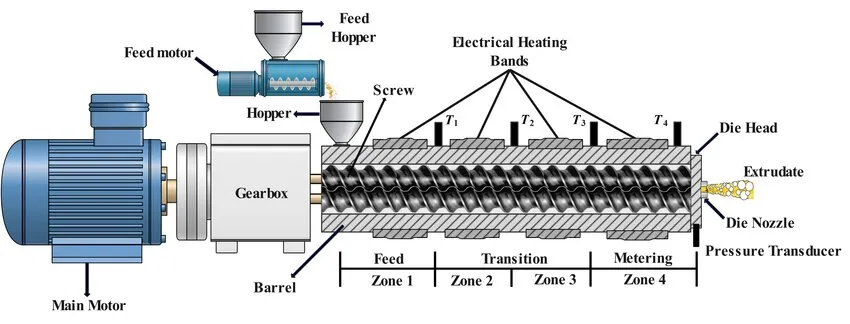
The stable operation and high-efficiency processing performance of a twin screw compounding extruder depend on the collaborative work of multiple core components. The key components and their specific functions are as follows:
1.Drive System
As the “power heart” of the equipment, it mainly consists of a motor, reducer, and coupling. Its core function is to precisely transmit the motor’s power to the screws. By adjusting the speed to control the screw rotation rate, it regulates material conveying speed, mixing intensity, and extrusion output—serving as the foundation for ensuring stable equipment processing.
2.Feeding System
Typically equipped with a quantitative feeder (e.g., loss-in-weight feeder), its function is to accurately and stably feed multiple materials into the barrel at a preset ratio. Precise feeding directly impacts the compositional uniformity of the final product, making it especially suitable for multi-component material compounding scenarios. It acts as the first line of defense for product quality.
3.Screw Assembly
As the “core execution component” of the twin screw compounding extruder, it is categorized into intermeshing (co-rotating/counter-rotating) and non-intermeshing types. Screw elements (such as thread elements and kneading blocks) can be combined according to processing needs. Its core functions include material conveying, shearing, mixing, and plasticization: thread elements handle material conveying, while kneading blocks break up material agglomerates via strong shear force to achieve uniform mixing.
4.Barrel
It forms a sealed processing chamber in conjunction with the screws and is externally fitted with heating and cooling devices. Its functions are to provide processing space for materials, melt and plasticize materials via heating, and adjust the chamber temperature via cooling to prevent material degradation from overheating—ensuring temperature stability during processing.
5.Die Head and Mold
The die head is a transition component connecting the barrel to the mold, guiding the plasticized melt into the mold. The mold is designed with a specific shape (e.g., granules, sheet blanks, pipe blanks) based on product requirements. Their core function is to shape the melt into the target product form, directly determining the final product’s appearance and specifications.
Application Industries of Twin Screw Compounding Extruders
With the advantages of efficient mixing and wide material adaptability, twin screw compounding extruders have become core processing equipment in multiple industrial fields. Their main application industries include:
1.Plastic Modification and Plastic Products Industry
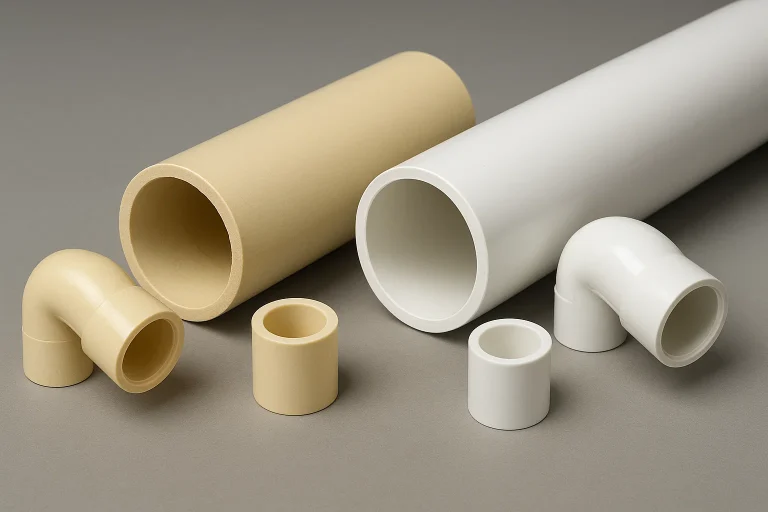
This is their most core application field, used for producing modified plastics (such as reinforced, toughened, flame-retardant, and filled modified plastics), which are widely applied in automotive parts (e.g., bumpers, instrument panels), electronic and electrical enclosures, and construction materials (e.g., modified materials for PVC pipes). They are also used for plastic recycling and granulation to realize the recycling of waste plastics.
2.Rubber and Elastomer Industry
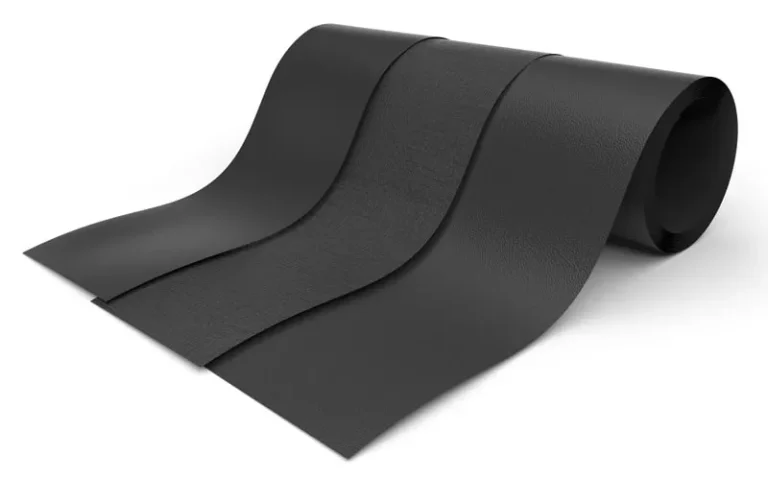
They are used for rubber mixing, modification, and extrusion molding—such as rubber composites for automotive tires and elastomer modified materials for seals. They can achieve uniform mixing of rubber with fillers and additives, improving the strength, wear resistance, and other properties of rubber products.
3.Composite Materials Industry
They are suitable for the preparation of polymer-based composite materials (such as carbon fiber-reinforced composites and glass fiber-reinforced composites). By precisely controlling the mixing ratio of fibers and resins, they ensure the mechanical properties of composite materials, which are widely used in high-end fields such as aerospace and new energy vehicles.
4.Food and Pharmaceutical Excipients Industry
In the food industry, they are used for grain flour modification and food additive mixing molding. In the pharmaceutical industry, they are used for the preparation of pharmaceutical excipients (such as sustained-release granules and pharmaceutical carrier materials). The equipment can be made of food-grade/pharmaceutical-grade materials to meet hygiene standards.
5.New Energy Materials Industry
They are used for the mixing and molding of lithium battery cathode materials and anode materials, as well as the modification processing of packaging materials for photovoltaic modules. The equipment is required to have high-precision temperature control and clean processing capabilities to ensure the performance stability of new energy materials.
How to Determine if a Twin Screw Compounding Extruder Meets Your Production Needs?
Selecting a twin screw compounding extruder requires precise judgment based on your production scenarios and needs to avoid blind selection. Consider the following 5 core dimensions:
1.Clarify the Characteristics of Production Materials
First, clarify the type of processed materials (e.g., plastics, rubber, composite materials), viscosity, heat sensitivity, and filling amount: For processing high-filler materials, choose intermeshing twin screws to ensure uniform mixing; for heat-sensitive materials, focus on the equipment’s precise temperature control capability and fast discharge design to prevent material degradation.
2.Define Output and Product Specifications
Select the equipment model based on your production capacity needs (e.g., 50kg/h or 500kg/h output) — the larger the screw diameter, the higher the output. Meanwhile, determine whether a specific mold is required based on the final product form (e.g., granules, sheet blanks) to ensure the equipment meets product specification requirements.
3.Consider Product Quality Requirements
For producing high-end modified plastics, composite materials, or other products requiring high mixing uniformity, choose equipment with a wide adjustable range of screw speed and flexible kneading block combinations; for products requiring high purity (e.g., pharmaceutical excipients), select equipment made of food-grade/pharmaceutical-grade materials with clean processing design.
4.Match Production Site and Energy Budget
Choose the equipment size based on the space of your production site to avoid site constraints. Meanwhile, consider equipment energy consumption (e.g., motor power) and long-term operation and maintenance costs. Select equipment with low energy consumption and easy maintenance to reduce long-term production investment.
5.Reserve Space for Future Capacity Expansion
If you have future needs for capacity improvement or product category expansion, it is recommended to choose equipment with a modular design — it can adapt to new processing needs by replacing screw elements, upgrading the feeding system, etc., avoiding repeated equipment purchases and reducing investment risks.
Why Choosing a Reliable Twin Screw Compounding Extruder Manufacturer Is Critical
As high-value industrial equipment with a long service life, the quality and performance of twin screw compounding extruders directly determine production efficiency, product quality, and long-term operation and maintenance costs. Therefore, selecting a reliable manufacturer is a core prerequisite for ensuring stable production.
High-quality manufacturers not only provide standardized equipment that meets production needs but also offer customized solutions based on customers’ personalized scenarios—such as optimizing screw design for special materials and matching exclusive molds. They also have comprehensive after-sales support, including equipment installation and commissioning, operator training, supply of wearing parts, and rapid fault response, which significantly reduces equipment operation and maintenance risks. Choosing a manufacturer with insufficient qualifications may lead to issues such as unstable equipment quality, substandard mixing uniformity, and lack of after-sales support, ultimately affecting production schedules and product competitiveness.
Transform Your Business Today
Contact us to get customized solutions for twin screw compounding extruders, and our experts will respond within 30 minutes upon receiving your message.