Welcome to ExtruderX Extrusion Machine Manufacturing Facility

What is the extrusion manufacturing process?
Extrusion molding manufacturing process is one of the core processes in modern industrial production, widely applied in multiple high-demand sectors such as plastics, rubber, and building materials. For industrial equipment distributors, mastering its core logic enables more accurate alignment with end-customer needs; for end-user manufacturing enterprises, understanding this process facilitates effective evaluation of equipment procurement and production optimization directions. This article will comprehensively break down the extrusion molding manufacturing process from five key dimensions: core definition, working principle, key steps, industrial applications, and market demand, helping you quickly establish a systematic understanding.
What is Extrusion Molding Manufacturing Process? Core Definition & Working Principle
Core Definition
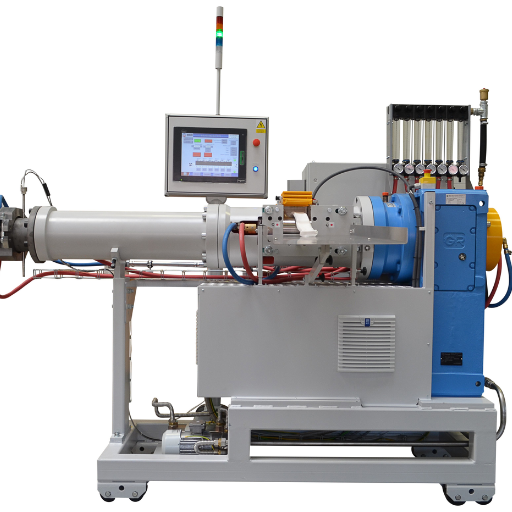
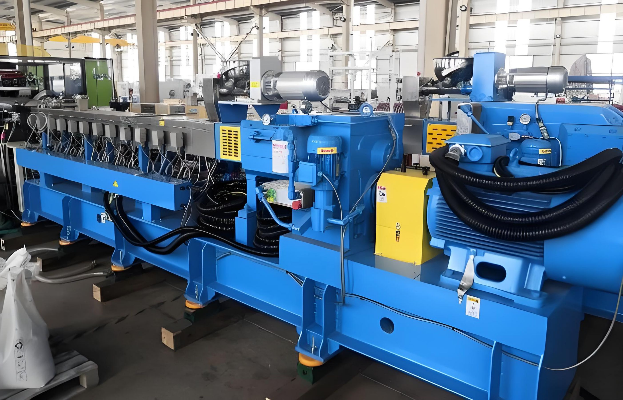
Extrusion Molding Manufacturing Process (referred to as “extrusion process” for short) is a continuous manufacturing technology that heats and melts solid materials (such as plastic pellets, rubber raw materials) through an extruder, then extrudes them into specific dies by the helical thrust of the screw, and finally forms continuous profiles (such as pipes, sheets, sections). Its core advantage lies in enabling mass, standardized continuous production and adapting to various product forms by adjusting the die. It is a key link in the transformation from “raw materials to finished products” in industrial production.
Core Working Principle
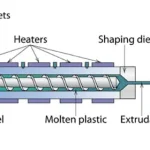
The working principle of extrusion molding can be summarized into four core logics: “raw material pretreatment → melting and plasticization → extrusion molding → cooling and setting”, which is specifically realized through the collaboration of key components of the extruder:
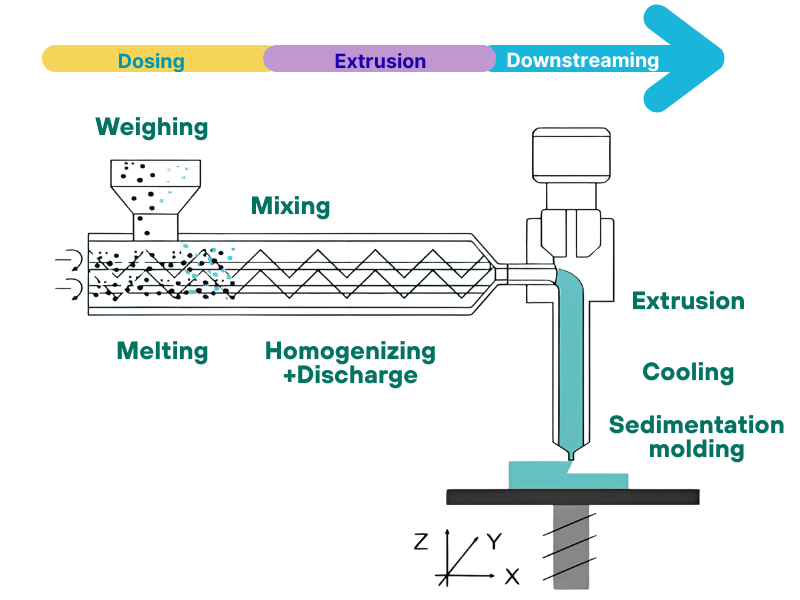
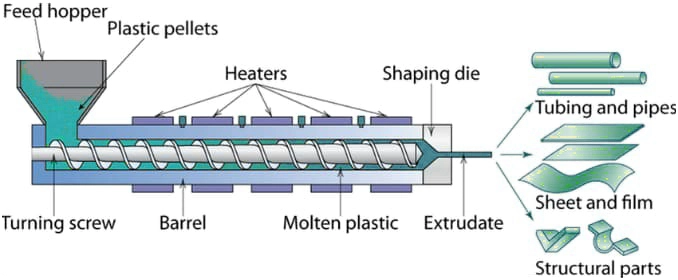
1.Power Transmission: The screw of the extruder is driven by a motor to rotate, generating continuous helical thrust to convey the materials from the feed hopper toward the die;
2.Heating and Plasticization: The heating device outside the barrel (such as resistance heating coils) gradually heats the materials, while the shear heat generated by the rotation of the screw assists in melting the materials, converting the solid materials into a uniform molten fluid;
3.Pressure Molding: The molten materials are pressurized under the thrust of the screw, enter the pre-set shape die (such as pipe die, sheet die) through the die head, and the materials fill the die and form a cross-sectional shape consistent with the die cavity;
4.Continuous Setting: After the formed continuous profiles are extruded from the die, they are rapidly cooled and solidified by cooling devices (such as cooling water tank, air ring), and finally form a stable finished product shape, which is then conveyed to the subsequent cutting process by a tractor.
Key Steps of the Extrusion Molding Process — From Raw Materials to Finished Products
Extrusion molding is a standardized continuous production process. Precise control of each step directly affects the quality of finished products. The specific key steps are as follows:
Step 1: Raw Material Preparation and Pretreatment
The core task is to ensure the raw materials meet extrusion requirements and prevent impurities or moisture from affecting molding quality. First, select raw materials of corresponding materials (such as PE, PVC, PP plastic pellets, natural rubber granules, etc.) according to finished product requirements; second, dry the raw materials (some plastics like PET and PA are hygroscopic and need to be dried by a dryer to remove moisture, avoiding bubbles in finished products); finally, screen the raw materials to remove impurities and agglomerated materials, ensuring uniform particle size.
Step 2: Melting, Plasticization, and Conveying
Pretreated raw materials enter the extruder barrel through the feed hopper. Under the rotational pushing of the screw and the heating of the barrel, they undergo a transformation process of “solid state → high elastic state → molten state”. This step requires strict control of heating temperature (different materials have different melting points, e.g., PVC heating temperature is about 160-190℃, PE about 180-220℃) and screw speed to ensure complete melting and uniform mixing of materials without residual unplasticized particles.
Step 3: Die Extrusion and Molding
Molten materials enter the die head under the thrust of the screw. The core function of the die is to give the product a specific cross-sectional shape. Die design must match material fluidity and product size requirements. During extrusion, it is necessary to maintain stable die head pressure (pressure fluctuations will cause uneven cross-sectional dimensions of finished products) to ensure uniform filling of the die cavity by materials and form continuous molded profiles.
Step 4: Cooling, Setting, and Traction
Profiles extruded from the die are in a high-temperature molten state and need to enter cooling equipment immediately for setting. Common cooling methods include water cooling (suitable for pipes and wires) and air cooling (suitable for sheets and profiles). Cooling speed must be uniform (avoiding excessive internal stress and cracking caused by rapid cooling). Cooled profiles are pulled at a stable speed by a tractor to ensure dimensional accuracy in the length direction of the product.
Step 5: Cutting and Post-Processing
Continuous profiles after traction are cut into finished products of fixed lengths by cutting machines according to customer requirements; some products require additional post-processing, such as surface polishing, drilling, and printing. Finally, the finished products are stored after quality inspection (dimensional accuracy, appearance defects, mechanical properties).
Main Industrial Applications of the Extrusion Molding Process
Boasting continuous production, wide adaptability, and controllable costs, the extrusion molding process is widely used in various industrial sectors, covering product categories such as daily necessities, industrial components, and building materials. The core application areas are as follows:
1.Plastic Processing Industry (Core Application Field)
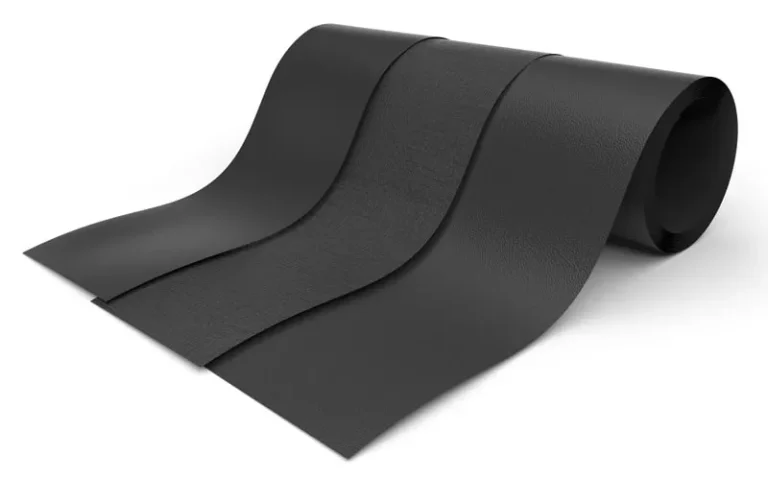
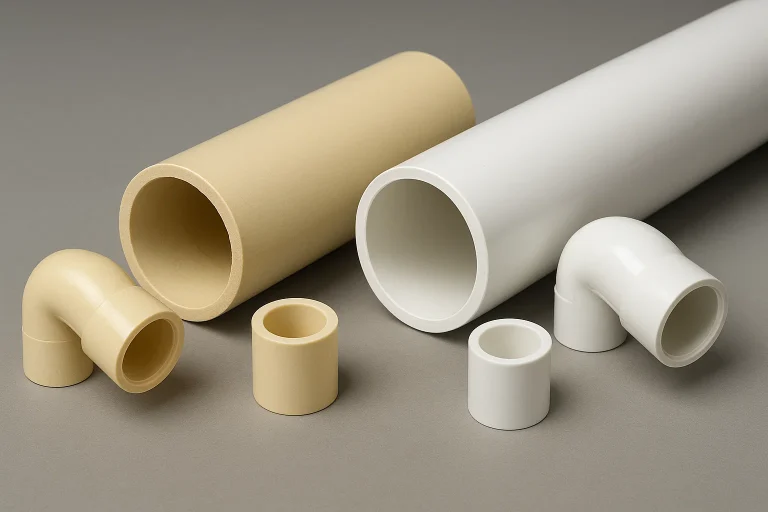
This is the primary application scenario of the extrusion process, capable of producing various plastic products: ① Pipes and Tubes (PVC drain pipes, PE water supply pipes, gas pipes, floor heating pipes); ② Sheets and Films (PP plastic sheets, PVC foam sheets, plastic films for food packaging); ③ Profiles (PVC door and window profiles, plastic decorative strips); ④ Wires and Cables (plastic insulation coating for wires and cables); ⑤ Others (plastic films, plastic filaments, blanks for hollow containers).
2.Rubber Industry
It is used to produce various rubber profiles and products, such as automotive rubber sealing strips, rubber tubes, rubber belts, and sole materials. The extrusion process enables continuous molding of rubber raw materials, followed by vulcanization to enhance product elasticity and durability.
3.Building Materials Industry
In addition to plastic building materials, it can also produce gypsum ceiling lines, aluminum profiles (metal extrusion), cement fiberboards, etc. Among them, aluminum profile extrusion is the core production process for building curtain walls and door/window frames, where aluminum alloy billets are extruded into profiles with specific cross-sections through metal extruders.
4.Packaging and Food Industry
It produces plastic films for food packaging (e.g., cling film, shopping bag films), plastic pipes for food contact (e.g., beverage delivery pipes), and blanks for disposable tableware. The process must comply with food-grade hygiene standards, controlling raw material purity and processing contamination.
5.Other Specialty Industries
Such as medical plastic tubes (infusion tubes, catheters) in the medical industry, 3D printing filaments (PLA, ABS filaments), and specialty plastic profiles in the aerospace sector. These applications have higher requirements for the precision of the extrusion process and raw material purity.
Why is the Extrusion Molding Process a High-Demand Market?
In recent years, the market demand for equipment corresponding to the extrusion molding process has been continuously rising, mainly driven by three core factors: strong rigid demand from downstream industries, prominent process advantages, and industrial upgrading. The detailed analysis is as follows:
1.Strong Rigid Demand in Downstream Industries and Large Market Base
The core application areas of the extrusion process (plastics, rubber, building materials, packaging) are all fundamental sectors of the global industrial system with strong demand rigidity. Taking the plastic processing industry as an example, the global plastic output exceeds 400 million tons annually, of which nearly 60% of plastic products need to be produced through the extrusion process. With the accelerated infrastructure construction in emerging markets (Southeast Asia, Africa), the demand for extruded products such as pipes and profiles continues to grow, directly driving the market demand for extrusion process equipment.
2.Process Advantages Align with Modern Production Needs
In industrialized production, the “continuous, large-scale, and low-cost” advantages of the extrusion process are irreplaceable: ① Continuous production can significantly improve production capacity, suitable for large-batch orders (e.g., daily output can reach several tons to dozens of tons); ② The equipment is easy to operate and has a high degree of automation, which can reduce labor costs; ③ Mold replacement is convenient, and the same extruder can produce a variety of products, adapting to the needs of multi-category orders and improving the flexibility of enterprise production. These advantages make it the core production equipment for both small and medium-sized enterprises and large factories, with a high market penetration rate.
3.Industrial Upgrading and Policy Drivers Spur New Demand
On one hand, stringent global environmental policies are promoting the upgrading of “green extrusion,” such as the growing demand for equipment in fields like biodegradable plastic extrusion and recycled plastic extrusion. On the other hand, the demand for high-precision extrusion processes in high-end manufacturing fields (medical care, aerospace) is increasing, driving the market demand for high-end extruders. Additionally, the accelerated industrialization process in developing countries has continuously released the procurement demand for extrusion equipment from new factories, further expanding the market scale.