Welcome to ExtruderX Extrusion Machine Manufacturing Facility

What is the Extrusion Process? (Complete Guide)
For industrial equipment distributors, mastering the extrusion process is a core prerequisite for promoting products accurately and matching customer needs. This article provides a comprehensive breakdown—from the definition, working principle, and quality factors of the extrusion process to industry application cases and market demands—helping you quickly strengthen professional knowledge, solve the core problems of “failing to articulate process value” and “struggling to identify target markets” in promotion, and develop business efficiently.
What is the Extrusion Process?
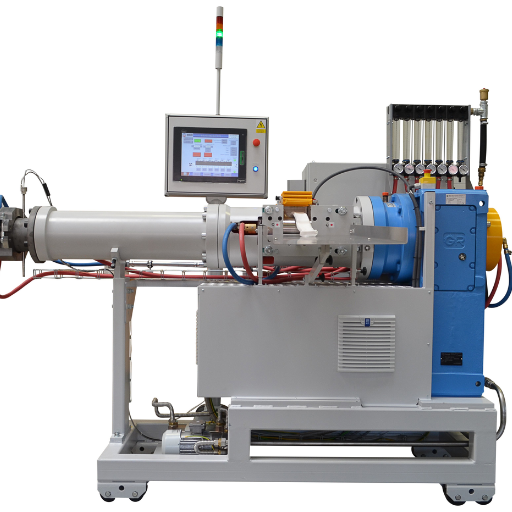
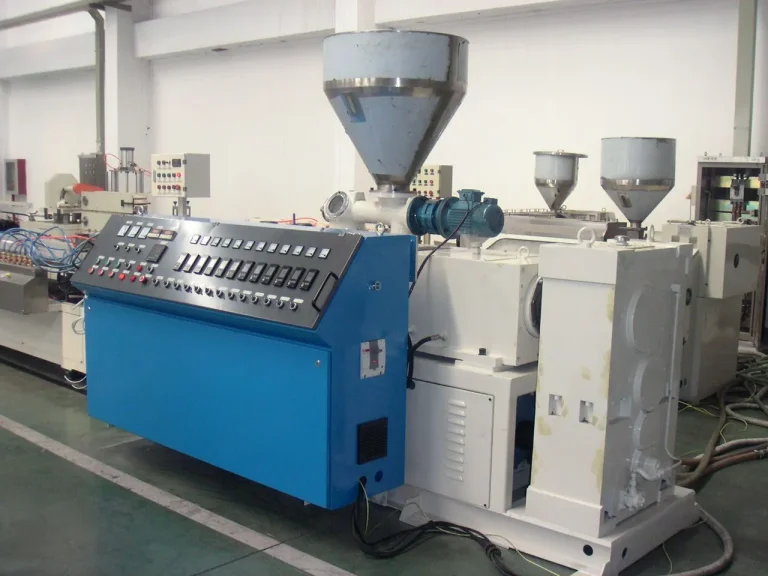
The extrusion process is an industrial molding technology that converts solid materials such as plastics and rubber into finished products with specific cross-sectional shapes through “thermal plasticization + continuous extrusion + shaping and cooling.” Its core characteristics are “continuity, high efficiency, and customization”—it can not only achieve large-scale mass production but also adapt to various product forms such as pipes, profiles, and films by replacing molds. As a key link connecting raw materials to end products, it is widely used in multiple basic industrial sectors.
Working Principle of the Extrusion Process: The Entire Process from Material to Finished Product
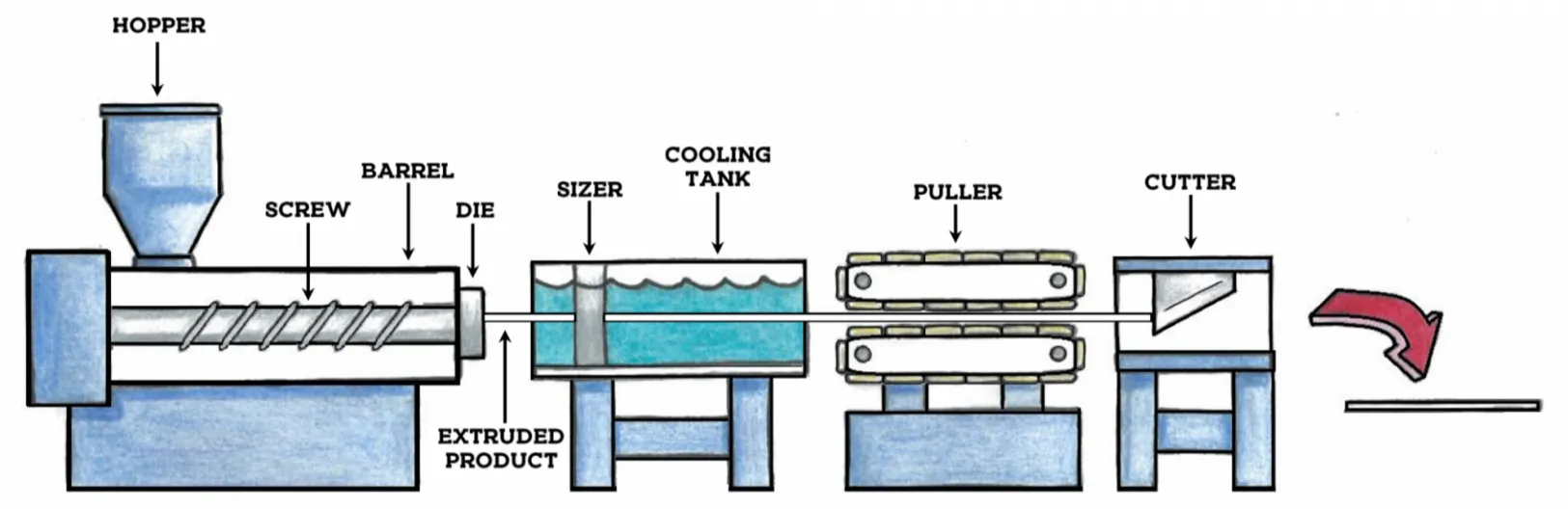
The core logic of the extrusion process is “material state transformation + continuous conveying and molding.” The entire process can be divided into 5 core steps, with a clear and controllable workflow:
1.Feeding Stage
Solid raw materials (such as granular or powdered forms) are uniformly fed into the extruder barrel through a feeding device. The feeding speed must remain stable to avoid affecting subsequent molding quality due to fluctuations in material supply.
2.Plasticization and Melting Stage
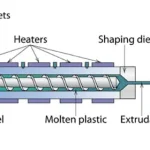
The heating devices outside the barrel raise the temperature in sections, while the internal screw rotates at high speed to generate shear friction. Together, these two actions gradually melt the solid materials into a uniform molten state (the “plasticization” process), which is a key link to ensuring finished product quality.
3.Pressurization and Conveying Stage
Under the push of the screw and the constraint of the barrel, the molten material forms a stable pressure and is continuously pushed toward the extruder’s die head. The stability of the pressure directly affects the material’s density.
4.Die Extrusion Stage
After reaching the die head, the molten material is extruded through the runner of a preset-shaped die, forming a billet with a cross-section consistent with the die cavity (e.g., circular pipes, square profiles). The precision of the die determines the dimensional tolerance of the finished product.
5.Cooling and Shaping Stage
The newly extruded billet has a high temperature and strong plasticity, requiring immediate entry into a cooling system (water cooling or air cooling) for rapid temperature reduction. This solidifies and shapes the billet, ultimately forming a finished product with stable dimensions and a regular shape, completing the entire extrusion process.
Key Factors Affecting Extrusion Process Quality
The quality of finished products in the extrusion process is influenced by multiple factors, which can be summarized into 5 core elements. Understanding these factors enables distributors to more accurately meet customer needs:
1.Material Characteristics
Parameters such as raw material purity, melting point, and fluidity directly affect plasticization results. For example, PVC raw materials require strict control of impurity content to avoid bubbles during processing; PE raw materials need to be matched with corresponding processing temperatures to ensure uniform melting.
2.Temperature Control
The temperature of each barrel section and the die head must be precisely regulated: excessively high temperatures can easily cause material decomposition, affecting the color and strength of finished products; excessively low temperatures result in incomplete plasticization, leading to issues such as rough product surfaces and internal hard lumps.
3.Screw Parameters
The screw’s rotational speed, pitch, and flight depth affect material conveying speed and shear force magnitude. For instance, high rotational speed is suitable for high-efficiency production but requires matching material fluidity; screws with different pitches are adapted to materials of varying viscosities.
4.Mold Precision
The mold’s machining precision and runner design directly determine the dimensional accuracy and surface flatness of finished products. For example, when producing precision profiles, the tolerance of the mold cavity must be controlled within 0.01mm; otherwise, it will lead to dimensional deviations in finished products.
5.Equipment Stability
The stability of the extruder’s transmission system, temperature control system, and cooling system is crucial. For example, stable operation of the transmission system can avoid screw rotational speed fluctuations, and precise temperature control ensures consistent plasticization—both are fundamental guarantees for process quality.
Application Cases of the Extrusion Process in High-Demand Industries
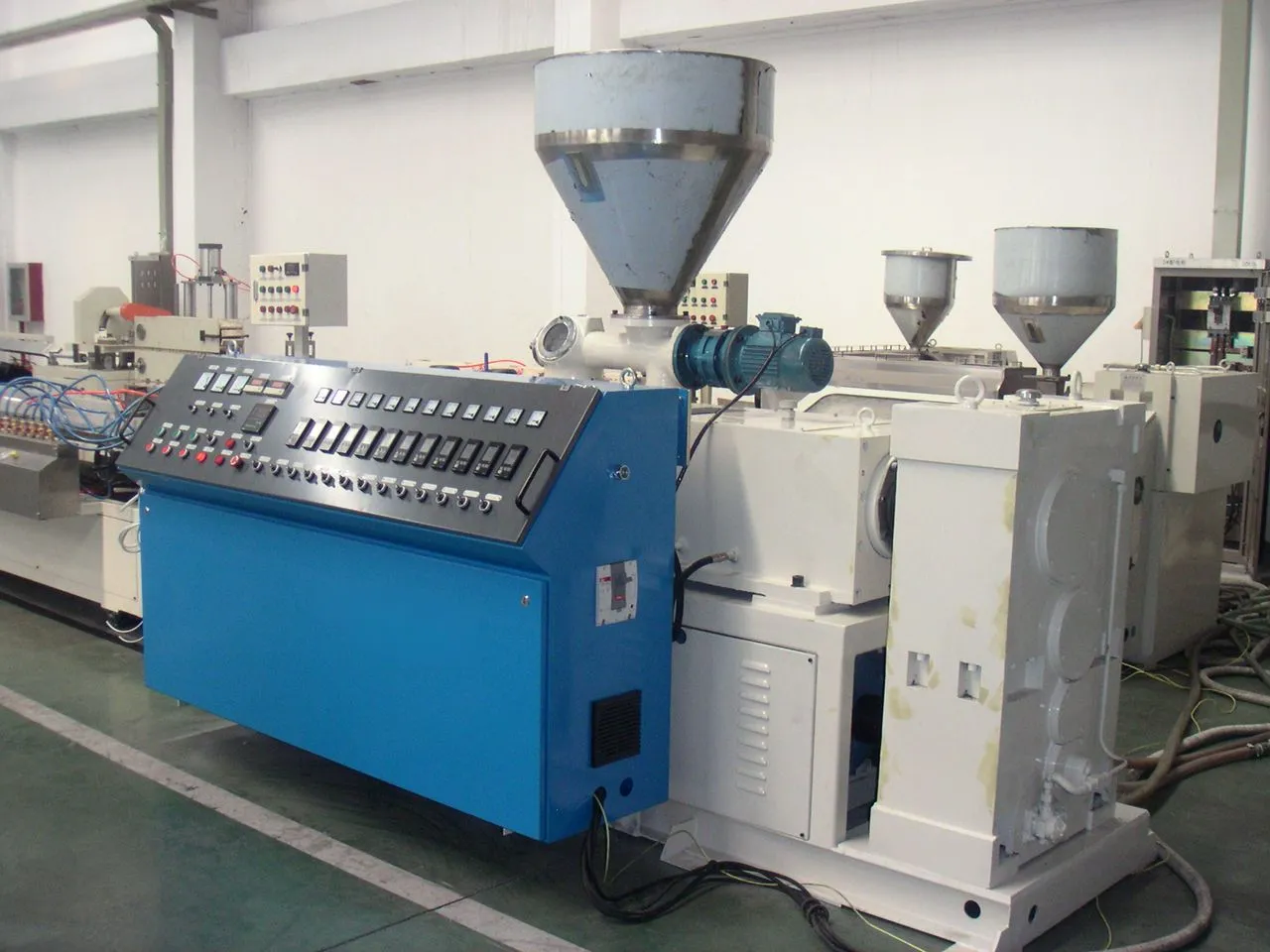
Thanks to its advantages of continuity, low cost, and wide adaptability, the extrusion process is widely used in multiple high-demand industries. Below are practical cases from core sectors to help distributors accurately target potential customers:
1.Construction Materials Industry (Core Demand Sector)
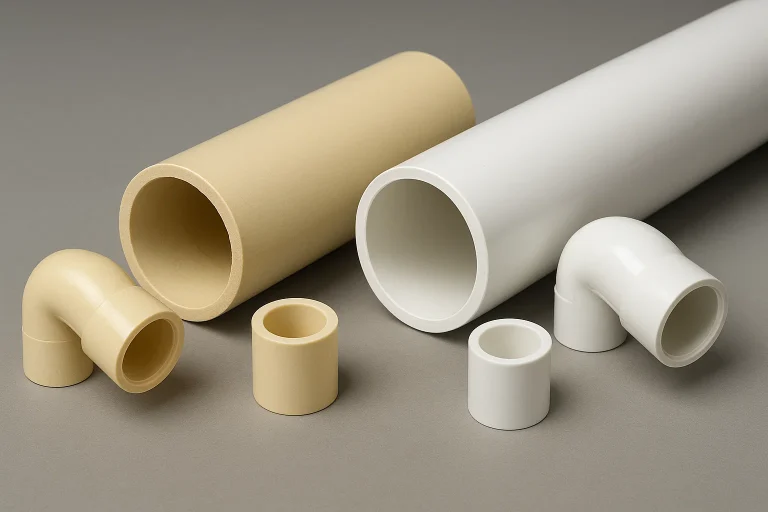
Application Cases: Production of PVC drainage pipes, PE water supply pipes, plastic door and window profiles, etc. For example, in Southeast Asian infrastructure projects, large-diameter HDPE drainage pipes are mass-produced via the extrusion process to meet the needs of municipal drainage engineering; in the European and American home improvement markets, environmentally friendly PVC door and window profiles are manufactured to comply with energy-saving and sound insulation standards.
2.Packaging Industry
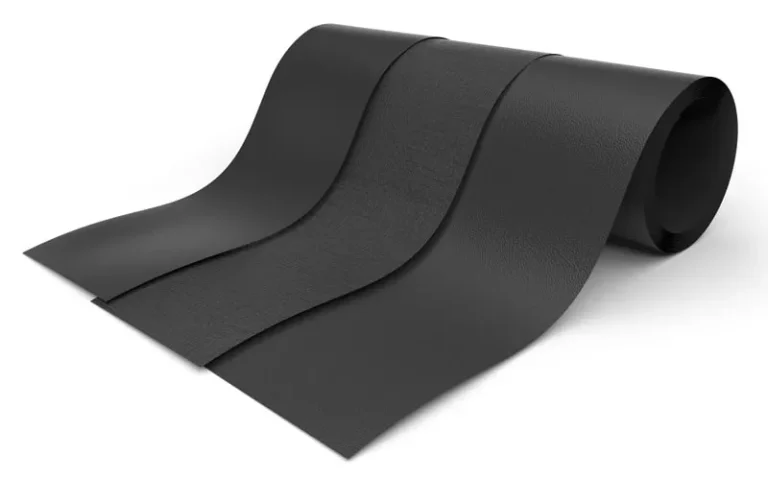
Application Cases: Manufacturing of food packaging films, beverage preforms, strapping tapes, etc. For instance, in the North American food processing industry, high-transparency PE cling film is produced using the extrusion process to ensure food hygiene and safety; in the Middle Eastern FMCG market, high-strength PP strapping tapes are manufactured to meet the requirements of cargo transportation and packaging.
3.Electronics & Communications Industry
Application Cases: Processing of insulation layers and sheath layers for wires and cables. For example, in the European electronics industry, flame-retardant PVC insulation layers are produced via the extrusion process for household appliance power cords; in African communications infrastructure, weather-resistant PE cable sheaths are manufactured to adapt to harsh outdoor environments.
4.Plastic Processing Industry
Application Cases: Production of semi-finished products such as plastic granules and plastic sheets, as well as finished products including toy accessories and industrial profiles. For instance, in South American plastic processing plants, recycled plastic granules are reprocessed into recycled plastic pipes through the extrusion process, realizing resource recycling.
Market Demand Analysis of the Extrusion Process
From a global perspective, the demand for extrusion process-related equipment (extruders) remains consistently stable. The core driving factors and market characteristics are as follows:
1.Industry Growth Drives Demand
Global infrastructure investment (especially municipal engineering in Southeast Asia and Africa) boosts demand for extrusion processes in the construction materials sector; the rapid development of the packaging industry (e-commerce logistics, food processing) fuels growth in demand for extrusion-based packaging products; technological upgrades in the electronics and communications industry also increase market demand for high-precision extrusion processes.
2.Distinct Regional Demand Characteristics
European and American Markets: Emphasize environmental friendliness (low energy consumption, low emissions) and high precision of extrusion processes, with strong demand for high-end extrusion equipment.
Emerging Markets (Southeast Asia, Africa, South America): Prioritize cost-effectiveness and stability of extrusion processes, with robust demand for entry-level extrusion equipment and fast market growth.
3.Core Customer Pain Points
End customers (processing plants) generally focus on: production efficiency, finished product qualification rate, and energy consumption costs of extrusion processes. Distributors pay more attention to product market adaptability, technical support, and after-sales service. This means extrusion equipment with high efficiency, energy-saving, and stability advantages is more likely to gain market favor.
If you want to learn about extrusion equipment solutions tailored to different markets or obtain exclusive support policies for distributors, feel free to contact us for one-on-one professional consultation.