Welcome to ExtruderX Extrusion Machine Manufacturing Facility

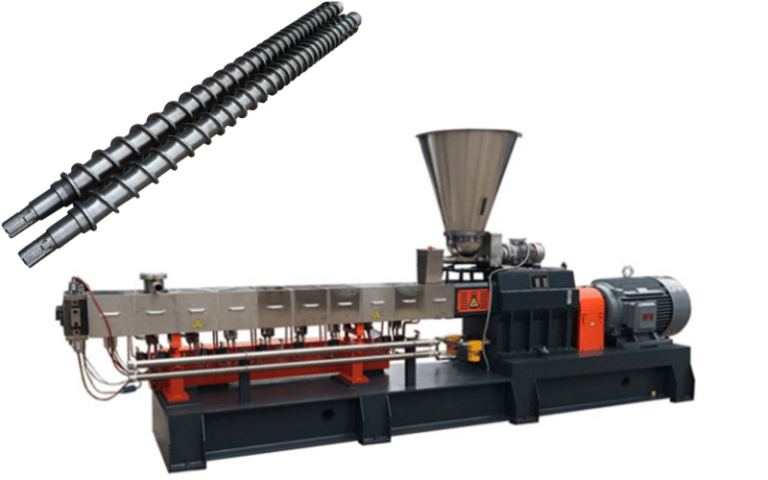
What Is a Plastic Twin Screw Extruder
The plastic twin screw extruder is a core molding equipment in the plastic processing industry. It directly impacts product quality and production efficiency. Understanding its core knowledge helps enterprises select the right models accurately and optimize production, while also supporting distributors in meeting customer demands. This article breaks down key information about the equipment from dimensions such as definition, working principle and core components to facilitate efficient understanding and application.
What Is a Plastic Twin Screw Extruder?
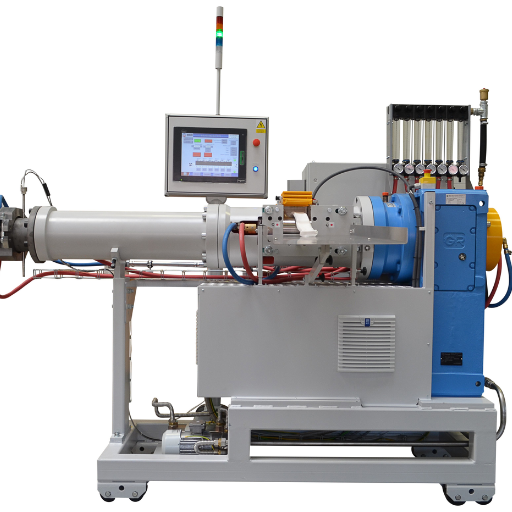
A plastic twin screw extruder is a specialized equipment that relies on two intermeshing or counter rotating screws to complete the conveying, compacting, plasticizing, mixing and extruding of plastic raw materials within a sealed barrel. Compared with traditional single screw extruders, it is optimized for the processing characteristics of plastic raw materials especially modified and highly filled formulations. It offers significant advantages in material mixing uniformity, production continuity and formulation compatibility. As core equipment for the large scale processing of commodity plastics and engineering plastics, it is widely compatible with various plastic product production lines.
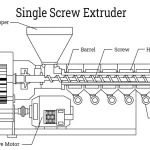
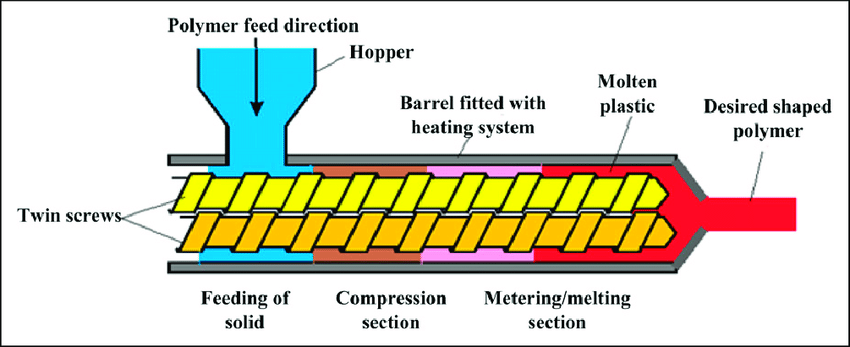
The core of a plastic twin screw extruder’s operation lies in the coordination of mechanical transmission and temperature control systems to achieve the orderly transformation of plastic raw materials from solid pellets to finished products. The entire process is divided into three key stages with seamless connections between each step to ensure processing stability.
1.Feeding Stage
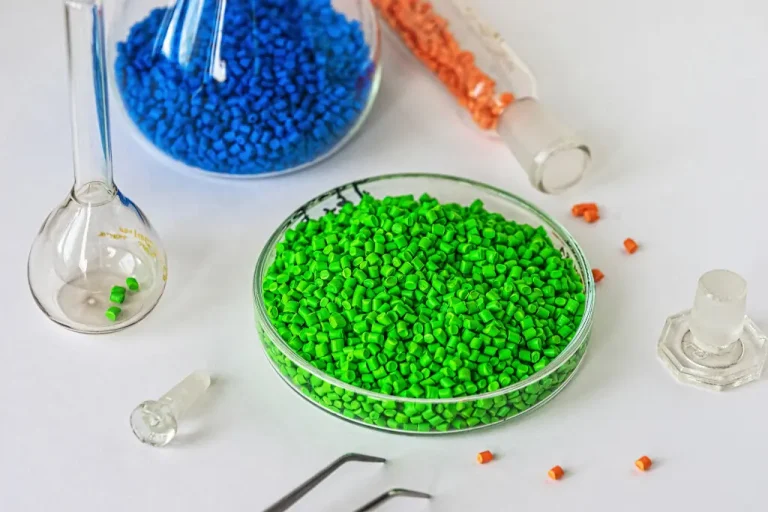
Plastic pellets, powders or recycled materials enter the barrel through the hopper. The synchronous rotation of the two screws generates axial thrust to convey the loose materials forward. Meanwhile, the thread structure performs initial compaction, expelling trapped air from the raw materials to prevent bubble defects during subsequent plasticization.
2.Plasticizing and Mixing Stage
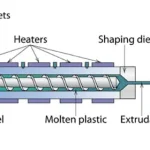
As materials move inside the barrel, they are subjected to shearing and extrusion forces from the screws. Coupled with precise heating from the barrel’s zoned temperature control system, the materials gradually soften and melt from a solid state into a homogeneous melt. The intermeshing structure of the twin screws enhances the mixing effect, ensuring full integration of plastic raw materials with additives and fillers to guarantee uniform melt composition and improved product performance.
3.Extrusion Molding Stage
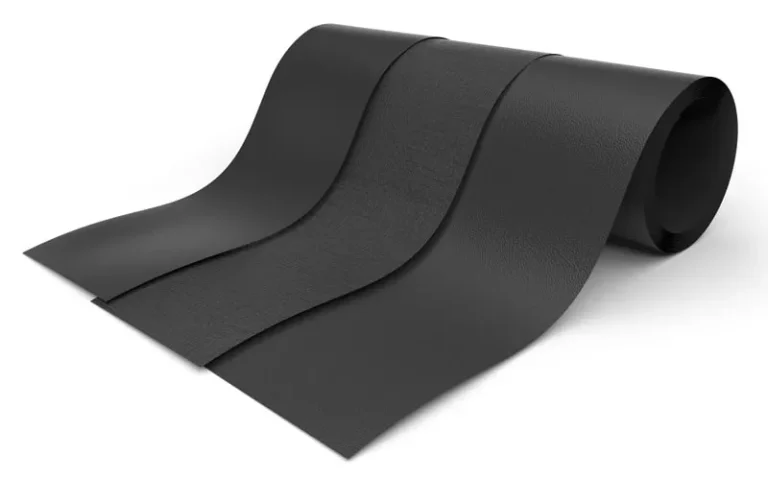
The fully plasticized melt moves at a constant speed into the die head and mold under the thrust of the screws. It is extruded into preset shapes such as pipes, sheets and profiles through the mold cavity. After cooling, shaping, traction and cutting, it becomes qualified plastic semi finished or finished products.
Core Components of the Plastic Twin Screw Extruder
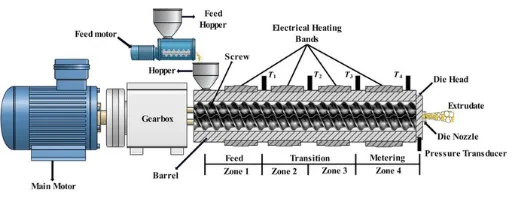
The performance of a plastic twin screw extruder is determined by its core components. The matching precision of each component directly affects processing results and equipment service life. Key components and their functions are as follows:
1.Screws
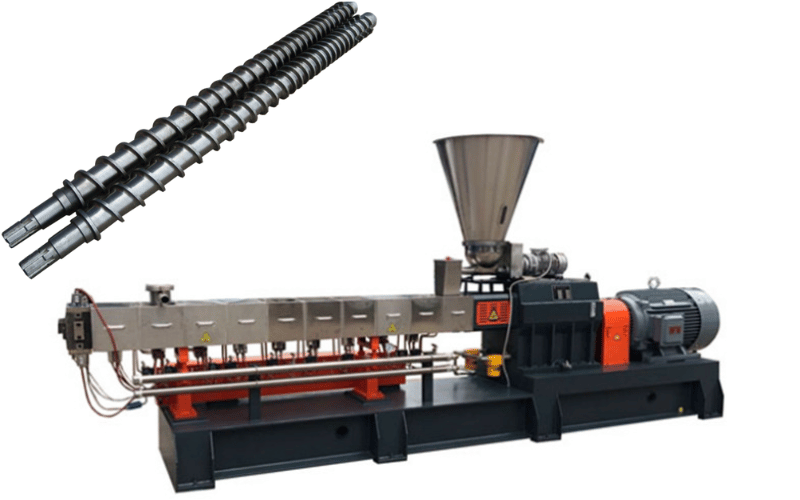
They are core functional components, with material, pitch and length to diameter ratio as the key parameters. High quality screws are mostly made of wear resistant alloy materials, which can adapt to the processing of hard raw materials such as glass fiber reinforced and highly filled plastics. The design of pitch and length to diameter ratio must match the plastic type to ensure conveying efficiency and mixing quality.
2.Barrel
It forms a sealed processing chamber with the screws. Its inner wall has high hardness and high finish, which can not only withstand the friction and impact of materials, but also ensure the uniform transfer of heat from the temperature control system. This prevents plastic degradation caused by excessively high local temperatures and insufficient plasticization caused by excessively low temperatures.
3.Die Head and Mold
The die head connects the barrel and the mold, which can adjust melt pressure and flow rate to ensure materials enter the mold smoothly. The mold directly determines the shape and size of products. It supports customization according to different needs such as pipes, profiles and films, adapting to diversified production scenarios.
4.Drive System
It provides power for screw rotation. The mainstream type adopts variable frequency speed regulating motors, which can flexibly adjust the rotation speed according to the characteristics of plastic raw materials and product specifications. This achieves precise control of production parameters, balancing efficiency and product consistency.
5.Temperature Control System
It conducts precise temperature control of the barrel and die head through zoned heating coils and cooling devices. Different plastics have significant differences in plasticization temperatures. For example, the plasticization temperature of PE is 150 to 180 degrees Celsius and that of PC is 260 to 300 degrees Celsius. Stable temperature control can avoid material defects and ensure processing continuity.
Core Advantages of the Plastic Twin Screw Extruder
Compared with single screw extruders and other plastic processing equipment, the plastic twin screw extruder is optimized to address the pain points of industrial production. Its core advantages are concentrated in the following aspects:
1.Excellent Mixing Uniformity
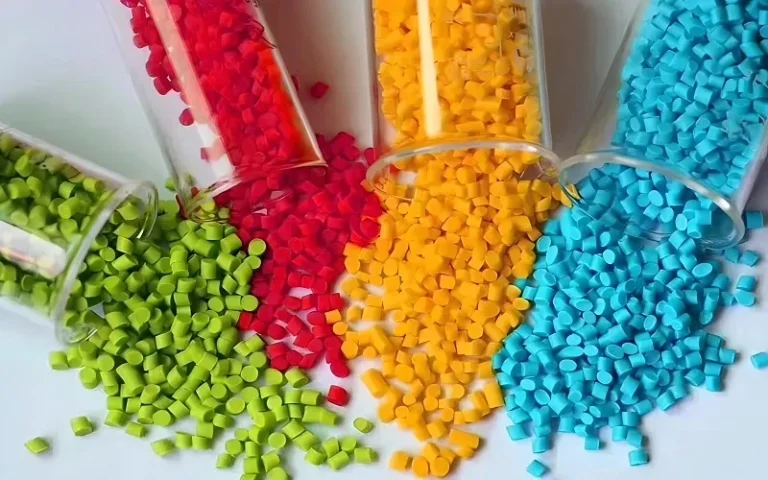
The intermeshing rotation of twin screws generates strong shearing and stirring forces, enabling full integration of plastic raw materials with fillers, additives and color masterbatches. Even when high proportions of materials such as glass fiber and calcium carbonate are added, it can prevent component segregation and improve the mechanical properties and surface finish of products.
2.Higher Production Efficiency
Twin screws have stronger synchronous conveying capacity. Materials stay in the barrel for a short and uniform time. The extrusion output per unit time is much higher than that of single screw models of the same specification. It is suitable for large scale continuous production and reduces the production cost per unit product.
3.Wide Formulation Compatibility
It is compatible with various raw materials such as commodity plastics, engineering plastics and modified plastics. Whether it is simple pellet processing or complex formulations such as flame retardant, reinforced and toughened ones, it can achieve stable adaptation and meet the production needs of multiple industries.
4.Easy Operation and Maintenance
Modern models are equipped with intelligent control systems that can monitor key parameters such as temperature and rotation speed in real time, featuring simple and user friendly operation. Some models support quick screw disassembly, facilitating daily cleaning of residual materials and inspection of wear conditions, thus reducing maintenance costs.
Common Application Scenarios of the Plastic Twin Screw Extruder
The versatility of the plastic twin screw extruder allows it to cover the entire industrial chain of plastic processing. Common application scenarios include the following:
1.Modified Plastic Production
It is used for plastic modification processes such as filling, reinforcement, flame retardancy and toughening, for example, glass fiber reinforced PP and flame retardant ABS. It ensures modification effects through precision mixing and serves as core equipment for modified plastic manufacturers.
2.Pipe and Profile Processing
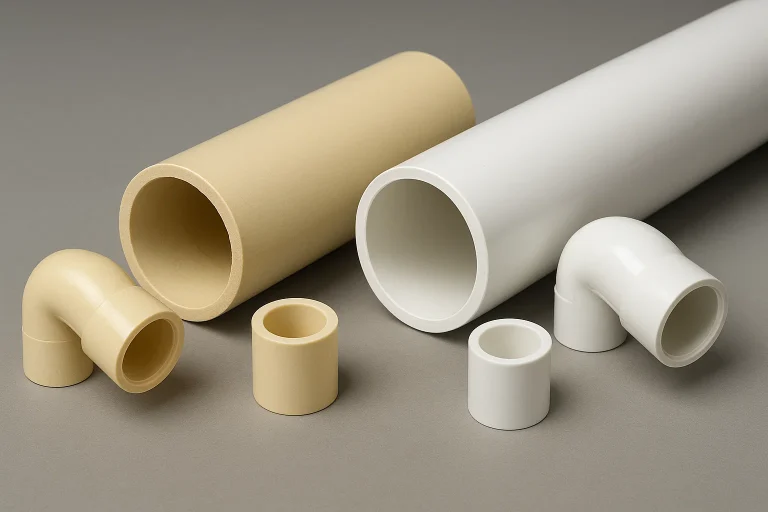
It produces PVC drain pipes, PE water supply pipes, plastic door and window profiles and other products. With stable extrusion precision, it guarantees compliant product dimensions and uniform wall thickness, meeting the needs of construction, municipal engineering and other fields.
3.Packaging and Film Sector
It manufactures plastic films, packing straps, preforms for hollow products and more. It can precisely control melt fluidity, ensuring key performance indicators such as product transparency and toughness.
4.Recycled Plastic Reutilization
It processes recycled plastic materials. Through high efficiency mixing, it removes impurities and restores material properties, achieving resource recycling and meeting the requirements of environmentally friendly production.
How to Choose a High Quality Plastic Twin Screw Extruder?
Choosing a high quality plastic twin screw extruder directly determines production efficiency, product qualification rate and long term operating costs. You need to make a comprehensive judgment based on your own production scenarios and core needs to avoid blind selection. The key points are as follows:
1.Focus on the Quality of Core Components
Prioritize equipment whose screws and barrels are made of wear resistant alloy materials. Check the machining precision and surface finish to prevent product quality issues caused by component wear and extend the service life of the equipment.
2.Match Your Production Parameter Requirements
Confirm parameters such as screw diameter, length to diameter ratio and extrusion capacity according to the type of processing raw materials and product specifications. For example, modified plastics require models with a relatively large length to diameter ratio, while pipe production requires emphasis on extrusion stability.
3.Evaluate Manufacturer Technology and After Sales Service
Choose manufacturers with independent R&D capabilities, as their equipment has more mature technology and stable performance. At the same time, confirm whether they provide professional installation guidance, spare parts supply, fault maintenance and other services to ensure uninterrupted production.
4.Refer to Actual Application Cases
Learn about the application feedback of the equipment in the same industry and check if there are processing cases of similar raw materials and products to intuitively judge the adaptability and reliability of the equipment.
Frequently Asked Questions (FAQ)
Q: Is the plastic twin screw extruder suitable for processing recycled plastics?
A: Yes it is. Recycled plastics contain high levels of impurities and have unstable performance. The strong mixing capability of twin screws can break down impurities and restore material uniformity. Matching with targeted screen filter devices can also filter out impurities. However attention should be paid to the wear resistance of the screw material during selection to adapt to the complex components of recycled materials.
Q: What effects will worn screws have on products in a plastic twin screw extruder?
A: Worn screws will reduce shearing and conveying capacity leading to uneven plasticization of materials and fluctuations in extrusion output. Products may suffer from issues such as wall thickness deviation rough surfaces and decreased mechanical properties. It is recommended to regularly inspect the wear condition of screws and replace severely worn ones in a timely manner to avoid affecting production efficiency.
Q: Do I need to frequently adjust equipment parameters when processing different plastic raw materials?
A: Yes you do. Different plastic raw materials have significant differences in plasticizing temperature and viscosity. When switching raw materials it is necessary to adjust parameters such as barrel temperature screw speed and melt pressure. For example processing PE requires a temperature of 150 to 180 degrees Celsius while processing PC requires 260 to 300 degrees Celsius. Parameter matching is essential to ensure stable processing.
Q: What should I do if the melt temperature is too high during equipment operation?
A: First reduce the heating temperature of the corresponding section and slow down the screw speed to reduce heat generation from material shearing. Check if the cooling system is operating normally and clean up debris in the heat dissipation channels. At the same time investigate the moisture content of raw materials because damp raw materials are prone to causing local overheating and need to be dried in advance.
Q: How to extend the service life of a plastic twin screw extruder?
A: Daily maintenance should be carried out on a regular basis. Clean residual materials in the barrel and check the temperature control system once a week. Tighten component bolts and inspect screw wear once a month. Conduct a full overhaul once a year and replace vulnerable parts such as seals and bearings. Clean the barrel promptly after processing to prevent residual materials from aging and corroding components.
Q: Do special adjustments need to be made to the equipment for processing highly filled plastics?
A: Yes they do. Highly filled plastics cause severe wear to components so wear resistant screws and barrels should be selected. Appropriately increase screw pitch and reduce rotation speed to avoid material accumulation and overheating. Optimize the temperature control curve at the same time to ensure full integration of fillers and plastics and prevent product defects.