Welcome to ExtruderX Extrusion Machine Manufacturing Facility


What Is a Twin Screw Rubber Extruder
The twin screw rubber extruder is core equipment in the field of rubber processing and is crucial to improving production efficiency and product quality. Understanding its working principles, components and advantages helps enterprises select the right model accurately and optimize production. This article will comprehensively break down the key information of this equipment to help readers gain an in-depth understanding.
I What Is a Twin Screw Rubber Extruder
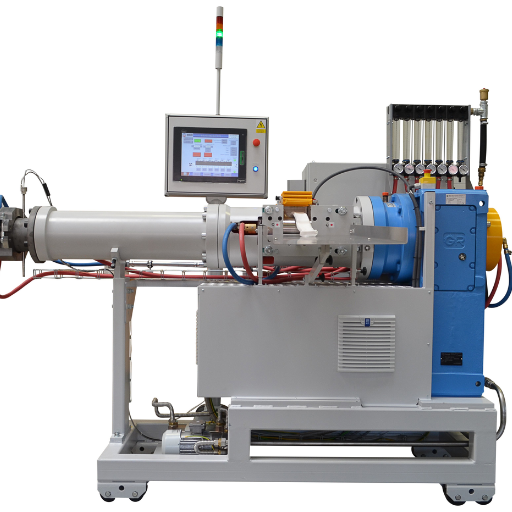
A twin screw rubber extruder is a specialized device that relies on two intermeshing or co rotating screws to convey plasticate mix and extrude rubber raw materials. Compared with single screw extruders it has more advantages in material mixing uniformity production continuity and formula adaptability. Widely used in the large scale production of various rubber products it is one of the core equipments for rubber processing enterprises to achieve efficient production.
What Is the Working Principle of a Twin Screw Rubber Extruder?
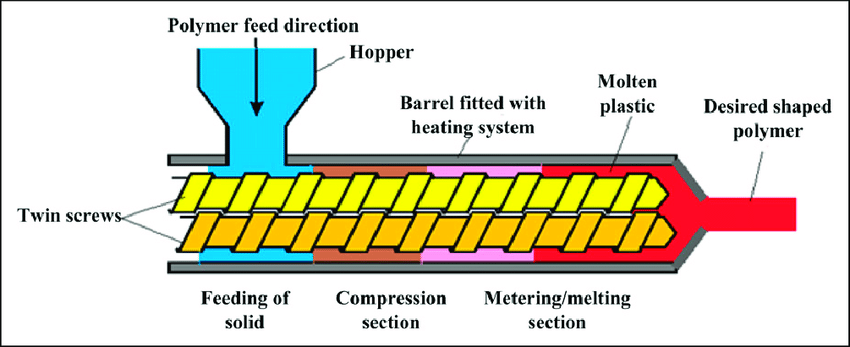
The efficient operation of a twin screw rubber extruder essentially relies on the coordination of its mechanical structure and temperature control system to achieve refined processing of rubber materials from a solid state to finished products. This process is not a simple material conveying step but a systematic procedure involving physical state transformation and uniform mixing of components. It can be specifically broken down into three core stages, each interconnected to ensure processing quality.
1.Feeding Stage
Rubber raw materials including mixtures of raw rubber carbon black and additives enter the barrel through the hopper. The rotation of the two screws generates axial thrust to convey the loose materials forward while performing initial compaction to prepare for subsequent plasticization.
2.Plasticizing and Mixing Stage
As materials move forward inside the barrel they are subjected to shearing and extrusion forces from the screws. Meanwhile the temperature control system on the outer wall of the barrel provides precise heating, gradually turning the materials from a solid state to a molten state. The intermeshing structure of the two screws enhances the material mixing effect, allowing raw materials of different components to fully integrate and ensuring uniform and stable performance of the final products.
3.Extrusion Molding Stage
The fully plasticized molten rubber is conveyed to the head mold under the thrust of the screws. Through the specific cavity of the mold the materials are extruded into continuous profiles that meet specifications such as rubber tubes and sealing strips. Finally the initial processing is completed after cooling and shaping.
What Are the Core Components of a Twin Screw Rubber Extruder?
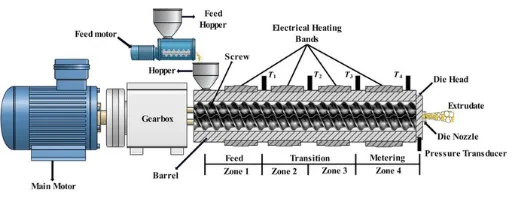
The upper limit of equipment performance and operational stability depend entirely on the design, material and matching precision of core components. Each key component of a twin screw rubber extruder undertakes an irreplaceable function. The rationality of the collocation directly affects material processing results, equipment service life and later maintenance costs. Below is a detailed analysis of the core components.
1.Screws
Screws are the core components of the equipment. Their material, pitch and thread depth directly affect material conveying efficiency and mixing results. High quality screws are usually made of wear resistant alloy materials, which can adapt to the long term processing of high hardness rubber raw materials and reduce wear.
2.Barrel
The barrel works in conjunction with the screws to provide a closed processing space for materials. The inner wall of the barrel needs to have high hardness and finish, which can not only withstand material friction but also ensure the uniform transfer of heat from the temperature control system to guarantee material plasticization results.
3.Head and Mold
The head is a key structure connecting the barrel and the mold, which can regulate the flow rate and pressure of materials. The mold determines the shape and size of the final extruded products and supports customized design according to the requirements of different rubber products.
4.Drive System
The drive system provides power for screw rotation. It usually adopts a variable frequency motor, which can flexibly adjust the screw speed according to the requirements of different raw materials and products to achieve precise control of production parameters.
5.Temperature Control System
The temperature control system conducts sectional control of the temperature of the barrel and head through heating and cooling devices. Different rubber materials have different plasticization temperatures. A stable temperature control system can prevent materials from having performance defects due to excessively high or low temperatures.
Core Advantages of Twin-Screw Rubber Extruder
In the industrial production of rubber products, the twin-screw rubber extruder has gradually replaced traditional equipment and become the industry mainstream, which is mainly due to its targeted optimization for processing pain points. Compared with single-screw extruders and other similar equipment, it has significant competitiveness in multiple dimensions such as mixing effect, production efficiency and adaptability range.
1.High Mixing Uniformity
The meshing rotation of the two screws can produce strong shearing and mixing actions, enabling full mixing of various raw materials. Even for rubber materials with complex formulations, it can ensure uniform distribution of components and improve the quality stability of the final products.
2.Higher Production Efficiency
Compared with single-screw extruders, twin-screw extruders have stronger conveying capacity, shorter material residence time in the barrel, and larger extrusion output per unit time, making them suitable for large-scale industrial production.
3.Wide Formulation Adaptability
Whether it is natural rubber, synthetic rubber, or modified rubber added with a large number of fillers and additives, the twin-screw rubber extruder can achieve stable processing to meet the production needs of different rubber products.
4.Convenient Operation and Maintenance
Modern twin-screw rubber extruders are mostly equipped with intelligent control systems, which can monitor key parameters such as temperature and rotation speed in real time with simple operation. Meanwhile, some models support quick disassembly of screws, facilitating daily cleaning and maintenance.
Common Application Scenarios of Twin Screw Rubber Extruders

The broad applicability of twin screw rubber extruders allows them to be used across multiple subsegments of rubber product manufacturing. Industries ranging from automotive and construction to machinery and cables rely on their precision molding and high efficiency processing capabilities. Different application scenarios have varying requirements for equipment parameters and mold design. Below is an explanation based on mainstream industry scenarios.
1.Production of Rubber Sealing Products
It is used to manufacture products such as automotive door and window seals and building curtain wall seals. The extruded seals feature precise dimensions and stable elasticity meeting the functional requirements for sealing waterproofing and sound insulation.
2.Processing of Rubber Pipes and Profiles
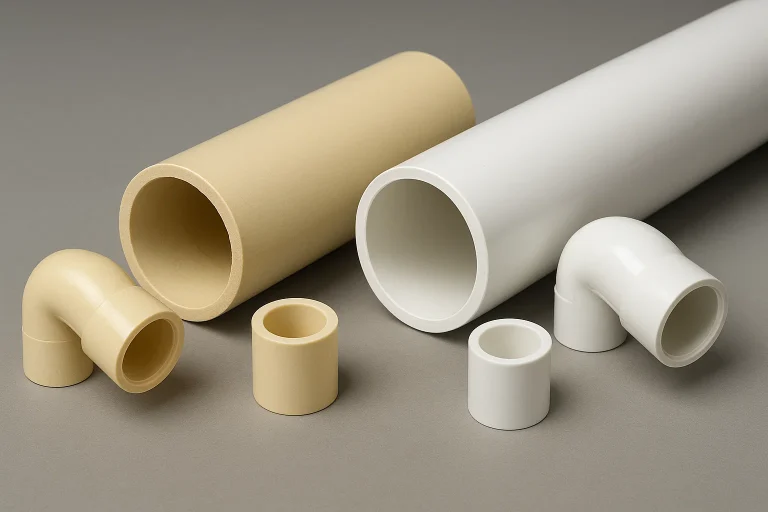
It can produce rubber hoses and rigid pipes of various specifications as well as special shaped rubber profiles. These products are widely used in hydraulic systems water supply and drainage projects and mechanical equipment among other fields.
3.Tire Component Manufacturing
In tire production it is used to extrude key components such as tire treads and tire sidewalls. Precise control of extrusion dimensions and material uniformity ensures the wear resistance and skid resistance of tires.
4.Processing of Other Rubber Products
It can also be used to produce rubber gaskets rubber conveyor belts and rubber cable sheaths adapting to the customized needs of different industries.
How to Choose a High Quality Twin Screw Rubber Extruder?
For rubber processing enterprises and distributors, selecting a high quality twin screw rubber extruder is a key prerequisite for controlling production costs and ensuring product quality. The market is filled with a wide range of equipment models and varying quality levels. A comprehensive assessment across multiple dimensions such as personal production needs, long term operating costs and after sales support is required to avoid production disruptions caused by improper selection.
1.Focus on the Materials and Craftsmanship of Core Components
Prioritize equipment where the screws and barrels are made of wear resistant alloy materials. Such materials extend component service life and reduce downtime losses caused by frequent replacements. Additionally, check the machining precision of the screws to ensure smooth threads and accurate dimensions.
2.Match Your Production Parameter Requirements
Confirm parameters such as screw diameter, length to diameter ratio and extrusion capacity based on the type of rubber products you produce. For example, manufacturing large diameter rubber pipes requires models with larger screw diameters while producing precision sealing strips demands higher rotational speed control precision.
3.Evaluate the Manufacturer’s Technical Strength and After Sales Service
Choose manufacturers with independent R&D capabilities as their equipment features more mature technology and stable performance. Meanwhile, pay attention to after sales service especially for overseas users confirm whether the manufacturer can provide timely technical guidance, spare parts supply and maintenance services to prevent production disruptions caused by equipment failures.
4.Refer to Actual Application Cases
Understanding the application of the manufacturer’s equipment in the same industry and reviewing feedback from cooperative customers allows for a more intuitive judgment of the equipment’s actual performance and reliability.
Frequently Asked Questions (FAQ)
Q: Which is more suitable for processing rubber with complex formulations, a twin screw extruder or a single screw extruder?
A: Twin screw rubber extruders are more suitable. Their intermeshing structure generates stronger shearing and mixing action, allowing full integration of various raw materials and preventing uneven component distribution. Single screw extruders have limited mixing capabilities and are only suitable for processing rubber materials with simple formulations.
Q: What is the regular maintenance cycle for twin screw rubber extruders?
A: It is recommended to conduct a basic inspection once a week, including cleaning residual materials in the barrel and checking the operating status of the temperature control system. Perform in depth maintenance once a month, such as inspecting the wear level of the screws and tightening the bolts of all components. Carry out a full overhaul once a year, replacing vulnerable parts and calibrating the core parameters of the equipment.
Q: Do I need to adjust the parameters of a twin screw extruder when processing different rubber materials?
A: Adjustments are required. Different rubber materials have different plasticizing temperatures and viscosities. For example, the plasticizing temperature of natural rubber is approximately 120 to 140 degrees Celsius, while nitrile rubber requires a temperature range of 140 to 160 degrees Celsius. Meanwhile, the screw speed should be adjusted accordingly to ensure uniform plasticization of materials and prevent scorching.
Q: Are twin screw rubber extruders high in energy consumption?
A: Compared with single screw models, twin screw rubber extruders have slightly higher energy consumption, but their production efficiency is significantly improved. When calculated per unit product, the actual energy consumption is lower. Optimizing the temperature control curve, matching appropriate screw speeds and avoiding equipment idling or overloading can effectively reduce energy consumption.
Q: Can twin screw rubber extruders achieve automated production?
A: Yes they can. Modern twin screw rubber extruders can be equipped with automatic feeding systems, cooling and shaping systems, cutting systems and quality inspection equipment to form a complete automated production line. This setup not only reduces manual intervention but also improves production efficiency and product quality consistency.
Q: What should I pay attention to when purchasing a twin screw rubber extruder?
A: First confirm that the equipment voltage and frequency match the power grid standards of the place of use. Require the manufacturer to provide operation manuals and professional technical support. At the same time clarify the transportation method, customs clearance procedures and after sales service response time to ensure the equipment can be installed and put into use smoothly.